Published April 23, 2026 02:02AM
Across the Sea Otter expo, there was one overwhelming topic in the off-road world: 32-inch wheels. It was defining, undeniable, and for many, the formalization of what has been brewing beneath the surface for the better part of the last year.
Thirty-two-inch wheels are inevitable, not just for mountain biking, but for gravel cycling, too.
While there were not very many 32-inch bikes on display around the show — with a few key exceptions — it wasn’t what was there that had the people talking; it was what everyone said was coming. A Ventum representative went so far as to say the brand plans on having some of its sponsored athletes on 32-inch wheel mountain bikes at Leadville this summer.
A palpable change in the wheel size of the fastest riders is going to begin over the coming months. It is inevitable.
Interestingly, that fervor at the show was at odds with the prevailing online sentiments. For all the enthusiasm that the industry and professional riders had around the new tech, the general public seemed either ambivalent to, or vociferously against, the 32-inch wheel revolution.
Chances are, if you’re reading this, you might be one of those people feeling a sense of impending doom around all the changes.
And who could blame you? From a consumer standpoint, if the wheel standard increases to 32 inches from the current 29-inch standard, wheels change, tires change, suspension change, bike sizing changes, and gearing demands shift. Things will carry over, but the vast majority of the components on bikes will morph to the new normal.
Yet, just as the change is undeniably disruptive, increasing wheel sizes promises more efficiency for off-road riding, both for mountain bikes and gravel bikes. That is why it is going to happen, whether you like it or not.
The science behind the shift to bigger wheels
While the move to 32-inch wheels has accelerated in recent months, testing the limits of wheel size is not new in cycling. In fact, we just had a similar three-inch jump in size in mountain biking a decade and a half ago.
Likewise, the reception was mixed, to the point where the 650b/27.5-inch wheel challenged the 29-inch takeover.
In the end, 29-inch bikes won out across all categories because of the benefits to rollover. With a larger wheel, there is a smaller angle of attack. This means the wheel preserves forward momentum by virtue of any hits, bumps, or rumbles, causing less suspension loss. Suspension loss is one of two components of rolling resistance (the other is hysteresis losses) and is the more significant of the two for off-road riding.
These are the same forces at play that have encouraged the move towards wider tires on gravel bikes, mountain bikes, and even road bikes, to some extent. All of this is geared towards suspension losses, which is managed even better with a big wheel and a big tire.
Until very recently, all of these arguments about 32-inch wheels being faster have been very conceptual. The idea on paper seems valid, but how does it fare in the real world when there are confounding variables and competing physics that might mess up the theoretical equation? Without comparable tires and wheels, it was very difficult to test in any actionable way. Tires and wheels, even of the same size, have incredible amounts of variance among themselves.
Functionally, that is why the Sea Otter Classic last week was so significant in the progress of 32-inch wheels. Finally, the tires and wheels are starting to reach the point where true testing can show quantitative differences in a tangible way.
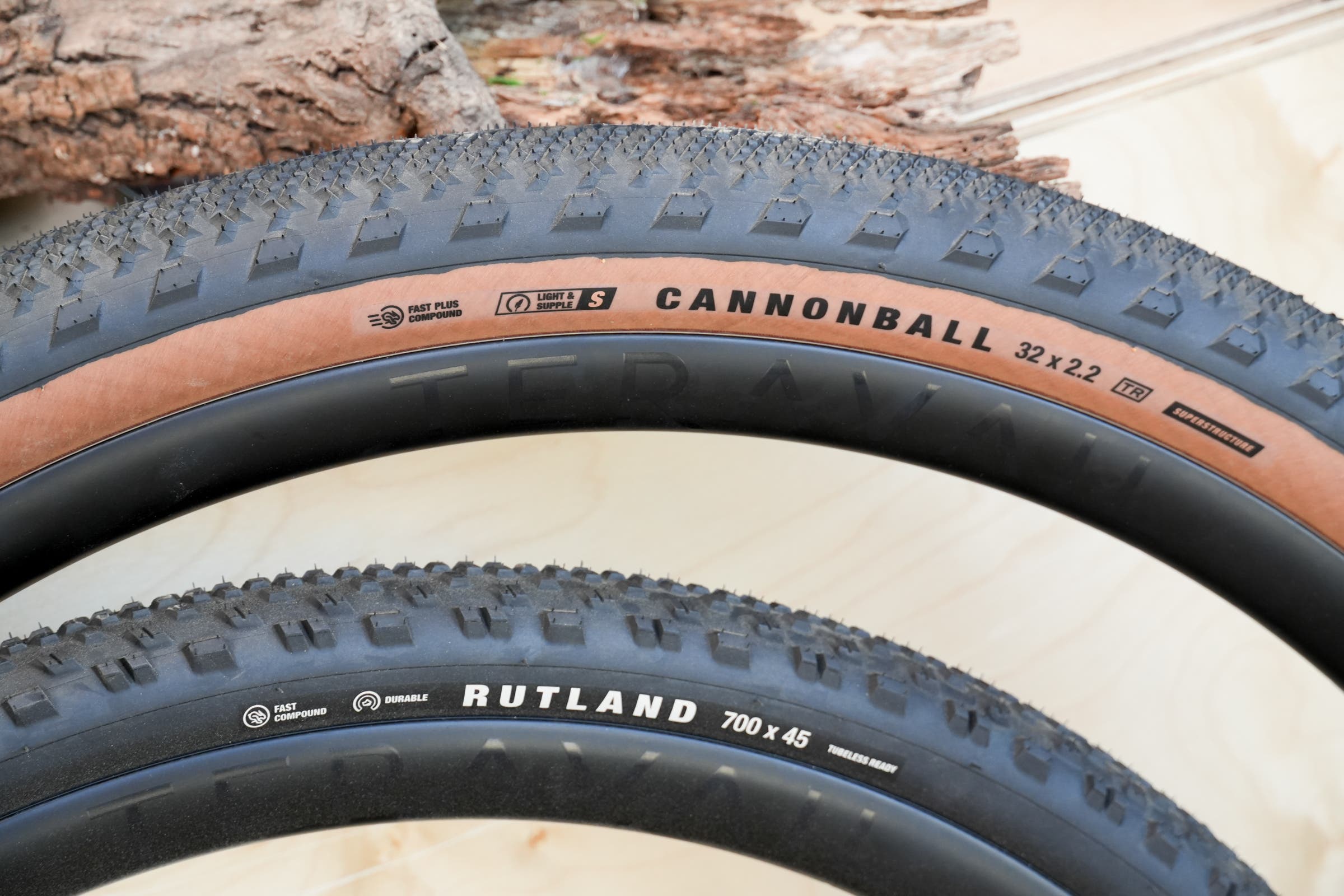
“There have been fits and starts with different wheel sizes over the years, and I think it’s the experiential evidence that is changing a lot of people’s minds,” said Zane Buskley, senior product manager for Teravail. Teravail was a brand that unveiled a 32-inch gravel tire at Sea Otter.
“People are objectively having rapid rides, back-to-back, when trying a larger wheel size. We’re a little bit more focused on that off-road endurance use case, so the benefit is more about where you can go, how far you can go at a level of comfort.”
What 32-inch tech we found at Sea Otter
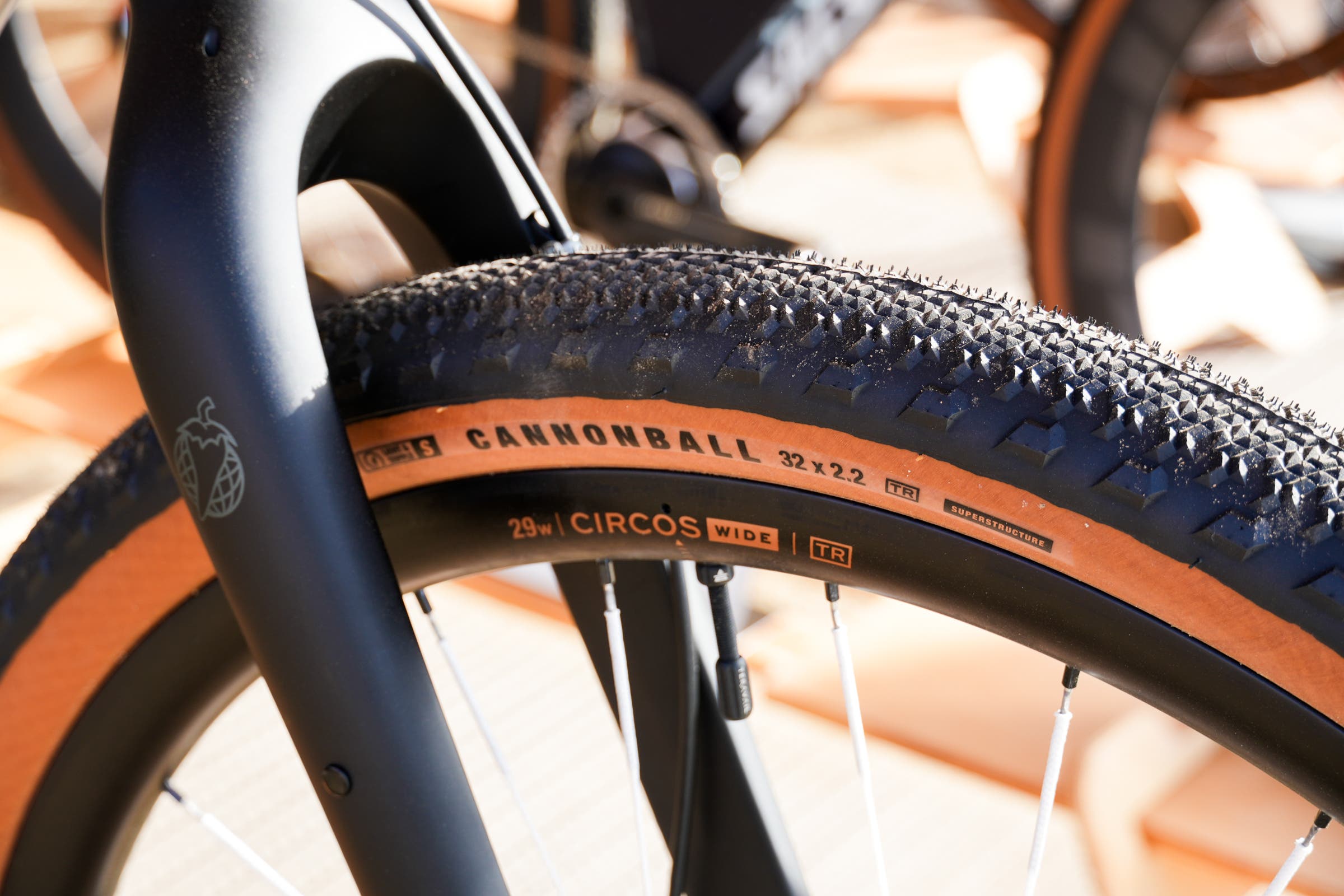
Thirty-two-inch tech dotted the show, but one of the clear epicenters was the combined booths Salsa and Teravail, both brands distributed by QBP.
Both brands are longtime players in the gravel space: the Salsa Warbird was a pioneering gravel bike, while the Teravail Cannonball was early in offering fast gravel treads up to 47mm. Between the two brands, there was the Fargo 32 drop bar mountain bike and a small collection of tires and wheels from Teravail to match.
Perhaps most interestingly, even the gravel tires were in a 2.2-inch configuration. For Teravail, it was a choice made around creating the best possible system for gravel-use specifically. Without the same need to necessarily make the fastest tire at balancing road and gravel demands, the full system — rims, tires, and even the Berd spokes I saw on the Fargo 32 — was curated to make a fast, extra-large gravel system that was ready for bikes to fit onto.
“Evening out, small bumps over long distances, and that’s gravel in a nutshell,” Buskley said. “So that smoothness and efficiency and gravel is gonna be a benefit to a wider section of users in the dropbar use case. And that’s what we’ve experienced.”
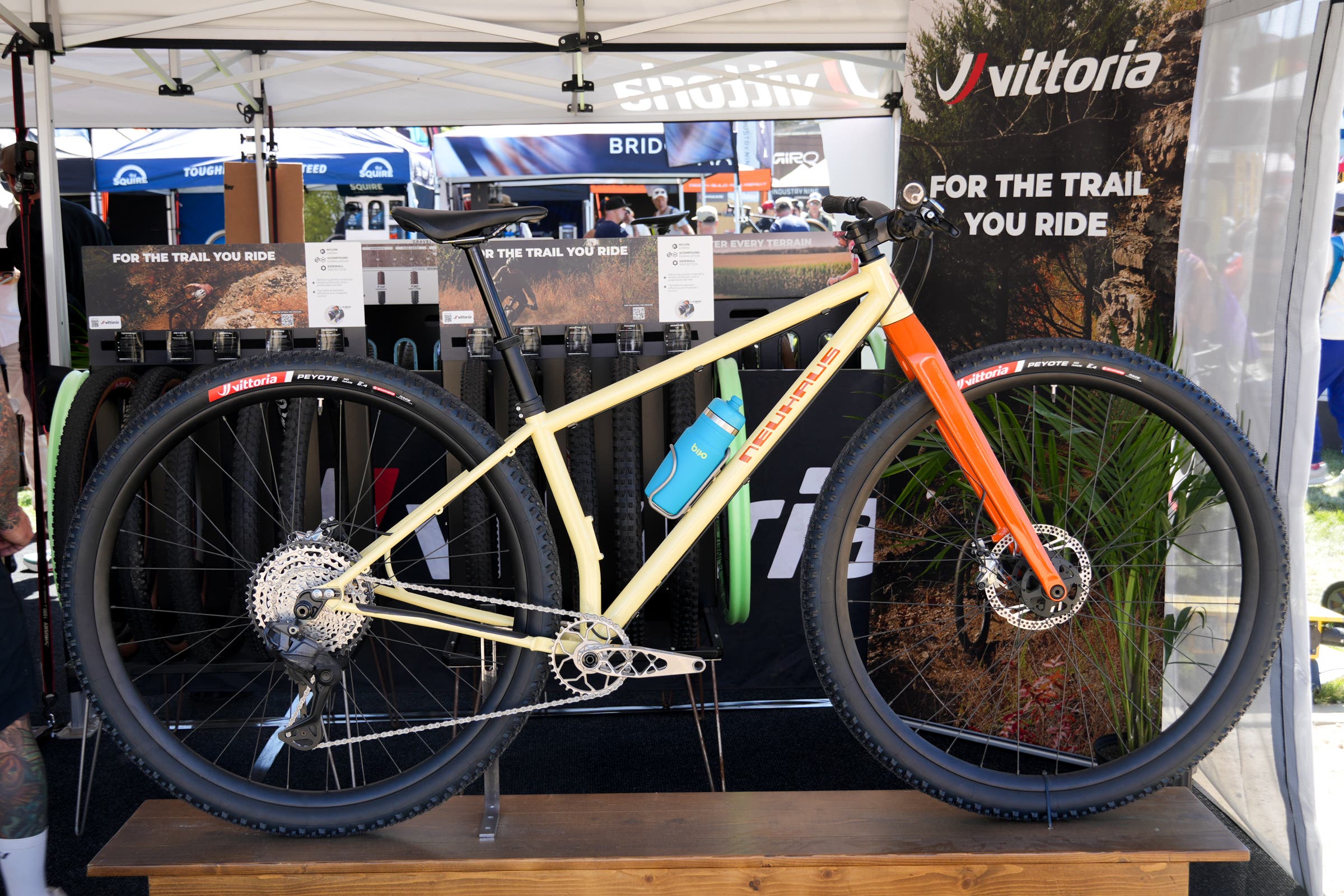
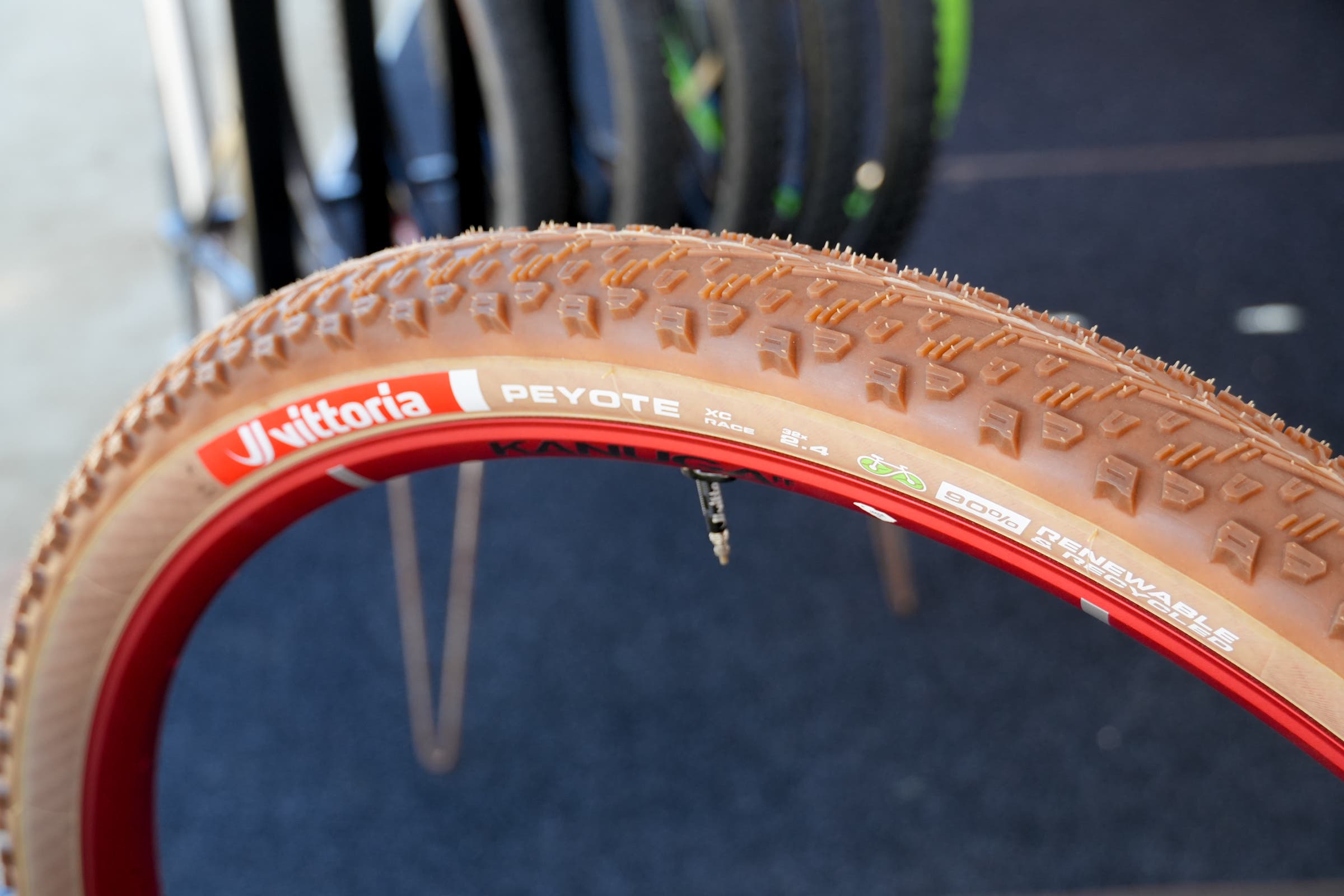
They were not alone. Vittoria and Maxxis have both put a fair amount of weight behind the trend, although they are doing it in slightly different ways. Both Maxxis, with the Aspen ST, and Vittoria, with the Peyote, have celebrated mountain bike treads that have won bike races. Both of them have now released 32-inch versions of those tires in 2.2″ and 2.4″ widths. Those are likewise the tires that most of the bikes at the show were using.
Likewise, Schwalbe, not to be left out of the party, had both its G-One gravel tire and Rick XC tires on bikes as well. The most notable of these was on Faction Bike Studio’s striking 32-inch concept bike, which used 32x55mm G-One RX tires. The Rick was on display with Stinner Frameworks, a brand that had a 32-inch wheelset front and center at its booth.
In terms of wheel-tire combos, a pairing that caught my eye was Light Bicycle and Vittoria. The Anax32 is Light Bicycle’s XC wheel that is predominantly built for mountain biking, but with the right spokes will be the type of wheel that will be used on early 32-inch gravel builds. More are coming, although the brand didn’t specify exactly which models would be bumped up to the 32-inch size, but they did suggest it would probably be in the gravel category.
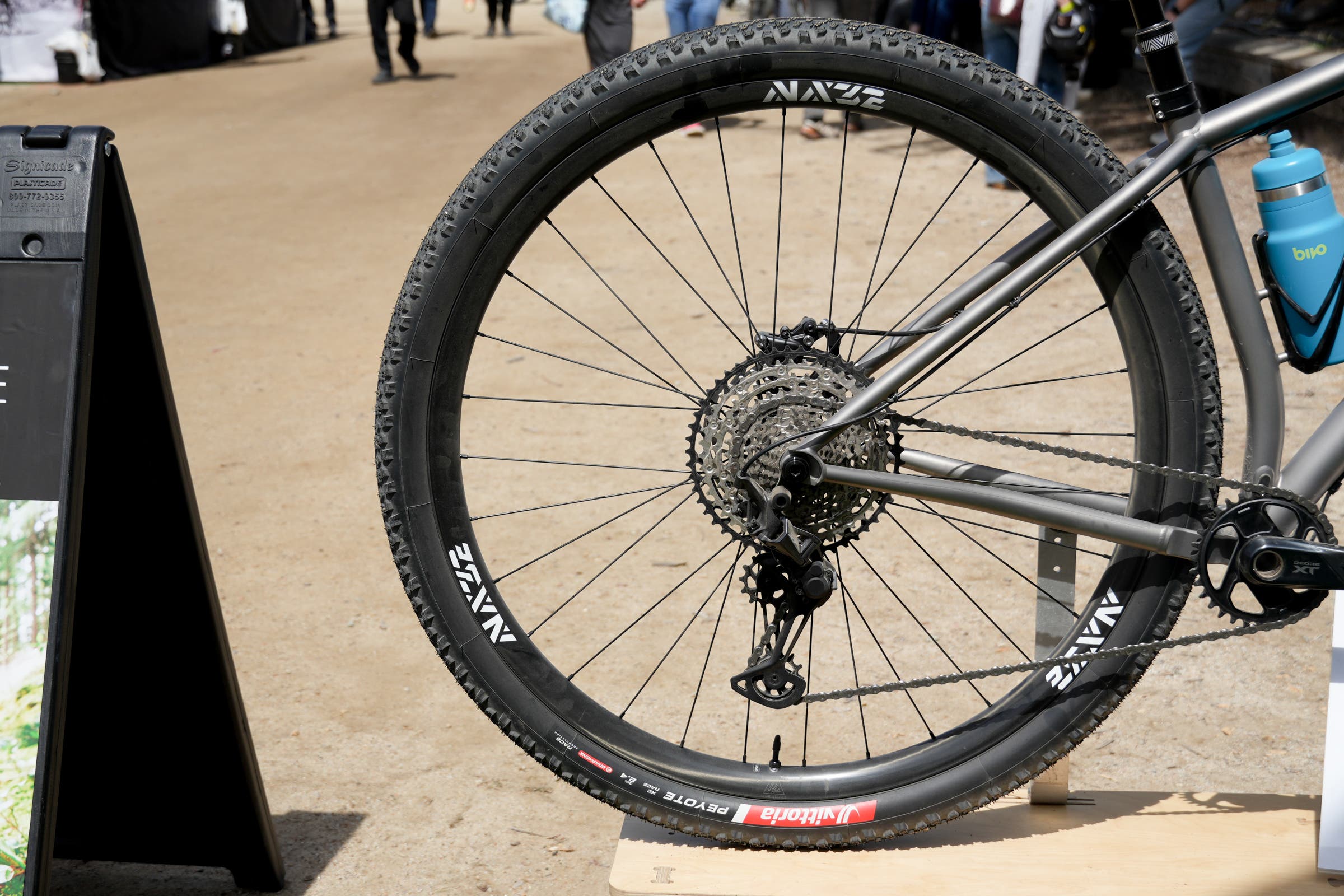
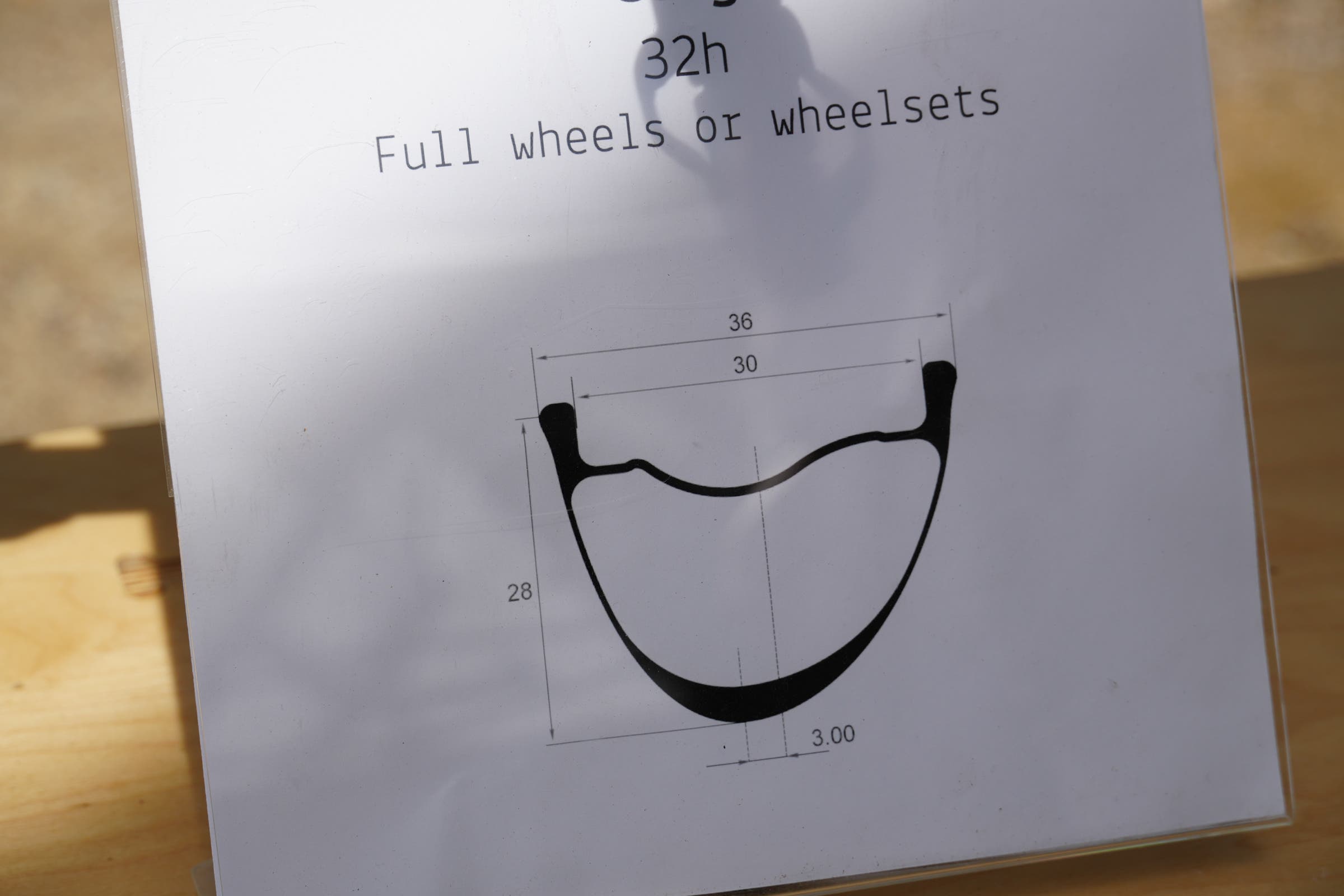
With companies like Light Bicycle entering the 32-inch wheel game, the level of equipment is rapidly improving in terms of weight and functionality as more options will bring more competition and refined wheels at that size.
The bike options are still small, but they will evolve fast
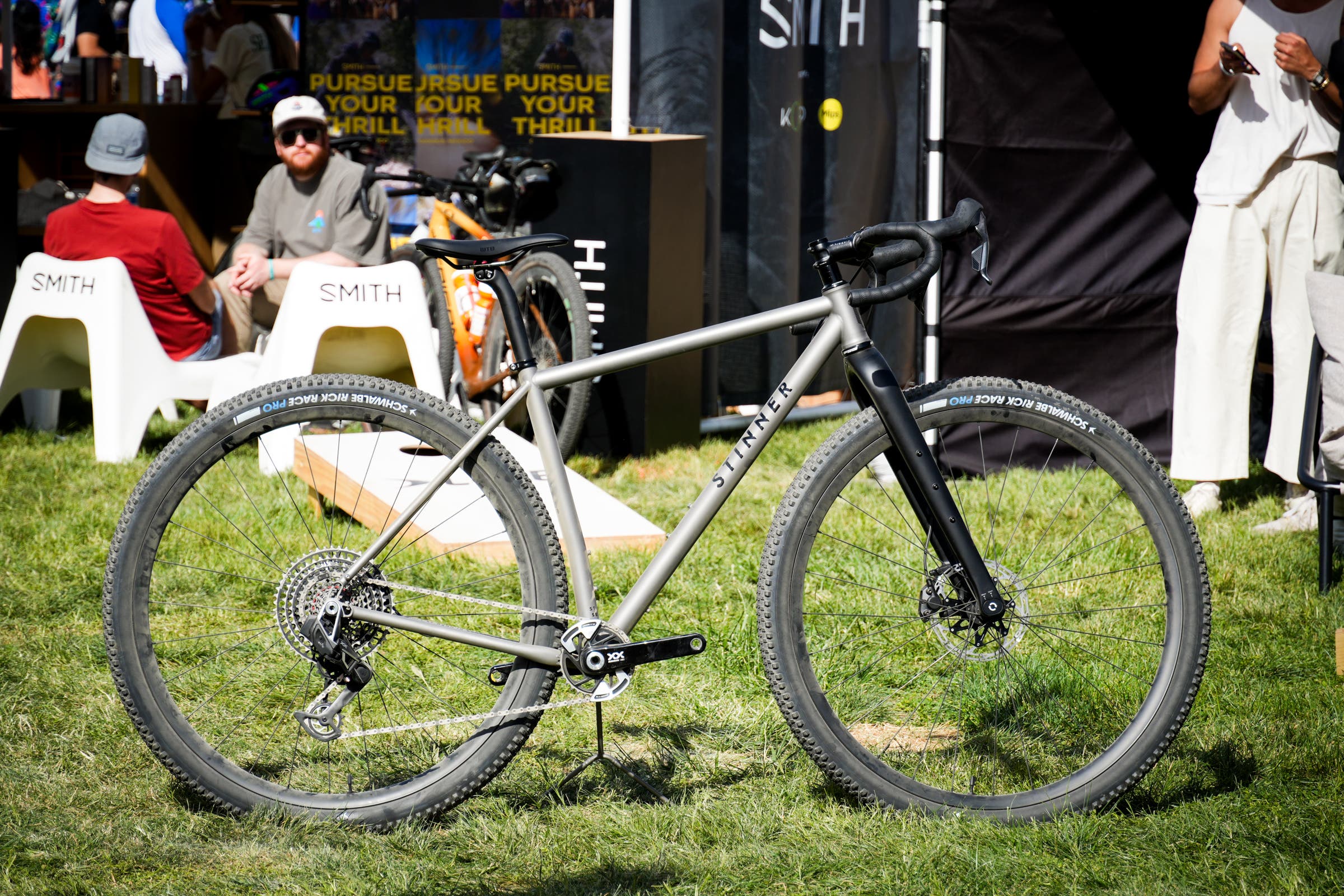
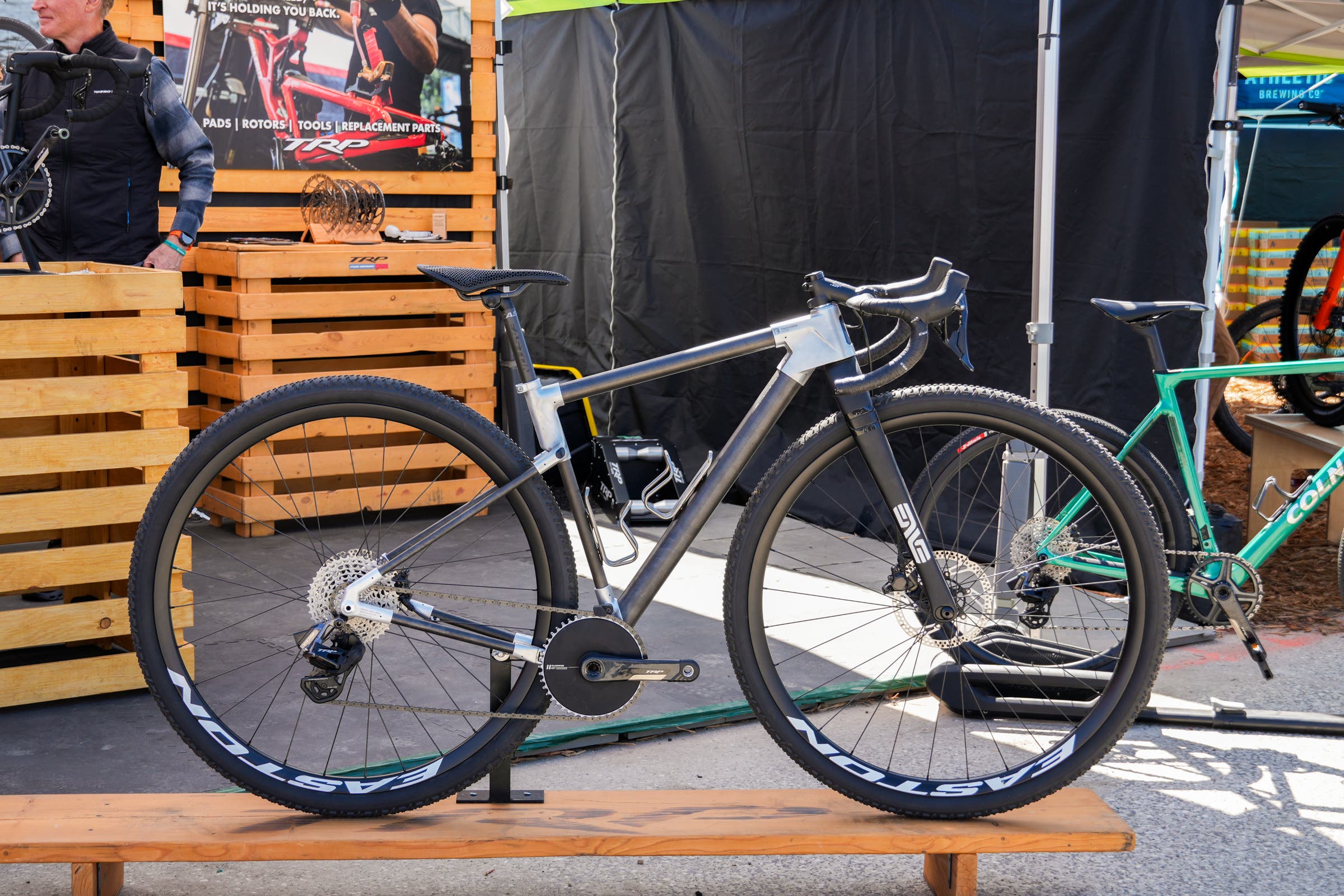
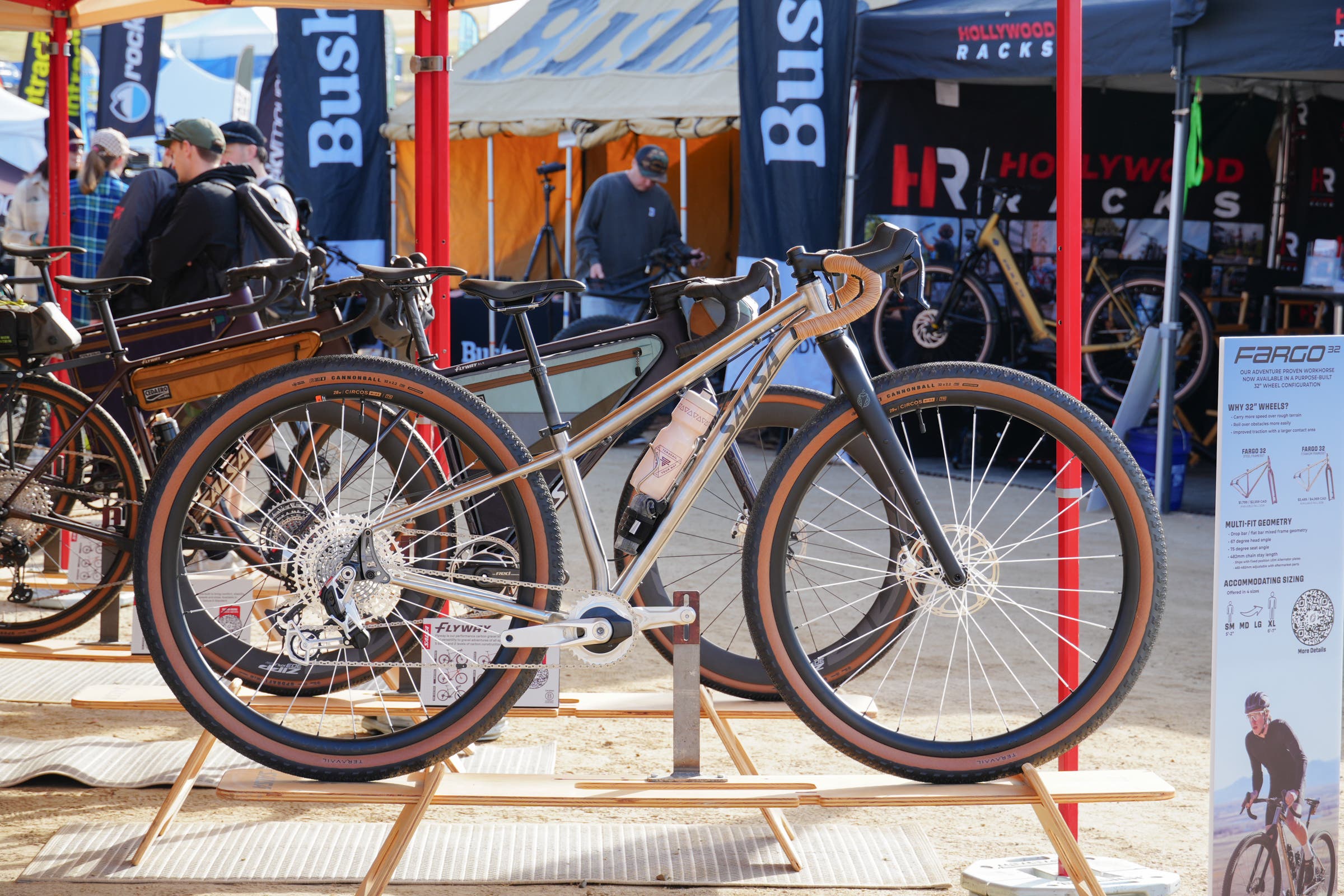
For bikes, there were three gravel bikes that stood out: the Salsa Fargo 32, the Faction Bike Studio concept 32-inch gravel bike, and a Stinner Frameworks concept mule.
The Faction bike stole the headlines with its innovative look and aggressive geometry, and the Salsa Fargo brings that technology to market, but the mule from Stinner is interesting because it is the first of a few iterations that will bring real gravel bike dimensions and feel to the market in a fairly quick timeline.
Relatively tight chainstay lengths, a reasonably effective seat tube angle, and a decently steep front end compared to the other 32-inch models are all encouraging for larger gravel riders. There wasn’t a small bike on display — the size I saw was essentially a 58cm frame — but this was a pretty exciting start to Stinner’s R&D process.
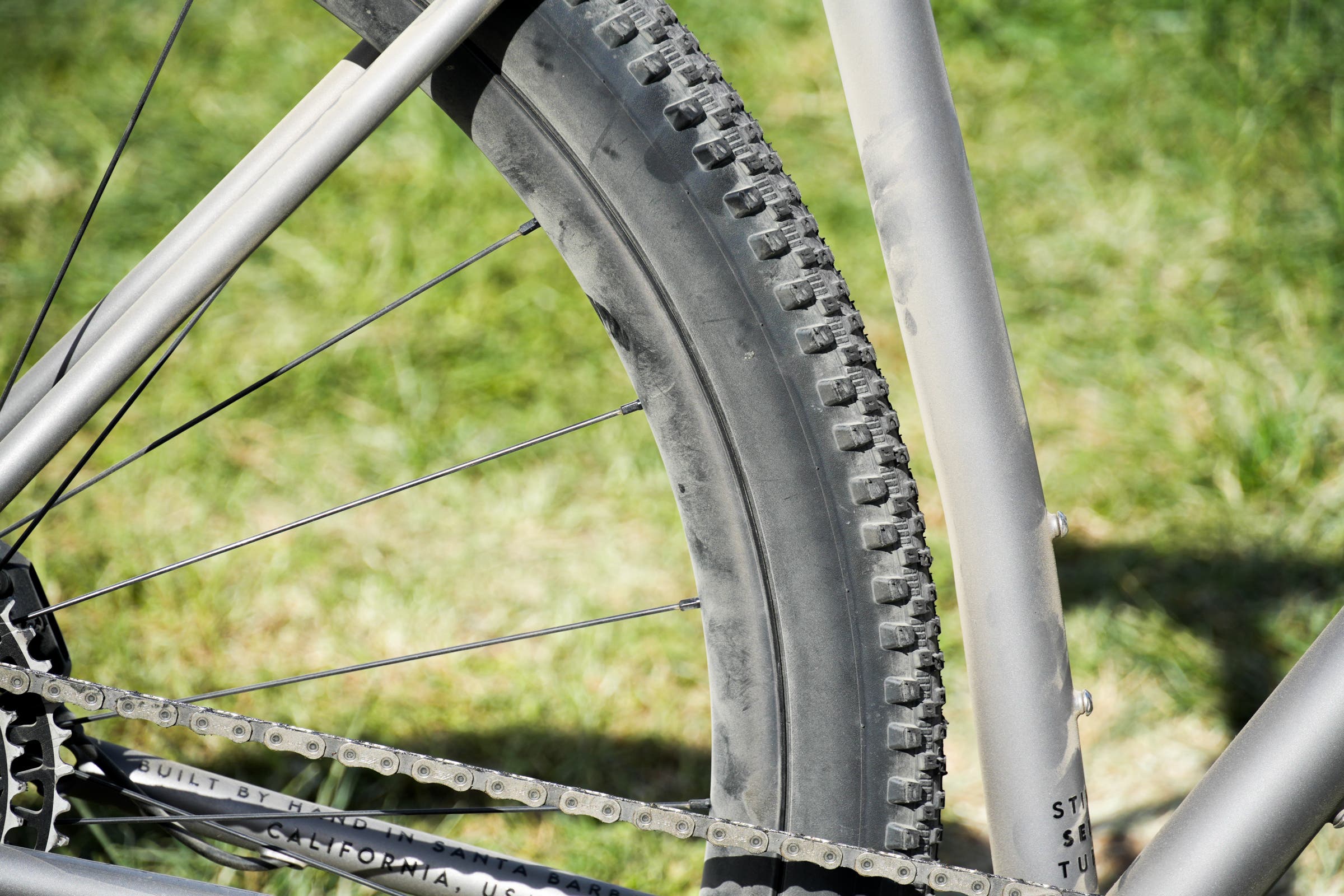
“Our 32-inch bike is here because it is coming whether you like it or not,” Chris Ellefson, product designer at Stinner Frameworks, told Velo. “What we’ve got now is honestly just geometry mule at this point. Now there are enough things that’ll fit where we can actually make a functioning bike.
“Gravel has so many fewer constraints around it. There is no jumping over things, a big old tire coming up and giving you a bite in the ass, you know, and really, by all accounts, it rolls like nobody’s business.”
Interestingly, the bike at Sea Otter was freshly made, no more than a week old. As a small shop in California, the process of adjusting moves quickly, providing a great template to see how 32-inch bikes start to solidify into real players for general consumers.
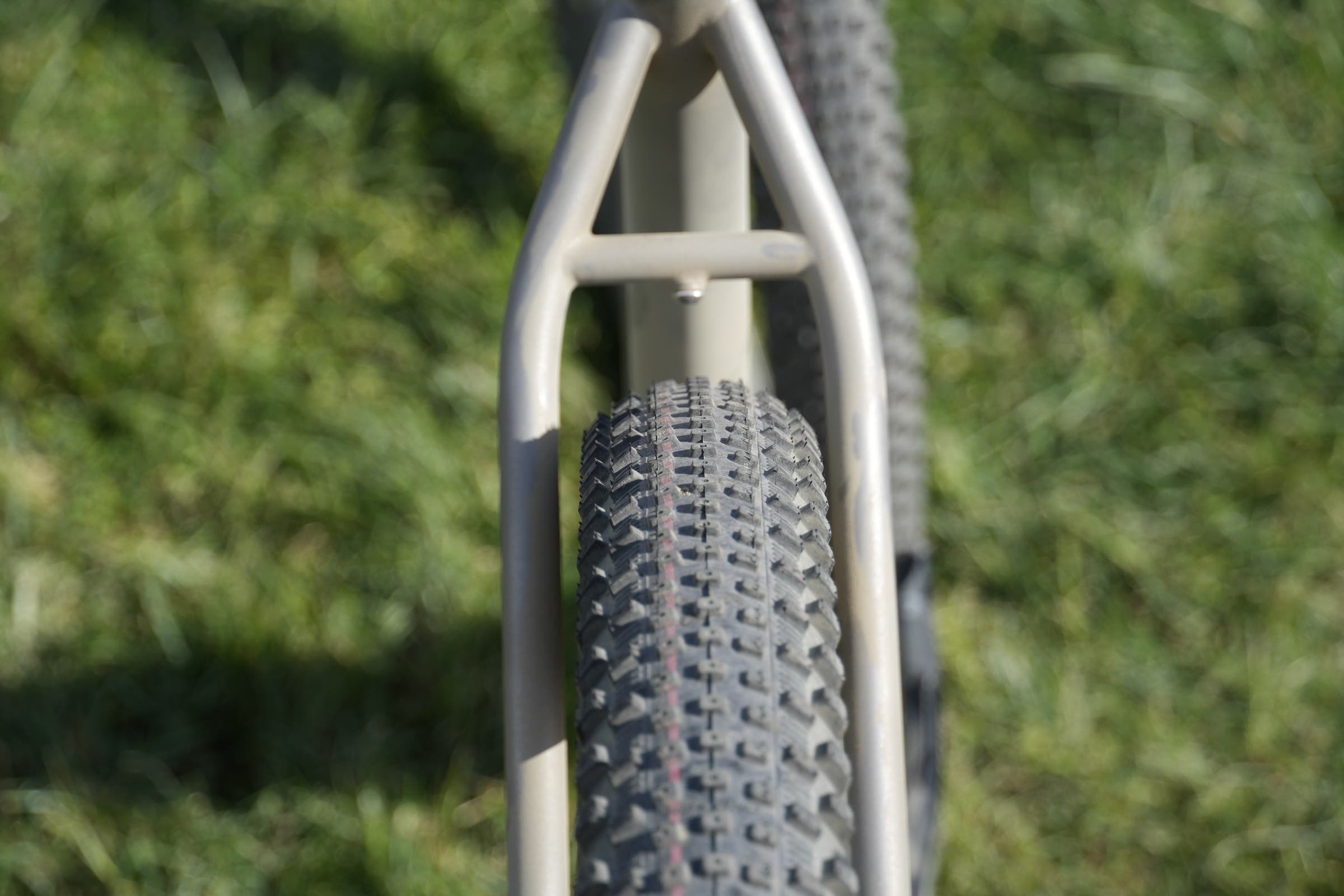
“We’ve talked about geometry a fair bit, but once we decided on something, that bike came together in four or five hours,” Ellefson said. “We built it on Monday, put all the parts on Tuesday, drove up here Wednesday. As a small batch custom builder, traditionally, we iterate really fast.”
“We try to do at least three to four genuine rideable prototypes that some, you know, go out and get a few hundred miles on them before we say, all right, let’s go, let’s put it out to the public.”
In the background, testing is confirming one thing: this wheel size are undeniably rapid
Ultimately, for many insiders, the movement at Sea Otter has coincided with some key testing that is coming from different corners of the bike world.
John Karrasch, or flexfitbyjohn on Instagram, has become a niche-within-a-niche celebrity for his Chung Method testing of gravel and mountain bike tires. The Chung Method is an alternative to lab-based drum testing to create real-world, objective rolling efficiency results that take into account the nature of gravel and trail riding.
For a few years now Karrasch has been providing comprehensive, actionable data on the benefits of wider tires for gravel riding. Over the past few months, he has directed his attention to 32-inch wheels through those new options from Maxxis and Vittoria.
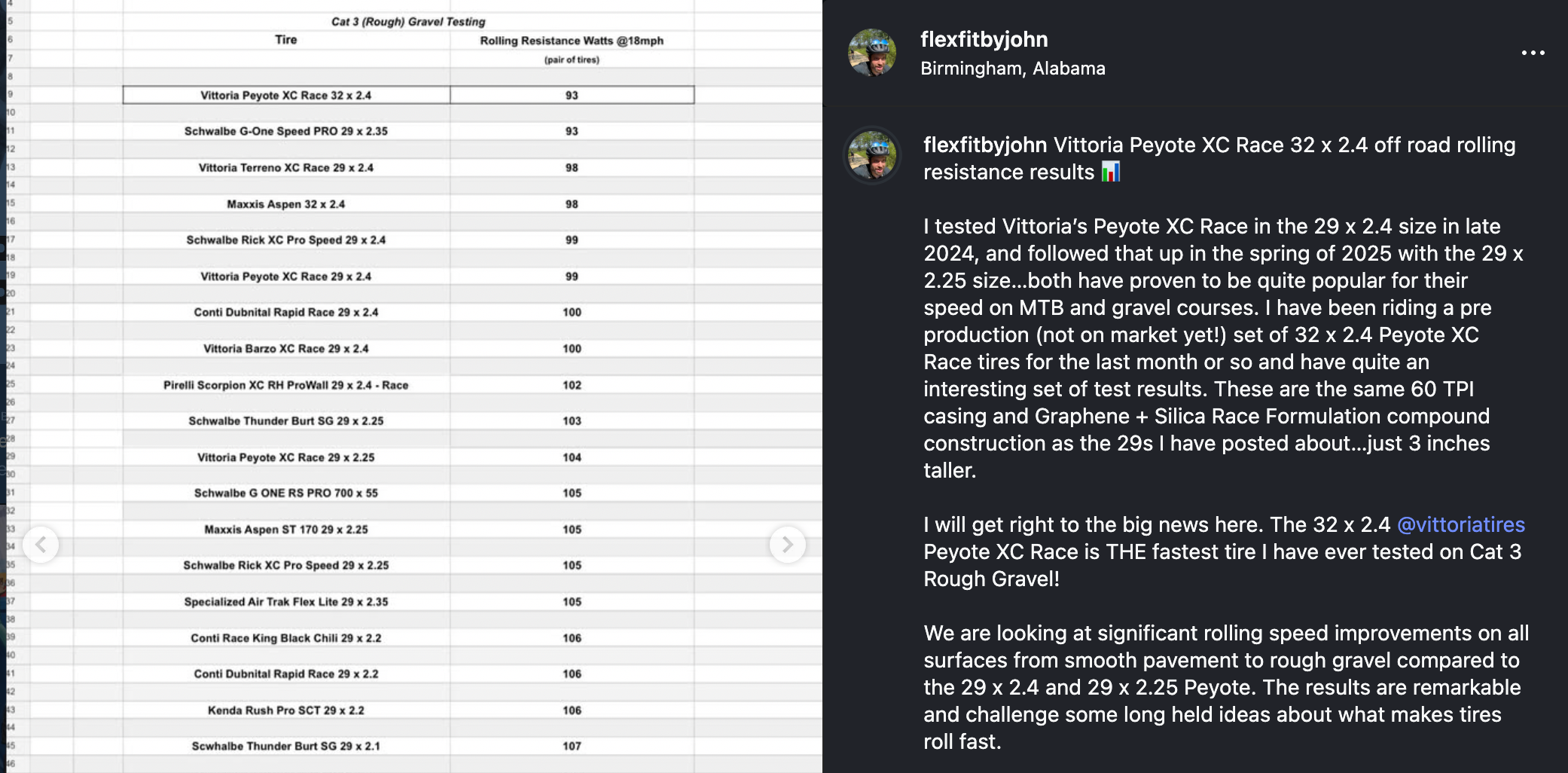
The results have been more emphatic than anything else he has tested.
“The difference in resistance values is roughly 10% faster across every single service, no matter what,” Karrasch told Velo. “There’s like a bigger diameter of everything, 10% roughly, and a bigger volume of everything, that’s like an eight or nine-percent boost in efficiency, roughly.”
There is more of an improvement with rougher terrain, which makes sense considering the science, but what is surprising is those improvements have also appeared on smoother surfaces as well. This isn’t to say the big wheels are coming to road — speed, weight, and aero goals will bring some confounding variables to the higher speeds of road — but it further supports 32-inch wheels as significantly faster for gravel.
“I started out thinking like OK they’ll definitely be obvious things like on rough bumpy things are faster because of rollover,” Karrasch said. “But that is not the end of the story and it seems like maybe the bigger story as far as straight line speed is concerned, is on softer surfaces, which are everywhere off-road. With old gravel systems, you sink into it and it waste energy.
“The bigger wheels have a much bigger contact patch, in addition to the dampening provided by the whole system from the inertia of the bigger wheel.”
You might not like 32-inch, but deny it at your own peril
With 32-inch wheel tech, you are justified in looking skeptically at this new trend in off-road cycling. From the outside, it is easy to see the new tech as a new avenue for the bike industry to provide a new standard of equipment and a new chance for products that can be positioned as innovative and cutting edge.
You are justified in being frustrated at the prospects of the costs of it all as well.
Yet, make no mistake, this trend is driven by a true belief that the new 32-inch wheel standard will create palpable efficiency benefits to professional athletes, and everyday cyclists alike. It is not out of nowhere; it is not unfounded; it is only coming to light as testing results — both public results and private results that big bike brands have found behind the scenes — have made it an undeniable need to innovate or be left behind.
It will cost you, but if you care about speed, you must care about 32-inch wheels.