Published September 26, 2026 04:33AM
Montréal’s attritional circuit has started giving up its secrets for what favorites like Demi Vollering and Mathieu van der Poel will be facing in the UCI Road World Championships.
The opening road races at the Montréal road world championships have shown us where the attacks are likely to fly, how the wheels can quickly fall off a chase, and why the grinding uphill drag to the line could still decide the rainbow jersey.
The junior and U23 races have offered a glimpse of how the circuit races, but the elite fields this weekend will also pack more depth, horsepower, and far more kilometers.
Still, some key takeaways can be made.
Saturday’s women’s race looks tailor-made for Vollering to claim her first elite world road title, but it won’t be easy.
Sunday’s men’s race will test whether Van der Poel can survive repeated climbs up Camillien-Houde and 3,700 meters of elevation gain against explosive climbers like Isaac del Toro and Paul Seixas.
Here is what the racing has told us so far:
Camillien-Houde is where the damage is done
The broad urban boulevards of central Montréal can make this look like a forgiving city circuit. The racing this week says otherwise.
The steep ascent of Voie Camillien-Houde has repeatedly forced the decisive moves in the four road races contested so far.
Viktória Chladoňová and Isabella Holmgren powered away in the under-23 women’s race and settled the title in a two-rider sprint.
In the junior men’s race, Benjamín Noval attacked on the penultimate lap, took company over the top and then left everyone behind. Ashlin Barry dropped his last breakaway companion with just under 30km remaining and held off five chasers over the closing climbs.
The later hills stacked up at Polytechnique and Pagnuelo in the second half of the circuit are giving attackers more space to press their advantage.
That pattern favors riders who have the legs to accelerate on Camillien-Houde and keep piling on.
The winning moves might not come exactly there, but the Camillien-Houde climb is proving to be the race-breaker so far.
Barry showed an early break can survive
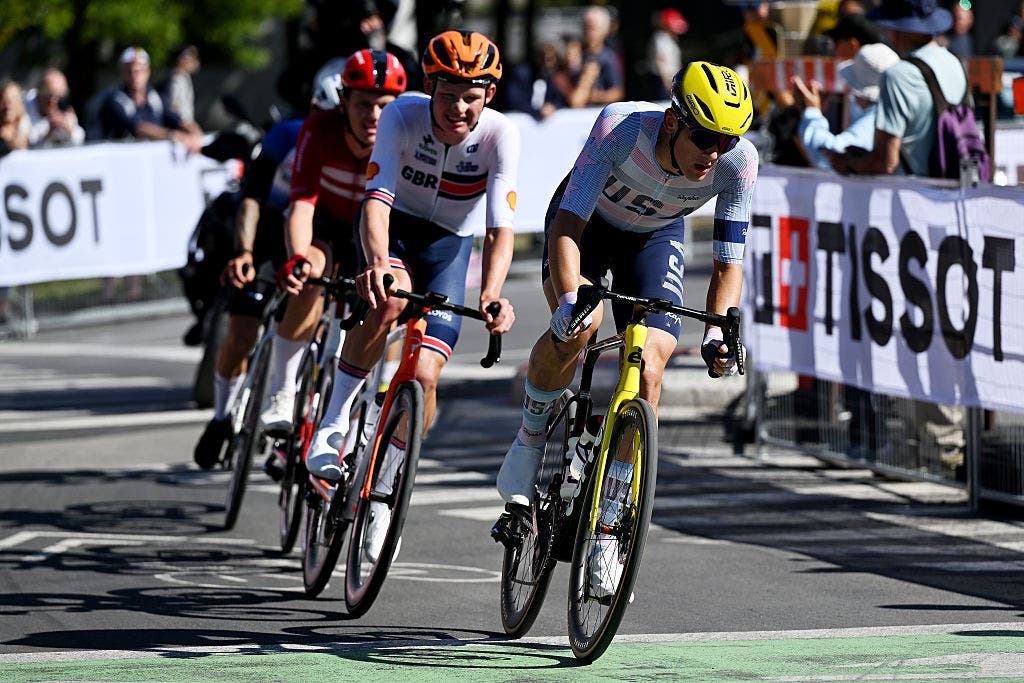
The biggest takeaway came from Friday’s under-23 men’s race.
Barry joined a move early, attacked out of it late, and carried his advantage all the way to the rainbow jersey. The chasers could see him up the road, but seeing him and catching him proved very different things.
That will give ambitious riders like Team USA or an outsider like Toms Skujiņš something to think about this weekend. An early move can have real chances if strong riders get clear and the nations screw up the chase behind.
The elite races present a different calculus, however, than what we’ve seen so far, but more than a few pros took note of Barry’s raid.
Larger and deeper teams have more riders to control the gaps, while the longer distances give the favorites more time to bring a break back, but cooperation (or the lack of) between rival national teams can give breaks some air.
Barry’s ride proves the circuit rewards the brave, and worlds has a long history of occasionally serving up a rogue winner.
The fast finishers still have a way in
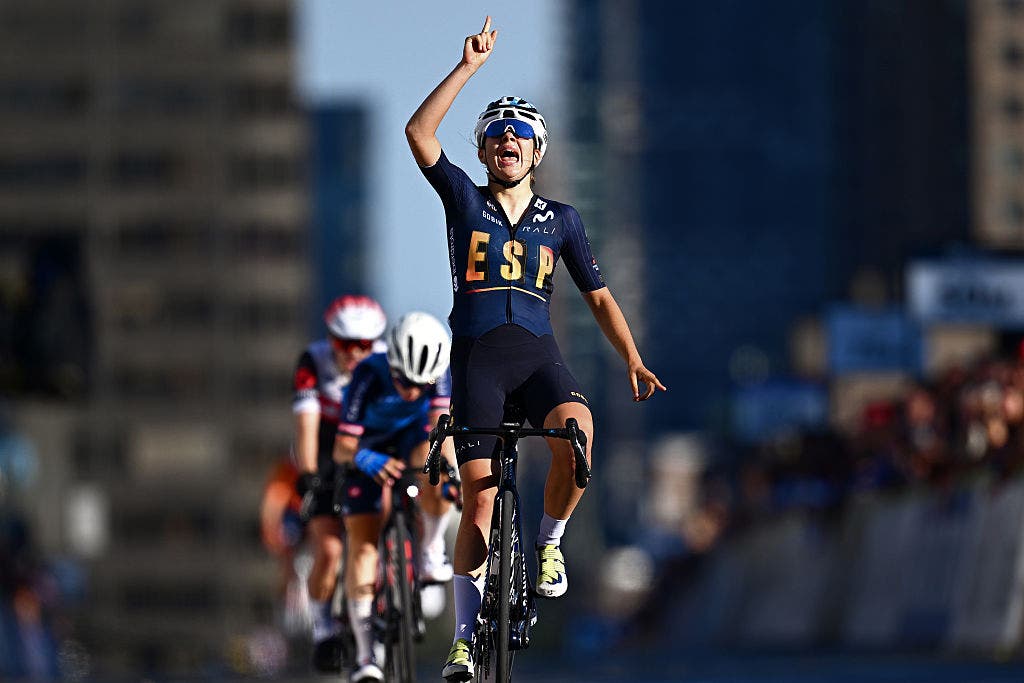
Friday’s junior women’s road race produced the world’s first reduced bunch kick. Spain’s Alejandra Neira won in a five-up drag to the line to take gold.
That’s good news for riders like Michael Matthews or Lotte Kopecky, who will be holding out hope if a small group survives.
The key is surviving over Camillien-Houde and reconnecting with the lead group. A deeper elite field could see more regrouping of scattered riders than the earlier splintered age-group races have shown us so far.
And if several riders do arrive together, the grinding uphill finale requires a mix of cold-blooded patience and perfect timing.
The road keeps grinding upward toward the line, and going too early could see riders getting swarmed, and leaving it too late could mean missing a medal.
Position and weather could change everything
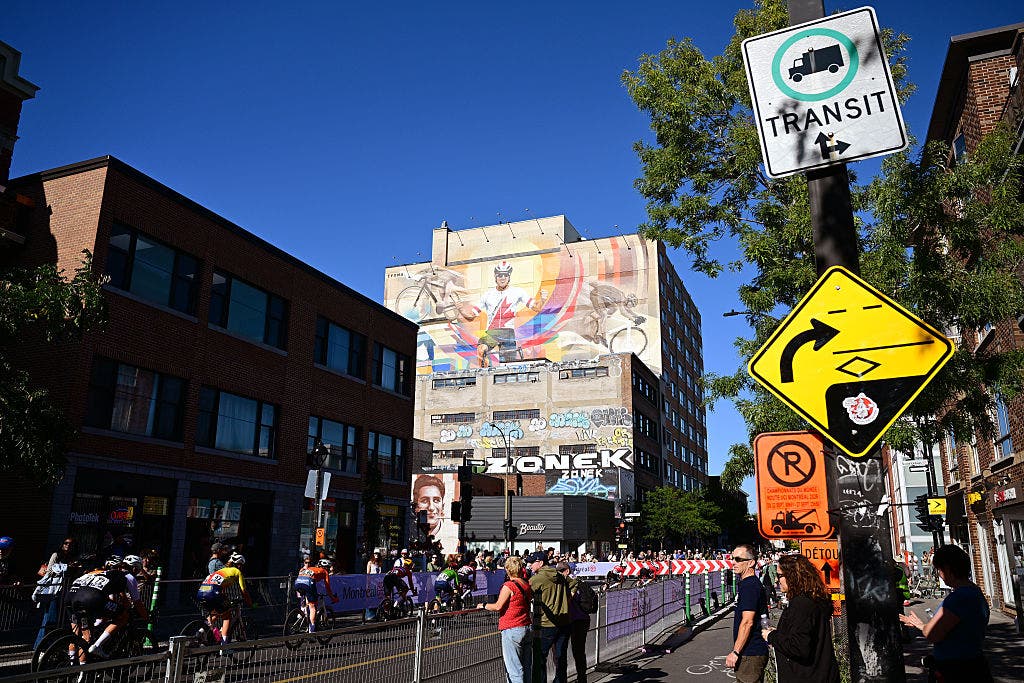
Montréal’s urban circuit is largely contested on wide roads and offers plenty of room to move, even if team cars have struggled.
There are a few traffic islands and other pinch points that will make positioning important before the climbs, especially on some of the cornering if the group is still big in the closing laps.
The course is also littered with painted pedestrian crossings and white traffic lines.
So far, Montréal has served up crisp, dry autumn weather, and we haven’t seen a lot of riders losing the grip on the corners.
There is a small chance of rain late Sunday, but forecasters are not calling for showers until after the men’s race ends. If rain comes earlier, the course could turn treacherous.
Montréal’s battered roads have drawn some complaints, but as one local said, that’s what Canada’s harsh winters do.
Crews have patched up the worst sections, and any remaining bumps and divots have been highlighted with bright neon paint marks.
So far, besides a few minor crashes, the peloton has been able to handle the demands of the course.
That could change with the bigger, more crowded pelotons or if the weather suddenly changes this weekend.
Who does it favor?
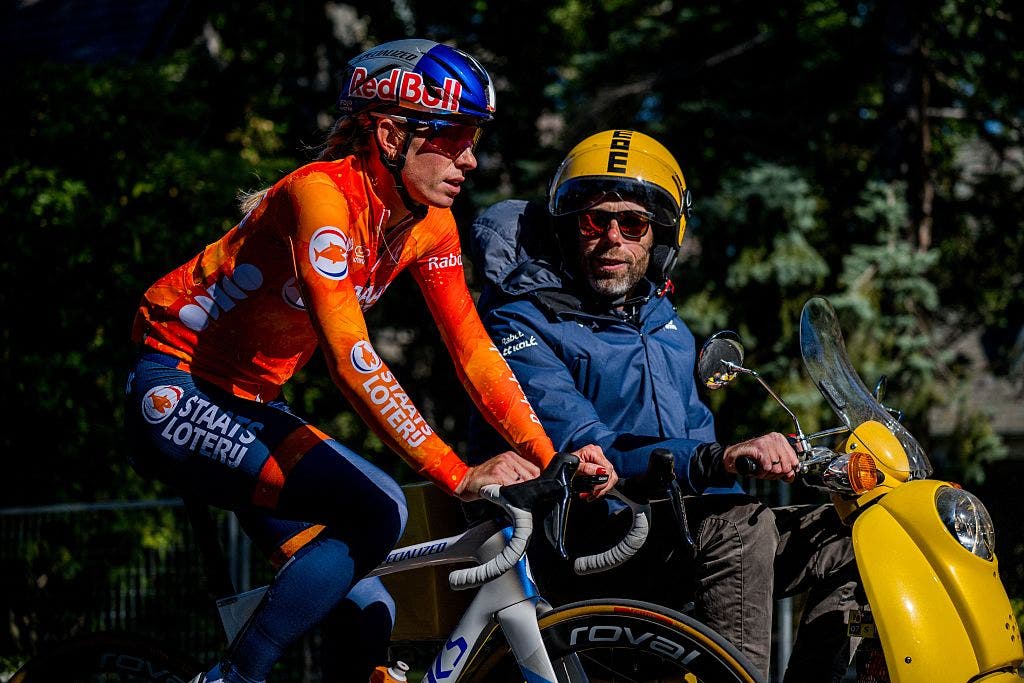
Vollering should relish that sort of attrition, and after being on a tear for much of 2026, she’s the five-star favorite.
Even with a loaded Dutch team, the two-time Tour de France Femmes champion will need to win this one alone.
Top rivals include Kasia Niewiadoma and rising Spanish star Paula Blasi.
The course might be a touch too hard for Kopecky or Marlen Reusser, with American road worlds debutant Kate Courtney entering unknown territory. Don’t count out rider like Elisa Longo Borghini or rising Swiss star Noemi Rüegg if it comes down to a reduced bunch kick.
For Van der Poel, the question is whether his classics-built horsepower can hold out on the incessant climbing. Wout van Aert and Mads Pedersen are also on the bubble on this course.
At 3700m packed into Sunday’s men’s road race, the accumulative elevation — at least on paper — looks almost like a grand tour mountain stage.
It’s less than the total elevation at Liège-Bastogne-Liège, at about 4,300m, but more than Tour of Flanders, which usually averages around 2,200m.
Lighter riders like Remco Evenepoel, Seixas, Del Toro, and Tom Pidcock could hold the advantage.
Fatigue and attrition, however, are the ultimate deciders in any road worlds.
At 180km and 273km, respectively, these are the longest one-day races that the top women and men will race all season.
Tactics and plans only count for so much at the six-hour, monument-distance courses that make the worlds so unique.
In the closing laps, it’s whoever still carries a few diamonds in the legs who usually brings home the rainbow jersey.