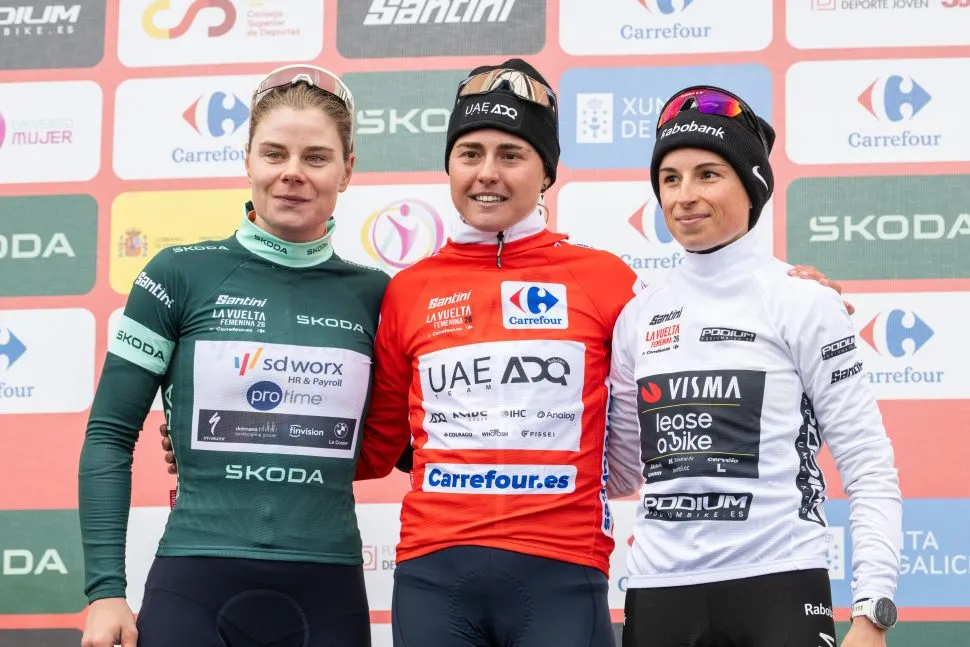
The Vuelta Femenina concluded last weekend in a blockbuster final weekend of climbing in northern Spain. Despite the presence of the two most recent Tour de France winners, Catalan rider Paula Blasi stormed through the pack to claim the overall title, her first at a Grand Tour and the first overall victory for a Spanish rider at the race.
Blasi’s victory will be historic for that reason, but also for what it signifies in the history of the women’s sport. Having claimed a breakthrough victory just weeks after her first Classics title at Amstel Gold, 23-year-old Blasi is spearheading a young generation ready to tackle the long-standing greats of Demi Vollering and co. She’s not alone either, with two riders under the age of 25 on the final podium for the first time in this modern era of women’s cycling.
That comes after a week of gripping racing, on a route that employed historic climbs and a varied pool of profiles. Having delivered what could go down as the best Grand Tour of the year, the Vuelta Femenina marks a great step forward for the women’s peloton, even without Demi Vollering or Lorena Wiebes there to assert their dominance.
A new generation rising through
The riders capable of winning women’s Grand Tours have been firmly concentrated in recent years, similar to the men’s sport. The same old names in Demi Vollering, Kasia Niewiadoma-Phinney, Elisa Longo Borghini and the returning Anna van der Breggen and Pauline Ferrand-Prévot have occupied most of the podium spots since 2023. All of these riders are 29 and over, with recent podium finishers Pauliena Rooijakkers and Marlen Reusser also over that age cut-off.
Blasi’s victory made her the youngest winner of a women’s Grand Tour since 2009, back when the races weren’t televised, and women were barely getting paid to ride their bikes at the top level. In that sense, it’s important to highlight that Blasi is the first Grand Tour winner to have only competed in the WorldTour era.
French 21-year-old Marion Bunel also became the youngest podium finisher in the history of the Vuelta Femenina, beating Gaia Realini’s record by just a few months. Bunel has been touted as the next great hope at Visma-Lease a Bike, having been signed after an impressive win at the Tour de l’Avenir in 2024. It’s the kind of story we’ve seen plenty of times on the men’s side, where Tour de l’Avenir performers shine on the elite stage soon after.
As much as we love seeing the cast of current stars, your Vollerings and Ferrand-Prévots of the world, a new wave of talent is coming through. They have benefited from a professionalised ecosystem from a young age, allowing them to concentrate on the sport from their teenage years.
Riders like Blasi and Bunel have come through development systems, a fully-fledged under-23 calendar, plus optimised training and nutrition programmes that are now rolled out within the junior ranks. With that support behind them, these young GC contenders will be faster than their predecessors and hit peaks earlier in their careers. In other words, they won’t have to wait until the age of 30 to win a Grand Tour. We’ve had this hypothesis for a while, but seeing Blasi and Bunel drop Van der Breggen on the Angliru was the confirmation we needed.
Big climbs for the big event
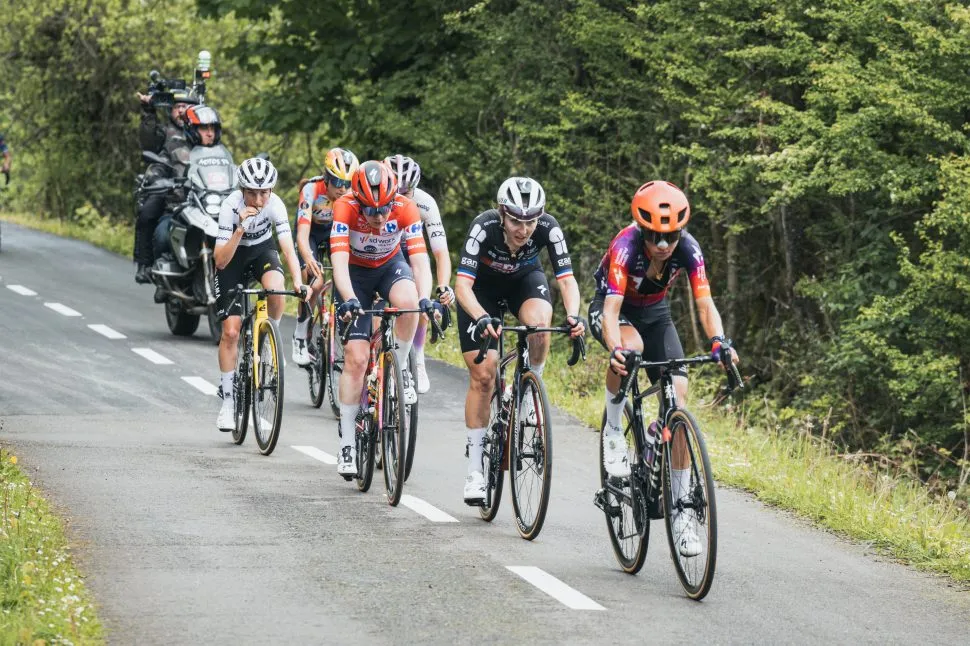
Before the Tour de France Femmes was introduced in 2022, women’s stage races were often light on mountain stages. Downhill finishes were commonplace, and we’d barely get to see the riders tackle the same mythical climbs seen in men’s racing.
Now we’re getting proper mountain stages, using the climbs that have defined the men’s races for decades. This year, three five-star climbs characterise the women’s Grand Tours, with the Colle delle Finestre and Mont Ventoux set to wreak the same havoc as the Angliru did at the Vuelta.
As we saw on Saturday, these headline climbs are great for the race. They’re not only good for viewing figures, but they also serve as an important battleground for the pros.
With more dedicated mountain stages, riders like Petra Stiasny, a purebred climber, and Sarah Gigante can have their moments in this race, which wasn’t the case at the Giro a few years ago. Where mountain specialists felt sparse, they now feel as though they’ve been handed a leg up. That should reinvigorate these riders, who have often been overshadowed in the past by the well-rounded likes of Vollering and Ferrand-Prévot, who manage to balance out Classics goals with the Grand Tours.
Attracting athletes from different sports
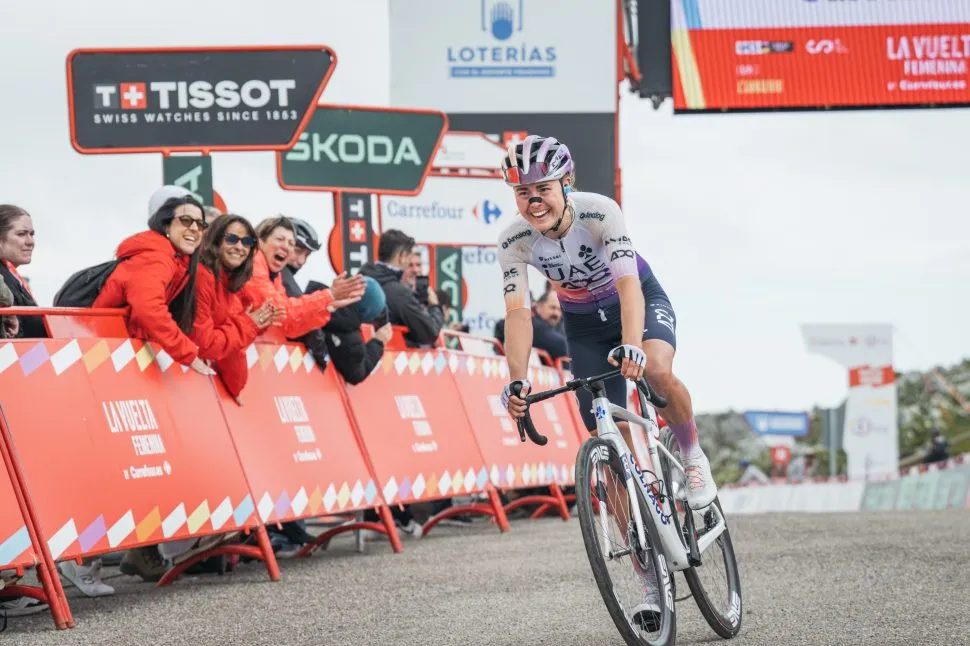
The Vuelta’s final stage also highlighted riders who had transitioned to cycling late in life.
This isn’t cycling’s first taste of this, having seen Remco Evenepoel join the peloton after a youth career at football club Anderlecht, but it was writ large at the Vuelta Femenina. Last week’s winner Blasi was a runner then a duathlete before signing a WorldTour deal in 2025. The stage winner atop the Angliru Stiasny was also a triathlete before abandoning the other two elements in favour of two wheels.
With the growing development of women’s cycling, it will be more attractive for athletes transitioning from other sports. Salaries on the WorldTour are now at a more comfortable wage, and the success that riders like Stiasny and Blasi are enjoying shows that the switch can be made successfully. This will only lead to the quality of the bunch continuing to grow.
Improved Grand Tours are to come
While the tide is slowly turning in women’s Grand Tours, there are still some steps to take. The Vuelta has done some big work in moving the sport forward, but the Tour and Giro later this year are sure to showcase another example of the improved quality and diversity of the women’s peloton.
Time-trials, for example, should be seen as a core skill for any GC leader. We’re getting a taste of that later this year when the Tour de France Femmes employs a decisive race of truth, while the Giro opts for a GC showdown in the form of a mountain time-trial. The Vuelta hasn’t used an individual time-trial since 2021, when the race was still going by its old name. By throwing these in, these Grand Tours should feel more complete and foster winners with a balanced set of skills.
In an ideal world, we’d also enjoy a longer race. Seven or eight stages don’t feel quite sufficient. A ten-day Vuelta or Tour de France Femmes should come next, and it’s not overly ambitious either. The interest is there, and a longer race would allow organisers the chance to experiment with the route and use a more varied selection of stages. Plus, it would finally breathe life into the dying art of the breakaway at women’s races.
While the goal has never been to be equal to the men at a lengthy and perhaps excessive three-week length, the women’s sport is ready to expand to a ten-day event. With the youngsters bursting through with all their added experience and professionalism, the physiology argument goes completely out the window. They’ll be more than equipped to handle a race that’s just a few days longer than they are in their current form. The only thing missing is the impetus of race organisers and sponsors to back that expansion.
So if it means we get a longer version of this Vuelta. I’m all for it.