Updated June 11, 2026 04:45AM
Remco Evenepoel just shared his functional threshold power, and it’s huge. It’s also remarkably similar to that of his Tour de France foe Tadej Pogačar.
Functional threshold power, or FTP, is the output a rider can theoretically hold for an hour. It’s used to set power zones for training and gives easily comparable bragging rights over buddies.
Evenepoel leaked his “magic number” on Wednesday – it’s around 425 watts. At an estimated 64kg, that’s 6.6W/kg.
According to our recent analysis, Pogačar’s FTP is in the range of 420-440W – for King Pog, that calculates to around 6.7W/kg.
To point out the obvious – that’s a lot of watts. Try to pedal that hard on your indoor trainer for a few seconds, we dare you.
But what does that mean in the context of the Tour de France?
Is Remco on par with Pogi ahead of the Big Show?
Can the Belgian top the Tour’s Big 4 and bring Red-Bull Bora-Hansgrohe its much-wanted maillot jaune?
Here’s what we can learn from Evenepoel’s rare data reveal – and if we can really learn anything at all.
Evenepoel’s Tour de France threshold session
Evenepoel shared his data during a YouTube video he shared to his channel Wednesday.
The 23-minute film was recorded during a trip to the Teide volcano and provides a rare glimpse into a pro altitude camp.
It features all the expected vlogging fluff – café stops, gratuitous bike shots, wholesome “banter” with staff, and a bad soundtrack.
The juicy part is the workout.
Evenepoel takes us behind the scenes of a 4.5-hour training ride punctuated by an onslaught of threshold intervals.
For those who want to know, the protocol is 1 x 15’, 2 x 12’, 1 x 10’, 2 x 8’. Ouch.
It’s a key climbing workout designed to harden Evenepoel’s legs for the long climbs of the Tour de France, an area where he’s repeatedly shown weakness.
Evenepoel’s outgoing trainer Dan Lorang – who is set to leave Red Bull for Lidl-Trek – makes a cameo role in the segment.
Lorang takes lactate readings with a portable pinprick analyzer while Evenepoel gasps for air after various intervals. The trainer explains after two of Evenepoel’s efforts that his blood lactate is around 3.5-3.6mmol.
“It’s perfect,” Lorang says after one of the readings. “420 watts would be under threshold, at 425 we are somewhere there when we’re talk about these longer efforts.”
FTP, revealed.
Evenepoel vs. Pogačar
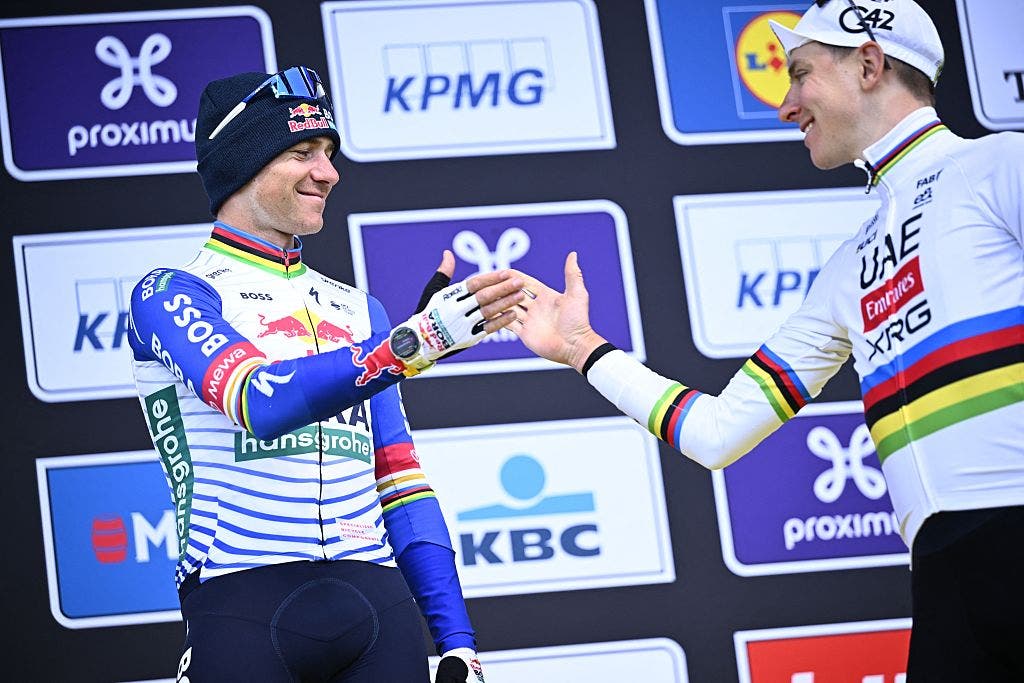
Lactate testing is the gold-standard method for calculating power zones and dialing in workout intensity.
The 20-minute tests or ramp protocol you’re fed by at-home training apps are only approximations.
The correlation between power output and lactate levels is slightly different for all athletes. Repeat testing and expert interpretation is typically needed for an athlete to understand their unique power-lactate curve.
However for all athletes, LT2 – or approximately FTP – typically sits at a blood lactate concentration of around 3.5-4.5mmol.
This allows us to assume Evenepoel’s second lactate threshold is around 425W.
For comparison, our data sleuth Zach Nehr has repeatedly estimated Pogačar’s FTP to be around 420-440W.
We can also derive Evenepoel’s Zone 2 power from what’s shared in the video.
Standard FTP-based training models put Zone 2 at between 60-75% of functional threshold output. In which case, we can theorize Evenepoel’s all-day Z2 pace is between 255-320W.
And what’s Pogačar’s Zone 2 power?
He explicitly said in a podcast with Peter Attia in autumn 2024 that his top-end Z2 is 320-340W.
Context is key
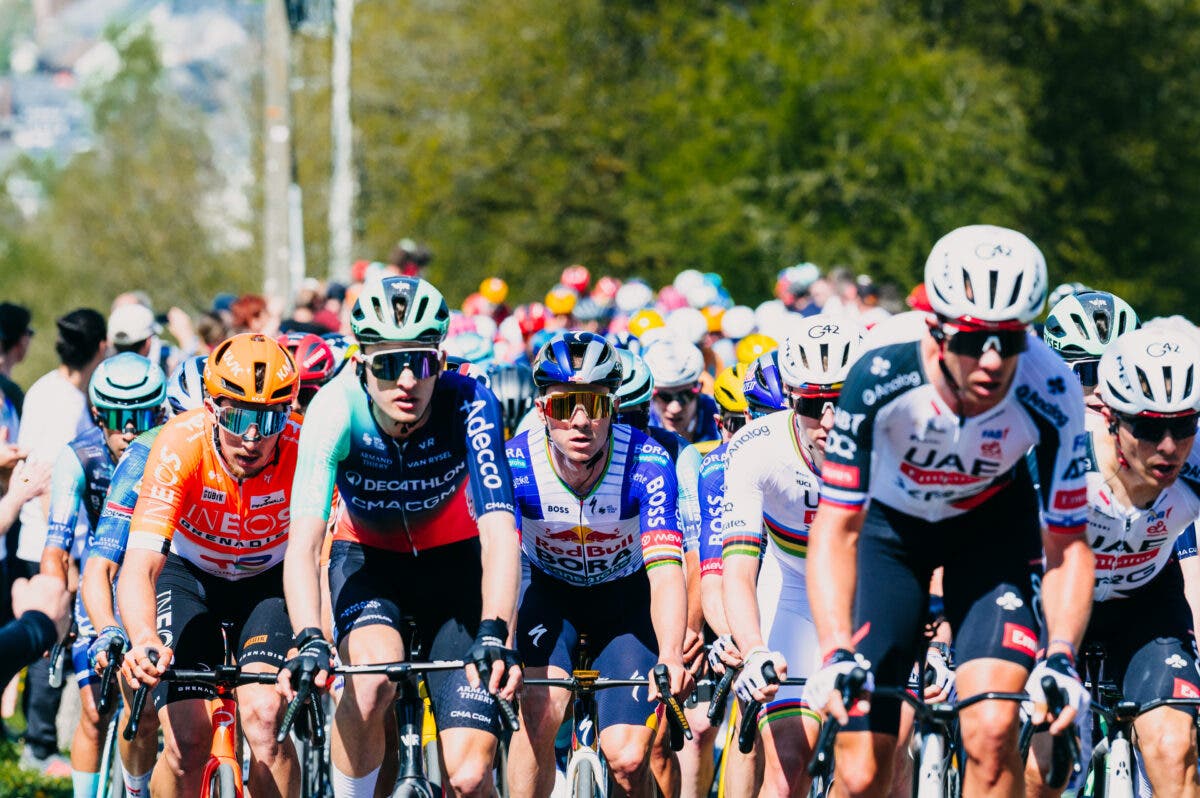
So, some rudimentary analysis suggests Pogačar and Evenepoel have similar power outputs.
But in reality, the comparison is futile, and extrapolating a meaning to the 2026 Tour de France is pointless.
What we understand of Pogačar’s wild wattages is based on a now-outdated interview and a single Strava upload from February.
Likewise, Evenepoel’s video was filmed several months ago – the last time he was known to be on Teide was March. And more to the point, it’s possible to pick many holes in the assumptions made about his thresholds.
Even if the estimates of FTP and zone 2 are valid, they don’t mean masses in the wider context of a race.
The Tour de France is now defined by the repeatability of peak outputs – aka durability. Basic training zones don’t reflect an athlete’s ability after four hours of racing and 4,000m of climbing.
What’s more, Evenepoel has previously cited his ability to hold Pogačar’s explosive 3-5 minute power as his ultimate kryptonite. A similar FTP does not guarantee similar performances across shorter efforts.
Why share the data, anyway?

What’s maybe more interesting is why Evenepoel chose to share his data.
It’s increasingly rare for WorldTour pros to publish their numbers. Athletes seldom post their rides to Strava, and the majority who do keep their wattages on lock.
A data reveal is sometimes due to user error.
However, these rare insights are sometimes considered to be an athlete purposefully broadcasting a message.
Mathieu van der Poel said he broke silence on his power numbers this spring after the E3 Saxo Classic to prove his efforts to doubters.
Pogačar’s power “leak” to Strava this February will also have been made with some intention.
Was there a message behind Evenepoel’s very open discussion of his FTP?
The 26-year-old’s decision to skip racing for more than two months before the Tour de France has seen a lot of scrutiny, for example.
On the flip side, Evenepoel might have barely given it a thought as he clicked “upload” on his YouTube publisher.
Whatever the reason, and however Evenepoel’s numbers stack up vs. Pogačar, it all provides us some timely titillation in the month before the Tour de France.