Published April 11, 2026 12:31AM
USA Cycling is chasing America’s next breakout star at Paris-Roubaix Juniors this weekend, where raw talent pedals straight onto cycling’s most unforgiving roads.
An ambitious American junior national team lines up Sunday for the hardest one-day race on the calendar.
A strong ride here can fast-track a young rider into cycling’s elite development pipeline.
First, they have to survive cycling’s day in hell.
“We’ve got guys who can be at the front,” U.S. national junior roach Jono Coulter told Velo. “It’s about positioning before that first sector, and then a bit of luck. We had a second place last year, so we know we’re close.”
Americans have never won Paris-Roubaix at the men’s junior level, but there’s optimism for Sunday after a solid spring racing campaign among a core group of America’s most promising young riders.
Lawson Craddock was third in 2010, and Ashlin Barry hit second last year. Barry bumps up to the espoirs category in 2026, and he’ll also race Sunday in the U23 ranks, won twice by Taylor Phinney in 2009 and 2010.
One of the names to watch in the junior race is Enzo Hincapie. Twelve months ago, he walked the final two kilometers rather than abandoning after he broke his bike.
Now he returns as one of the riders capable of going deep into the finale in the 106.2km course from Avesnes-le-Sec to Roubaix velodrome.
“We have a strong group here. Some have been over here for three or four weeks, and they’re excited to race Roubaix,” Coulter said. “Paris-Roubaix is more chaotic. It’s a lot about instinct and having some luck.”
Sounds just like the pro race.
Racing for the podium
Sunday’s race caps a busy spring calendar racing season for the U.S. men’s junior team, packed full of promising, untapped talent.
Hincapie was seventh at E3 Saxo Bank while Rowan Nistal held the leader’s jersey at the four-day STER Van Zuid Limburg stage race last week.
As part of USA Cycling‘s talent development program, top riders can qualify for a European stint at the team’s base in Sittard, Netherlands.
Traveling out from that base, riders have been getting a steady taste of road racing on Europe’s gnarliest roads.
Joining Hincapie on Sunday are Kash Adamski, Matthew Crabbe, Jacob Hines, Kaison Smith, and Clark Lavoie, with Ethan Courson as an alternate. Last year’s junior worlds breakout rider Beckam Drake is not here this weekend, but he was 12th at Mid-South last month on gravel.
“We’re really building out the program,” Coulter said in a call with Velo this week. “We’ve been racing as a group at Limburg, Roubaix Juniors, E3, and up next is Peace Race and some other races. We have a solid group.”
On Sunday at Paris-Roubaix, Coulter will be joined by two mechanics, two soigneurs, and a Service Course manager who will help pass up wheels.
It’s a tight, focused group intent on leaving an impact on one of cycling’s most prestigious races at Paris-Roubaix.
Building the pathway
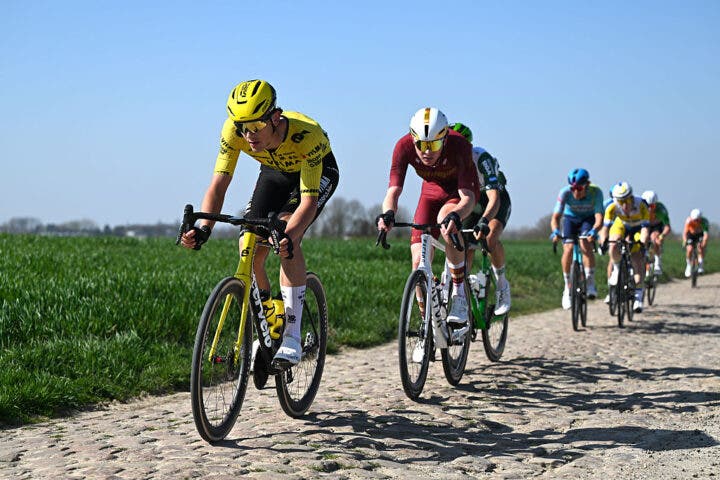
The U.S. talent pipeline has transformed over the past decade, and this weekend’s Paris-Roubaix reflects that.
Despite doom-and-gloom headlines about the domestic road racing scene, the U.S. continues to develop and produce top WorldTour pro talent.
Current stars like Brandon McNulty, Magnus Sheffield, Matteo Jorgenson, Matthew Riccitello, and 2019 junior world champion Quinn Simmons are the latest crop of pros who came through the U.S. junior program.
Behind them, this current generation might be among the strongest in years.
“The level is high,” Coulter said. “You’ve got riders coming from different backgrounds, from road, MTB, and gravel. We’re seeing that the interest in road racing is very high.”
The pathway to the pro ranks has changed dramatically since the days of the legendary USA house in Izegem, Belgium, more than two decades ago.
Back then, budding U.S. pros in their late teens and early 20s would try to catch the eye of a European sport director, and if not, they could race domestically and still carve out a living.
Flash forward to 2026, and junior riders are training and fueling like a pro, often times already having a full-time coach and trainer.
Power meters and the ability to share real-time data allow teams to scout pure talent faster and more accurately.
The game-changer over the past decade is how the major WorldTour teams are backing U23 development squads and helping out junior teams as well.
Every team is desperate to find the next Tadej Pogačar or Isaac del Toro. That means there are more spots, but with that comes pressure to perform earlier than ever before.
“There are more junior programs linked to WorldTour teams now,” Coulter said. “They bring equipment, structure, and support, which helps reduce some of the pay-to-play.”
It’s not any easier
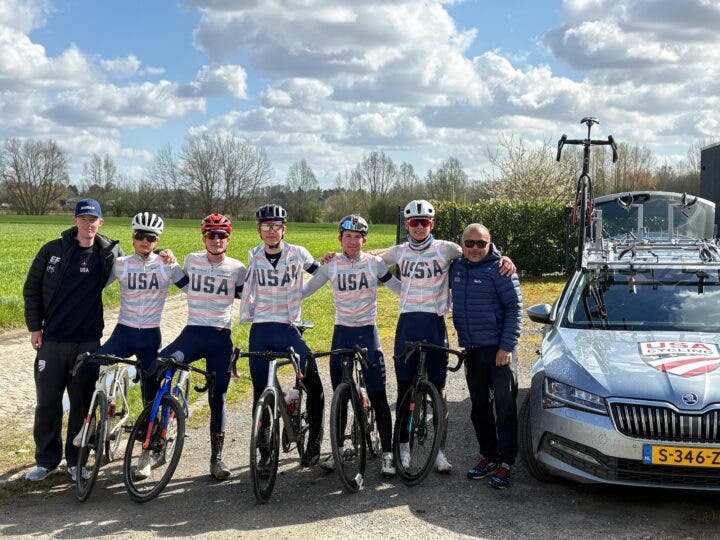
That shift is already playing out among the latest crop of top U.S. talent. Barry moved into Visma’s U23 setup, while Hincapie is tied into the Red Bull junior system.
There are more opportunities, but it’s also more competitive.
“I wouldn’t say it’s easier,” Coulter said. “There’s more awareness, and maybe a clearer pathway, but there are also more kids trying to do it.”
Coulter also said the home-road advantage that European riders have always had over the Americans hasn’t changed.
Local kids know the roads of the spring classics, while everything is new for an American on their first trip over to Europe.
“It’s the jump in race complexity,” Coulter said. “You’ve got 100 riders, guys who’ve been racing those roads their whole lives. It’s not just fitness — it’s positioning, timing, knowing when to move.”
The learning curve is steep, and the window isn’t open for long. Junior riders typically get one season to learn the ropes, and maybe a second season to prove themselves before aging out or moving up.
Coulter, who’s been working with developing riders for years, said he’s impressed with how mature and clear-headed today’s young riders are.
“Most of them are overachievers, so it’s about habits. Being on time, respecting teammates, doing the small things right,” Coulter said. “There’s not much room for mistakes at this level.”
That’s not to say that it’s all business for these kids. They want and do have fun. And what’s more fun than racing your bike in Europe?
On Sunday, every one of them will dream of getting into the breakaway, riding deep into the final, and even hitting the podium at Paris-Roubaix.
It’s the process that counts most, and planting that seed for what could be American cycling’s next big star.