L’Enfer du Nord. A Sunday in Hell. The Queen of the Classics. Or, as Theo de Rooij once described it, ‘a pile of shit.’
But what’s in a name?
Paris-Roubaix has more than earned its treasured monikers throughout the years. One of the oldest events on the calendar, its humble beginnings stretch all the way back to 1896 as the brainchild of two textile manufacturers. Now, on the eve of its 123rd edition having only paused for the two World Wars and the Covid pandemic, it has developed into something much more than a cycling race.
Paris-Roubaix is one of the five prestigious Monuments and its idiosyncrasies separate it from its companions. Milan-San Remo is historically a sprinter’s affair but this new generation of racers make the Cipressa and Poggio 1-2 punch as hard as possible. The Tour of Flanders brings steep cobbled climbs in the famed Koppenberg, Oude Kwaremont and Paterberg. Liège-Bastogne-Liège is one for the punchy climbers while Il Lombardia relies on longer climbing efforts to mark the end of the season. Paris-Roubaix meanwhile is pan flat, but packs in unrelenting cobblestone secteurs throughout the route. It can suit Classics specialists or sprinters, can see solo wins, breakaways or big group finishes, and culminates in the traditional but now unique arena of an outdoor velodrome.
A total of 30 sectors of pavé feature in the 2026 edition of the men’s race, and 20 for the women. All are rated out of five stars for their toughness, with stretches ranging from under a kilometre to over three times that. It’s the brutality of these that create the feared reputation of Paris-Roubaix. Cobblestones are not neatly stacked bricks. They are disorderly in nature, there’s no slotting together and they differ in size, shape and height with big cracks and gaps between them. There’s a big matter of luck in avoiding a mechanical or crash at some point along the route. It’s pure attrition, and that’s when the weather’s good.
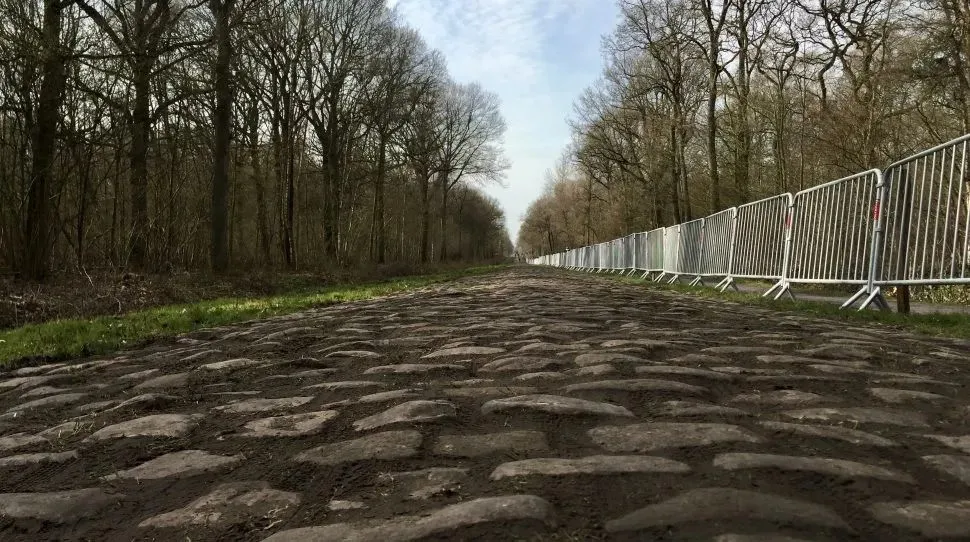
Every year, goats are set out along the course to graze along the Trouée d’Arenberg to clear the weeds. I know what you’re thinking – surely Marianne Vos has better things to do?
That leads perfectly onto my next point. The 2.3km Arenberg Trench is one of three hardest-rated sections of cobbles on the route (though it’s not yet included in the women’s race) alongside Mons-en-Pévèle and Carrefour de l’Arbre. It comes just under 100km from the finish and is one of the most iconic and difficult moments of every Paris-Roubaix, for the speed the peloton takes it on (though that has been decreased in recent years), the long, narrow straight, and the large gaps and irregularity between cobbles compared to other sections. It’s distinctive from the other pavé as it cuts a direct path through the usually quiet Arenberg forest, with riders roared on the whole way down by rows of fans. When the Arenberg arrives, the race is on.
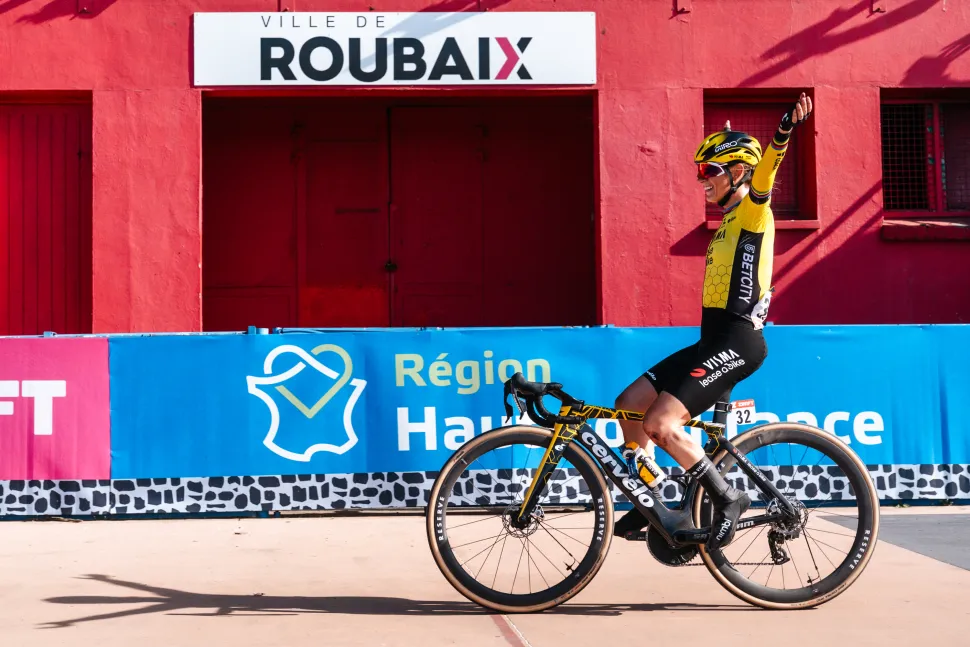
Once riders finally escape the clutches of the cobbles, drained with exhaustion, there’s one final obstacle to tackle. Track was my first love in cycling, so I felt like all my Christmases had arrived at once when I watched my first Paris-Roubaix all those years ago.
Riders enter the Vélodrome André-Pétrieux and must complete one and a half laps in front of a raucous crowd. Sometimes it’s a solo victor lapping up the applause as they go, sometimes it’s a tense track-style cat and mouse, sometimes it’s a pure adrenaline group sprint. All to win one of the heaviest trophies known to man.
Winners receive a large cobblestone for their efforts, with second and third also getting a smaller cobblestone for their mantelpieces. The Ferrand-Prévot/Van Baarle trophy cabinet must be buckling under the weight of Pauline and Dylan’s cobbles.
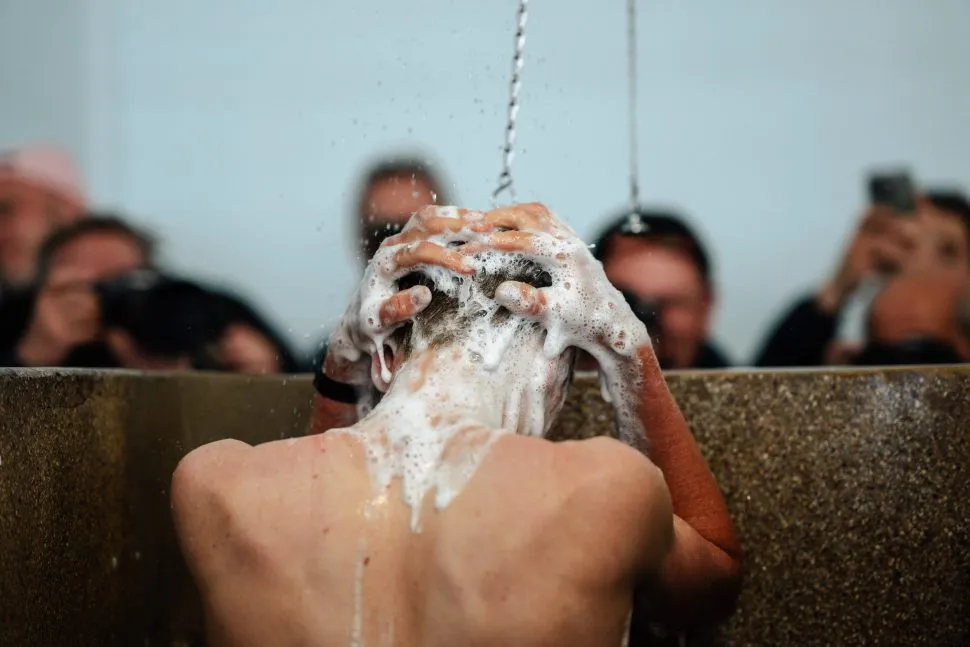
The fun doesn’t end there. Riders wash the day’s dirt and detritus off in the iconic Roubaix showers, where winners find their spot in the history books. Every victor receives a gold plaque in one of the cubicles too – the glamour of professional cycling never stops.
Paris-Roubaix finally introduced a women’s race in 2021, and to date, there has been no repeat winner. That might just change this weekend with the last-minute announcement of defending champion Ferrand-Prévot starting, with two other past winners taking to the start in Lotte Kopecky and Alison Jackson. But they’ll face stiff competition from the likes of legendary Marianne Vos and world-beating sprinter Lorena Wiebes.
For 2026, organisers have moved the women’s race from its own slot on Saturday to just after the men’s race on the Sunday, but let’s hope that’s just a one-year mistake given that leaves just 90 minutes of coverage of the women’s race, which, let’s not forget, began its televised life with Lizzie Deignan having already made the race-winning move.
An extra element of history on the line in the men’s race this year is Tadej Pogačar coming into his second Roubaix having made it the one Monument left to tick off on his palmarès. UAE Team Emirates-XRG’s main man made his debut last year and raced to second place behind three-time winner Mathieu van der Poel, but with Pogačar’s only moment of weakness a crash, who knows what he’s capable of if they enter the velodrome together.
While we’re talking winners, it would be remiss to not mention the greatest ever edition. ‘It’ll be my fifteenth attempt at winning,’ a 38-year-old Mathew Hayman joked to the Orica-GreenEDGE camera before the 2016 race. A trusted road captain, the Australian did not win much in his career but helped plenty a teammate to success. Just six weeks prior, he had broken his arm at Omloop Nieuwsblad and spent the time between races training on his turbo in the garage, his cast propped up on a ladder.
On the pavé of Paris-Roubaix, multiple crashes and splits wreaked havoc on the bunch. Hayman’s teammate Mitch Docker crashed so violently on Arenberg that he almost lost an eye. Eventually a five-man leading group would form in the chaos. Hayman was briefly dropped on the Carrefour de l’Arbre but battled his way back into contention and, as the kilometres ticked down, five became two.
Hayman found himself challenging for the biggest win in his career against one of cycling’s greatest giants. Classics heavyweight and sprinter Tom Boonen had four cobblestones already – a joint record of wins alongside Roger De Vlaeminck – as the pair raced into the velodrome, nobody doubted he’d make that five.
A good job Hayman couldn’t hear the coverage, which reminded us of his scant hopes. ‘Hayman has won two professional races; Boonen has won 109. The odds are stacked against the Australian.’
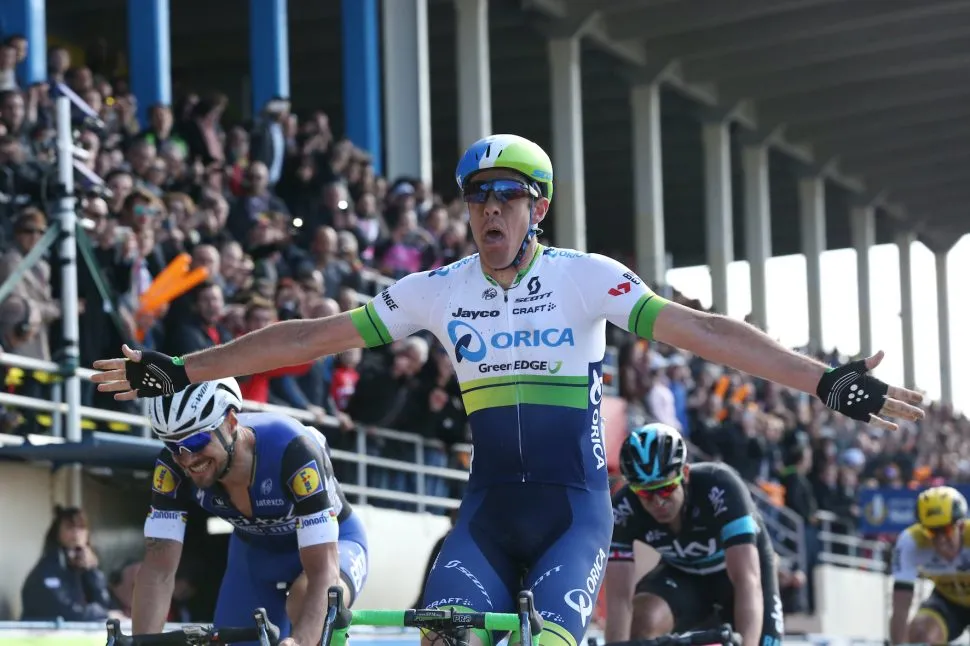
Every so often, a race can leave you in disbelief. It’s part of the draw of this sport. That, sometimes, a rider defies insurmountable odds to pull off the biggest win of their career. The two quickly swelled to four as Ian Stannard and Edvald Boassen Hagen were allowed back to join the party. Unfathomably, Hayman delivered the ultimate haymaker in the sprint, somehow defeating the three titans on his wheel. Such can be the nature of Paris-Roubaix, the best one-day race in the world.