Updated April 1, 2026 01:16PM
Geography has long been the secret sauce of cycling, omnipresent in the background; always changing, always defining the rides we all go on.
Physical geography is primarily what comes to mind, with the mountains, plains, forests, and valleys of the world shaping the maps and profiles of rides, no matter where you may ride. Gravel riding, especially, has been shaped by these tangible geographic changes because it often strays further off the beaten path and deeper into the wild areas where humans have less influence.
We’ve even defined that here at Velo when we considered the geography of Kansas and how its nuances have shaped the different courses of Unbound.
Yet, in American gravel, that’s not the only geography that matters. Here in the states, political geography, or human geography, has come to play an outsized role in the way the discipline has thrived. The East coast is significantly behind the rest of the country.
There are no stops on the Life Time Grand Prix, no BWR-branded races after the North Carolina stop has been taken off the docket, and no supersized independent events like Mid South or SBT GRVL. There are races, but not any that bring folks from across the country or overseas to dig into.
For East coast gravel enthusiasts, this is not an existential problem. There are plenty of great small and medium sized races. Yet, it does make them wonder why they can’t seem to strike the same growth. To get some answers to why, we spoke to a few key promoters who would have some insight as to why.
The East has all the ingredients for a great gravel racing
“We have tons of state forest lands, a lot of public lands,” Dave Pryor, who is the founder and co-promoter of UnPAved of the Susquehanna River Valley, told Velo of the oh-so important physical geography of Pennsylvania that makes it such a great place to ride gravel.
“There are some 25,000 miles of gravel and dirt roads within public and private lands, including the Allegheny National Forest. Pennsylvania is very rural compared to the rest of the East Coast. There’s a section of Pennsylvania called the Wilds. It’s basically the Northwest Quadrant of Pennsylvania. It is the acreage of Massachusetts, with 4% of Pennsylvania’s population living in it.”
Dave Pryor has been using those wild lands to build one of the East-Coast’s top gravel races for the last eight years. He knows more than most the power of the Pennsylvania backwoods and back roads.
As gravel cycling has grown, so too has the understanding that Pennsylvania has some of the best terrain around to dig into. With this new discipline unlocked, the cycling culture in the state has thrived because of it.
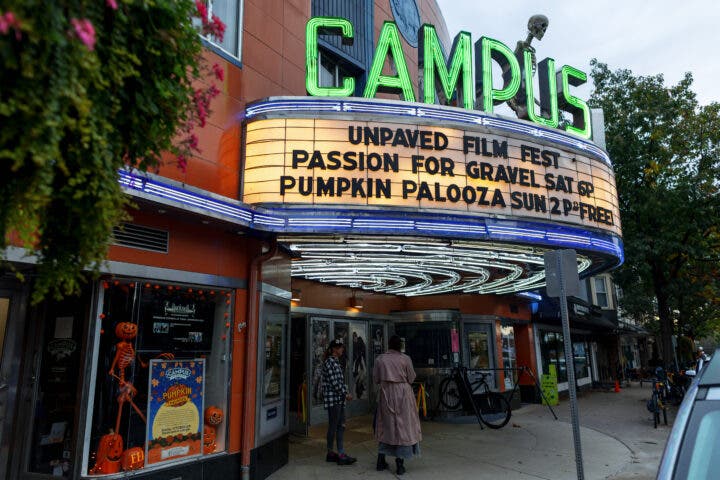
“Pennsylvania is unique,” Pryor said. “We have great pockets of cycling culture around Philadelphia, Pittsburgh, Lancaster, and the Lehigh Valley. There are people riding bikes all around who love to figure out the nooks and crannies of bike rides. There’s always an exploratory vibe in Pennsylvania’s cycling communities.”
Yet, for racing, the human geography of the East Coast is harder to grasp – especially the disconnect between the size of the populations and the size of the gravel event. Pryor has done enough to make his event a success. Every October, a few hundred folks gather in the small college town of Lewisburg to take on a beautiful course filled with gravel climbs and rich fall foliage. But there is a sense that there should be something bigger on the East Coast in terms of gravel.
In 2019, UnPAved was no less successful than the likes of Mid South and Gravel Worlds. Yet since then, the professionalization of those races has dovetailed. Mid South and Gravel Worlds have gone global, and UnPAved has stayed local.
Human geography, and the relative struggle for big gravel events to gain traction on the East Coast, may hold the answers.
The challenge of what ‘local racing’ means
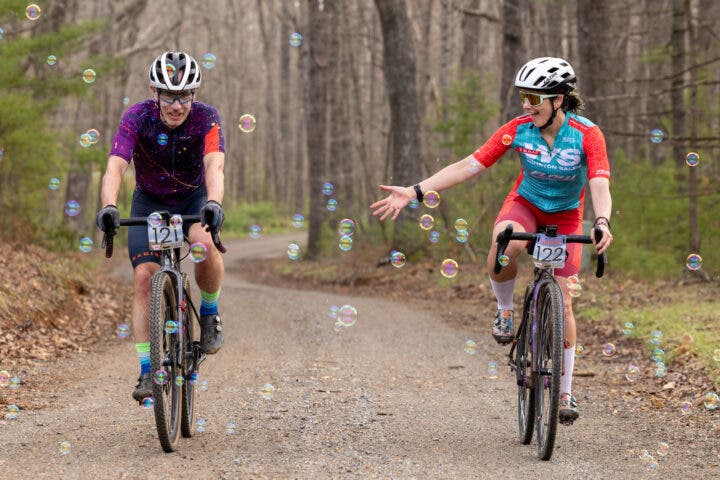
“One of the questions that I’ve asked myself is why we don’t have several thousand rider events in the East?” Gordon Wadsworth asked, rhetorically.
The Virginian, known in some circles as “Quadsworth” for his, well, quads, has been asking the same question. Wadsworth is the co-race promoter and founder of the Appalachian Journey. The Appalachian Journey will run this weekend in Floyd County, Virginia, a rugged rural area that sits atop a high plateau in the southeastern corner of the state. The race featured in our seven hidden gems of US gravel list, and is known for its Cape-Epic style duo format.
That format is a passion point for Wadsworth since he cut his teeth racing duo mountain bike events, in addition to other endurance tests. In terms of gravel, he was early to the discipline, finishing on the of Unbound 200 in the mid 2010s. Through all of this, he has seen each side of the coin and still wonders why things haven’t clicked in the East in the same way they have elsewhere.
“We have a couple of 500 rider events. We may have some that sniff around a thousand, but we don’t have the big marquee gravel event. Events in the East are not lower quality, that’s for sure. Some of them are incredibly high quality, but they don’t get the same level of attention as others do, unless it’s manhandled. I don’t mean that with disrespect.
“It’s one thing if it’s a Life Time Big Sugar that’s got all the money in the marketing dropped in place. And even then, sometimes it doesn’t work.”
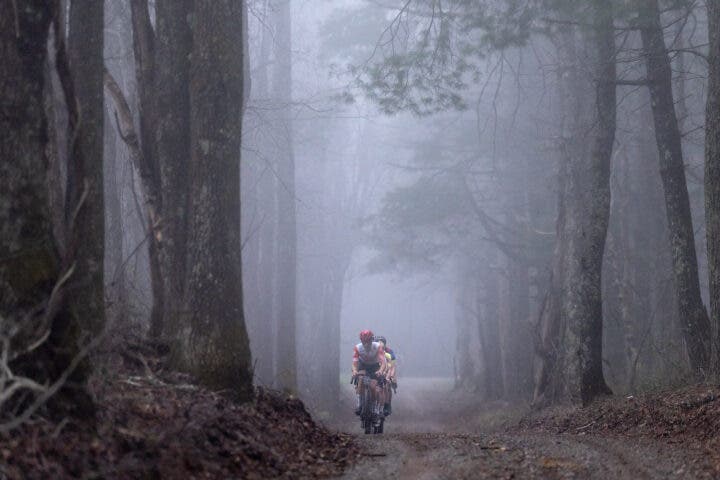
Really, the crux of the challenge for East Coast gravel races revolves around the economic changes in gravel racing, especially when it comes to attracting top talent. In just five years, the calendar has filled up, and the money required for marketing has skyrocketed. The money in, however, is far from predictable.
“It’s starting to become very expensive to pull one of those marquee events off,” Dave Pryor said. “The marquee events require top talent, which means you’ve got to pay prize money, you’ve got to pay travel expenses for them, and you’ve got to put in a big marketing push. And the sponsorships aren’t there right now to create one of those from scratch.
“The space is there, the courses are there, the support of state forestry and the governor’s office is there, but it’d be really expensive now to do it from nothing.”
UnPaved as a race isn’t that old, but it is night and day compared to the environment gravel exists in now.
“When we did Unpaved in 2018, we wanted it to be from the get-go, a top-tier gravel event in the U.S. That was our challenge to ourselves. We knew we could build it from a grassroots perspective, but as event promoters, we didn’t want to. We wanted to try to make a big one from the get-go. It worked well, and we had tourism support to make that happen, but it’d be 10 times more expensive to do that now than it was in 2018.”
‘People will drive 20 hours to Oklahoma, but not three hours to Floyd county’
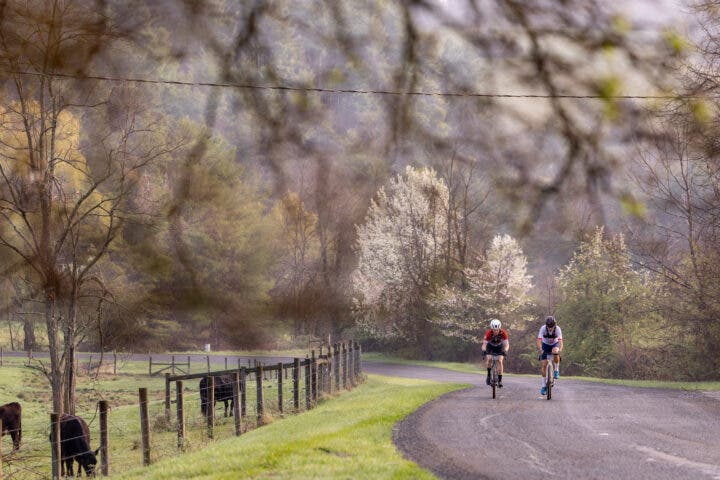
All this being said, what success means in gravel race promotion is relative. Biggness is not the only measure of success. Both Pryor and Wadsworth, along with the likes of the Vermont Overland, the Southeast Gravel Series, and other successful long-standing events, have carved out businesses that reliably produce great, sustainable races every year.
Regardless of the lack of a big marquee event, there is much to be proud of for these East Coast promoters.
“I know that every gravel event that I go to as a participant, I see an Appalachian Journey t-shirt, which tells me we are as big as I want us to be in many ways,” Wadsworth said. “We hit our limit of about 550 riders every year. That is a very intentional limit to preserve the smallish nature of things. It’s an effort not overwhelm our one-stoplight county.”
That being said, no one would blame Wadsworth for striving for more.
“There’s something about events in the East. People will drive all the way to Stillwater, Oklahoma, for Mid South. And it’s a great race. There’s every reason to do that. But they won’t get in their car and drive three and a half hours from Richmond, Virginia, to do an event because it’s too far. I understand we can hold both these things in unison, but it’s a bit frustrating.”
Nevertheless, the gravel races of the East truck on, modest, engaging, and almost certainly worthy of more attention. Where that attention will come from, however, is still far from clear. Geography, as it seems, is a tricky thing to work around.