Spring is here and, depending on where in Canada you are, you might be back on the trails now, soon or very soon-ish. Which means it’s time to get your bike ready for spring riding. Depending on how proactive (or not) you are as a home mechanic, that may also mean taking care of a few problems you said you’d deal with later when you put your bike away in the fall.
Now, a full service from a shop is probably the best way to start the year. If your local bike shop isn’t already fully booked up, it’s a great idea to have a proper mechanic give your bike a once-over before launching into the year. It can help catch any small problems before they turn into big problems that could keep you off the bike for a while.
Failing that, and I’ll admit I fail at that more years than I don’t, here’s a minimalist guide to things that you really should check before your first ride of the year. Consider it a bare minimum list of things that may have deteriorated or problems that might have developed while your bike was sitting over the winter. Most of the items on this list, as you’ll see, reflect a lesson I’ve learned the hard way. There’s no point in learning something the hard way twice, though, so read on and learn from my very self-inflicted misfortunes.
This list applies to mountain bikes, gravel bikes and, to an extent, road bikes.
A minimalist guide to spring maintenance

The front tire? Still plenty of sealant in liquid form.


Tire Sealant
This one is not your fault. Sealant dries up over time, especially if your bike’s sat in one spot for months over the winter. Thankfully, topping up sealant is easy. There’s plenty of adapters that allow you to squeeze some sealant in through the valve stem, meaning you don’t even have to take the tire off the rim to check this off the list.
Here’s one important reminder, though: just because your tires survived one ride without topping up the sealant does not mean they’re actually ready for the season. I recently hauled out the gravel bike for a quick spin to enjoy the evening sun we’ve been getting the last couple weeks. The tires inflated fine and held air for the ride, but the back tire was entirely dry. That’s fine, until you hit anything. With no sealant left, any little puncture could have turned a short ride into a long walk home.

Sealant Pt.II – Valve Cores
Sealant doesn’t always dry in neutral places, like the bottom of a tire. Sometimes it dries in really annoying places. Like when it clogs up the valve stem or seals the valve core shut. This result is, arguably, worse than not realizing you don’t have sealant in your tire. All hyped up to get out for the first ride of spring, you go to add more air to your tire and, instead of the lock nut unscrewing, the entire valve core starts unscrewing from the valve stem. In the worst case scenario, the valve core then jettisons off into the shrubbery, leaving you with a very flat tire. In the best case scenario, you just can’t turn the lock nut at all (or you have both a valve core removal tool and a pair of pliers with you to force the lock nut loose).
There’s not a really good fix that I’ve found if your lock nut is sealed shut. Getting a full replacement valve is cheap enough that finding replacement valve cores isn’t super easy. But at least replacing the whole valve is cheap.

Cleats
If you’re not riding flats, you should check the status of your cleats before starting the season. Even if you didn’t notice a problem at the end last season. I learned this one for you the hard way. I showed up to the first Island Cup XC of the season a few weekends ago completely unprepared. Now, I was prepared to be unprepared physically, though it was still a bit of a shock. I was not prepared to feel my cleat starting to come loose part way through the second of three laps.
You want to know what’s really wild? The one that came loose at least had two bolts in it. The shoe that held tight? It was missing one of the two bolts holding the cleat in place. Sometimes you can be unlucky in really lucky ways. Bonus: the fine humans at Broad Street Cycles / Bici were on their patio with tools to help, since I didn’t bring any with me. It was a 90 minute race, what could go wrong? Anyway, the point of the story was that I don’t remember having any problem with that pair of shoes the last time I used them months earlier. I was concerned about other things I knew I’d left unattended on my bike, only to be blindsided by my shoes.
Chain wear and cables
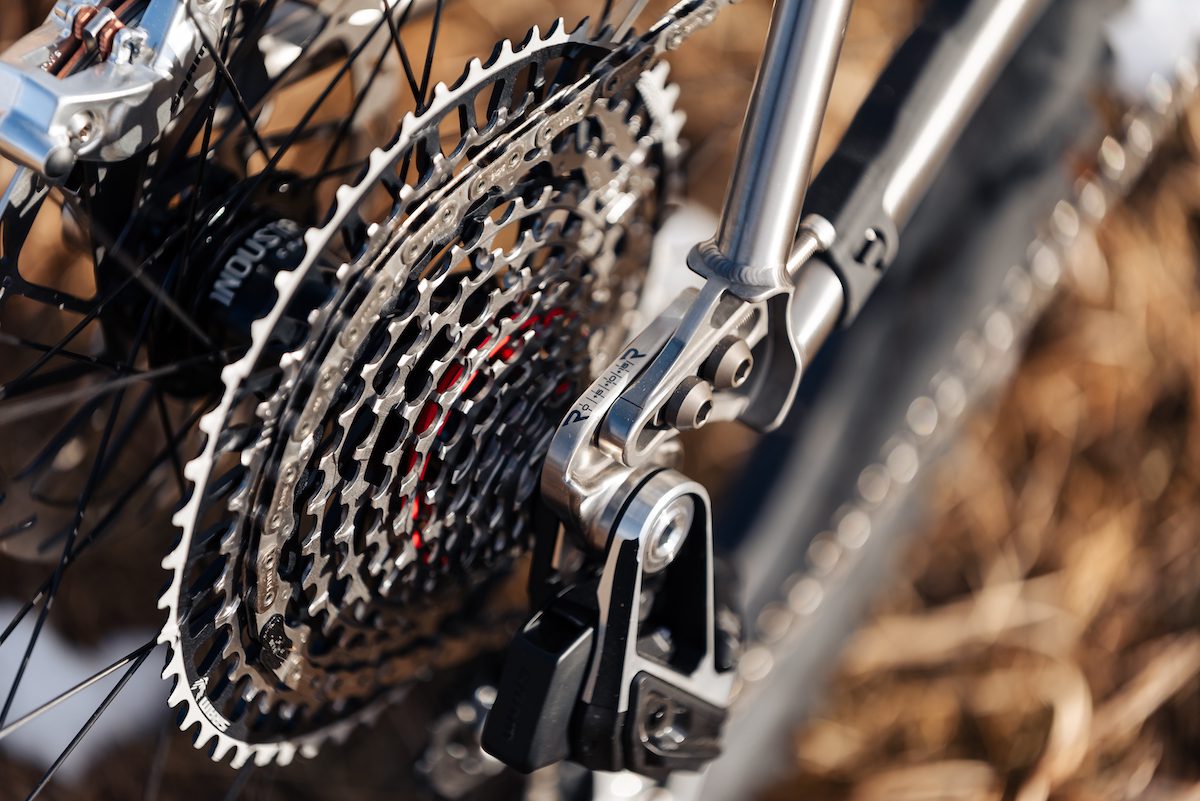
This one’s getting a little less minimalist, but it’s pretty important. Especially with how much drivetrains cost these days. Check your chain wear at the start of the season, so you hopefully don’t have to replace the whole thing. It’s easy to adapt to the slow deterioration when you’re riding a lot. But what felt “fine” at the end of last year might not fell great at all this spring, if you’re expecting clean, crisp shifting.
If you’re lucky, you’ll catch chain wear in time that you can just throw on a new chain and extend the life of your other components. If not, you’re left with two choices: run your current drivetrain completely into the ground while you save up for a new cassette, chainring and chain or; replace everything now and start the season with the wonderful feeling of crisp shifting. I know what kind of rider I am and you know what kind of rider you are. Make your choices accordingly. But make them before that first ride of the season is ruined.
While we’re here, same goes for shifting cables. They are cheap to replace when they’re a little worn. They can cause expensive problems, or big headaches on the trail, if you wait until they’re too worn or fully broken.

Brakes and brake fluid
Are your brakes feeling spongy, vague, soft? Do the levers bite where you want them to or go straight to the bars? If any of those are true, your brakes could probably use a bleed. Heck, it’s a good idea to start the season with fresh brake fluid no matter how alright your brakes feel. Again, this is one of those maintenance issues where staying ahead of it costs money, but not nearly as much money as waiting too long. Brakes aren’t cheap, but they are pretty darned important.
While we’re here, the same goes for brake pads. Check them before they cause problems.

Sliding surfaces
This one’s mostly for the mountain bikers, but increasingly applies to gravel too. If there’s a part on your bike that slides – like suspension or a dropper post – it needs to be serviced. The frequency with which a basic service is required might be new to gravelistas, and known but rarely followed by mountain bikers. But it’s more often than you might think. Regular service here is cheaper than waiting until there is a problem that you can see or feel with your squishy or droppy bits.

Moving parts
So, I promised this would be minimalist and we’re what, seven points in? Turns out modern bikes, whether road, gravel or mountain bikes, have a lot of moving parts. Expensive moving parts.
The last thing on the list, but certainly not the least important (or expensive) is all those moving parts. Pivot bearings, bottom brackets, headsets, wheel bearings and freehubs. Basically anything on the bike that rotates should rotate easily, quietly, and effortlessly. If there’s resistance, noise, if it feels clunky or, God forbid, it creaks and cracks before moving, you have a problem. And that problem is going to be a lot easier and less expensive to fix sooner than later.
This is the sort of thing that can be a very unwelcome surprise when pulling a bike out of the garage after a few months. But that’s also when it’s going to be the most noticeable. Parts that were on the verge of seizing have had time to really set in place. The gradual deterioration of a headset that you didn’t notice when you were riding all the time now feels rough and gritty. The good news is fixing this sort of thing early often means the part can be saved. But postpone this service at your peril. If you want too long, you might not only ruin the bearing or headset, but the frame itself.