Published March 28, 2026 08:29AM
Tune into any virtual bike race and you will see the best indoor cyclists in the world riding out of the saddle at 60-75 rpm. They can produce over 400w for an hour, and they spend 99 percent of the race standing on the pedals.
It’s no secret that indoor pros prefer lower cadences – but why?
In this article, we’ll dive into the low cadence phenomenon, why it’s so prevalent in indoor cycling, and why it doesn’t work for outdoor cycling.
What is a ‘low cadence’?
Low cadence is typically classified as somewhere in the range of 60-80rpm. If you are an experienced rider performing torque intervals, you might even go lower than that, targeting 30-50 rpm during each effort.
Typical cycling cadence is 85-95 rpm, with high cadences being anything over 100 rpm. Cadences tend to be slightly lower in training, partially due to lower target intensities and lower speeds. You might average 85 rpm on a Zone 2 ride, but 90 rpm in a race, for example.
But if racing increases our cadence, then why do indoor pros pedal at such low cadences?
Aerodynamics, speed, musculature, and shorter races are the reasons.
Who needs aerodynamics?
The sport of cycling is getting progressively faster. Due to equipment improvements and aggressive race tactics, it is not uncommon for a professional bike race to average 45-50 kph for several hours. Speeds like this were unheard of decades ago, but now they are the norm.
There is another big reason for the massive speed increase: aerodynamics.
Cycling is becoming more aerodynamic every year, and not just the bikes, but also the riders. Everything is being optimized, from the skinsuit and helmet, to the socks, frame, and wheels. Everyone knows that aero outperforms power in most race situations (the exception being at very low speeds, such as on a steep climb).
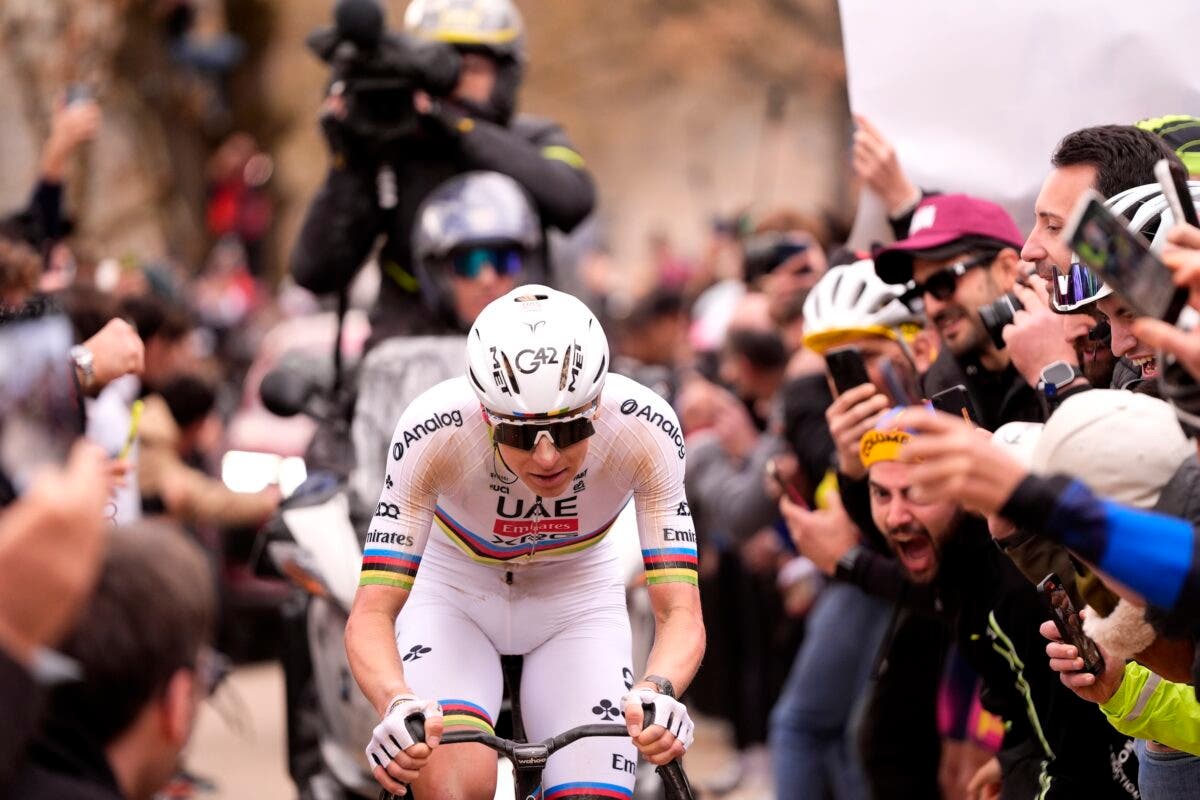
Aero is everything, and that’s why riders stay planted in the saddle for as long as possible, even when they are attacking at 700w. Even the world champion, Tadej Pogačar, changed his attacking style in 2025, in part due to aerodynamics. He and his team realized that attacking in the saddle was significantly more aerodynamic, and therefore faster because he is attacking on climbs at 30-40 kph.
In every professional bike race, from Australia to France and everything in between, you will see riders bent over their top tube in the most aerodynamic position possible.
Aero means nothing on the indoor trainer. And that’s why the pros can ride out of the saddle for the entire race – there is no aero penalty.
Indoor riders can use longer cranks, flappy jerseys, upright positions, and anything else that would slow them down outside. It doesn’t matter on the indoor trainer. All that matters is how much power you are producing.
The shift to short cranks and high cadence doesn’t apply
In the aerodynamics conversation, we have to talk about speed. As professional cycling gets faster and faster, it means that aerodynamics matter more than ever.
It wasn’t that long ago that climbing speeds were slow enough that aerodynamics didn’t matter. Picture Alberto Contador racing up Alpe d’Huez, dancing on the pedals at 75 rpm. Now picture Pogačar racing up the same climb, planted in the saddle, spinning at 95-100 rpm and moving 3-4 kph faster.
As speeds increase, aero matters more, even on climbs. That’s why more riders are moving to shorter cranks and seated pedaling – it is significantly faster and more aerodynamic.
Faster speeds also lead to increased cadences, especially on flat roads. It is not uncommon for pros to spend 20 minutes at 55 kph and 105 rpm in a crosswind section. You could never lower your cadence to 65 rpm or ride out of the saddle at those speeds.
Contrast a 55 kph crosswind section with the indoor trainer. They are complete opposites: lightning-fast speeds versus no movement at all. You can pedal and position yourself however you prefer on the indoor trainer with zero speed penalty.
Some indoor pros have even changed their gearing to allow them to push a low cadence at all times. Even on a flat virtual road at 55 kph, indoor pros can push 400w out of the saddle at 65 rpm. You may think such an output is unsustainable, but there are a few reasons that it works.
Standing in the pedals can recruit more muscle
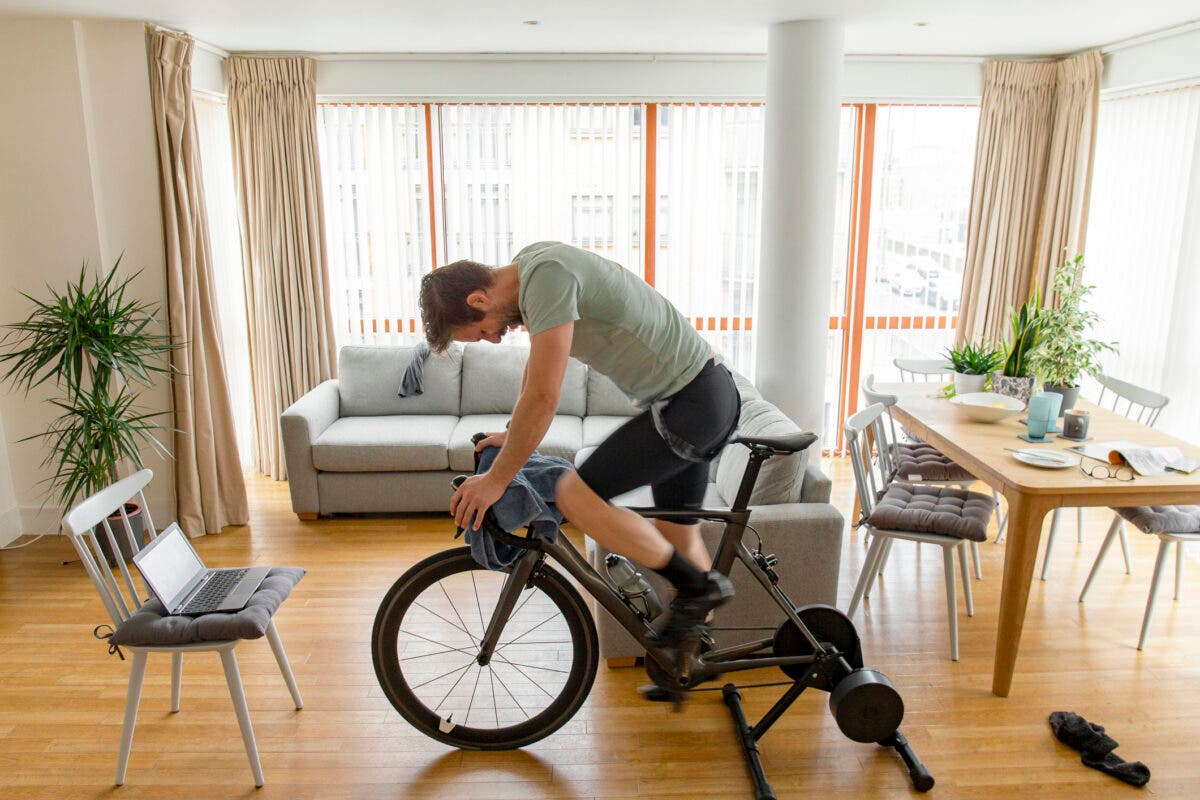
Seated and standing pedaling engage different muscle groups, and for many riders, one group will be stronger than the other. Standing pedaling tends to engage large muscle groups like the quads and hamstrings, while seated pedaling (especially in an aggressive aero position) might engage smaller muscles like the glutes, core, and calves.
The everyday cyclist might find that their larger muscle groups are stronger, which means that they can produce more power when riding out of the saddle. Naturally, this is how most humans are when they first jump on the bike. Standing up to produce more power is almost instinctual. The only reason we don’t do it as much outside is because it is slow.
However, standing up has its downsides. Riding out of the saddle, especially at high power outputs (FTP and above) places a significant amount of strain on the arms, shoulders, and lower back. Those who are unaccustomed to this pedaling style may feel cramps coming on after 10-15 minutes out of the saddle.
But like any other muscle, standing pedaling can be trained. The indoor pros that you see riding out of the saddle for over an hour have been doing this for years. They have perfected their position, sometimes even altering their indoor bike setup to favor standing over sitting.
Short indoor races vs. long outdoor races
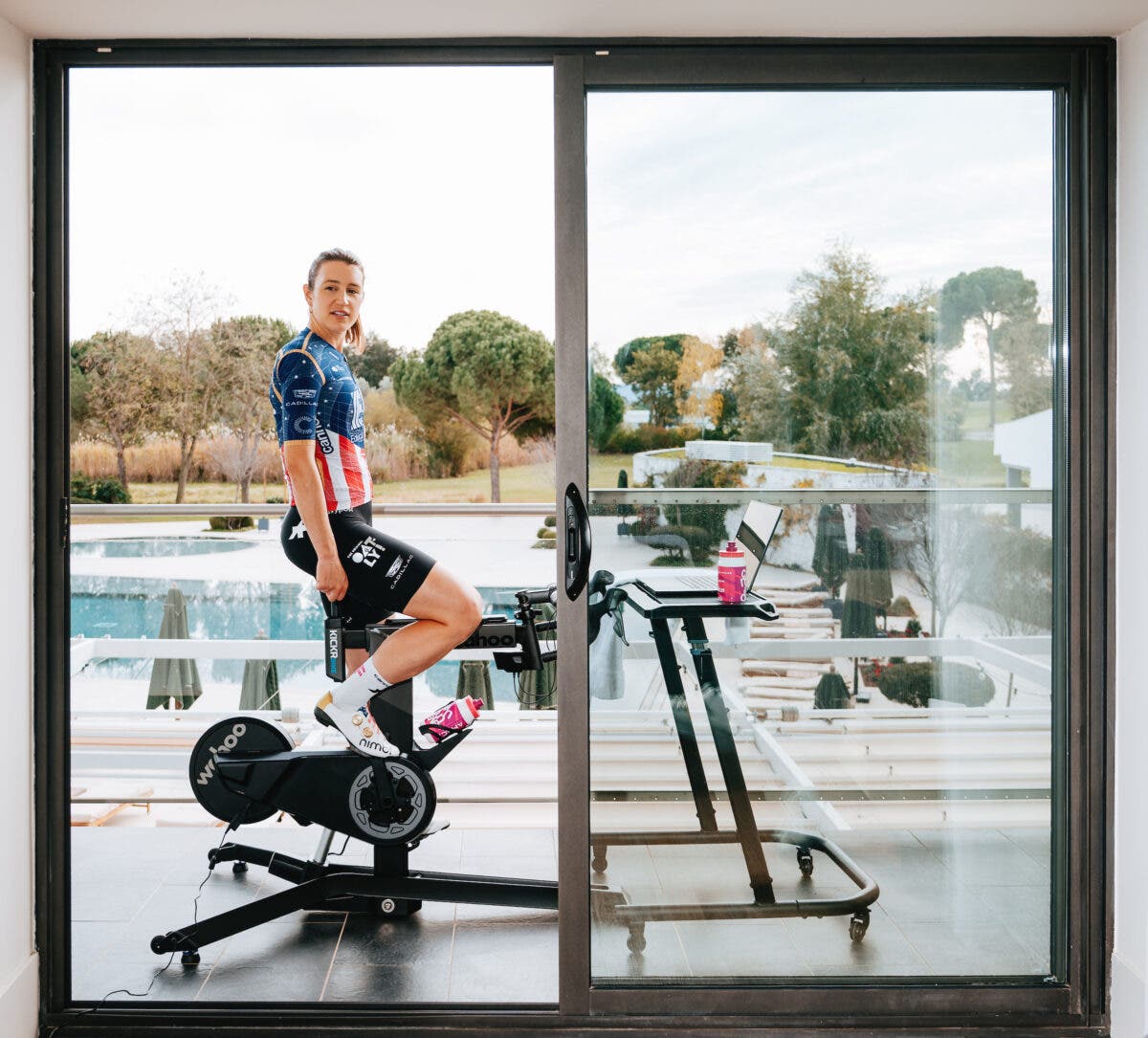
In the discussion of seated versus standing and low cadence vs. high cadence, we have to account for the differences between indoor and outdoor racing. Not only are indoor races more intense and explosive than most outdoor races, but they are also significantly shorter.
The typical outdoor race could be anywhere from an hour (criteriums) to 5+ hours (road races and Gran Fondos). On the extreme end, riders may spend more than 10 hours in the saddle during gravel races.
Indoor races, on the other hand, are incredibly short. There are some indoor races that only last a few kilometers, while others last up to 60-90 minutes. The longest indoor races last about two hours, but those are few and far between. On average, indoor races last 10-30 minutes, which means that you can afford to try some extreme cadences or positions.
If I asked you to pedal at 60 rpm for a 4-hour road race, you would probably look at me like I was crazy. But if I asked you to pedal out of the saddle at 60 rpm for a 15-minute indoor race, you would probably think you could manage it.
Experimenting with low cadence
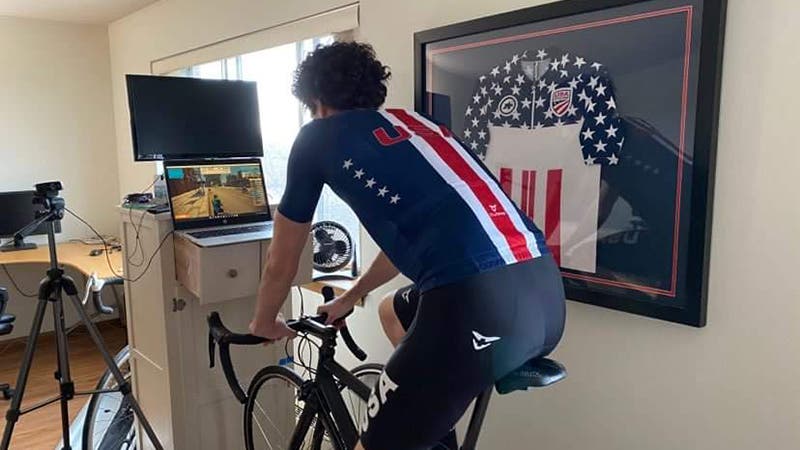
Low cadence isn’t for everyone. There are still some indoor pros who can produce over 400w for an hour while staying seated at 90 rpm. But most indoor racers have made the transition to the low cadence standing style.
It might not feel natural at first, but it’s important to experiment with different things in training. Try a few 3-minute low cadence blocks at first, and see how your body reacts. If the power output is there, then you can try completing longer blocks. Remember to train your upper body, core, and trunk off the bike, as this will play a key role in your ability to sustain power at low cadences. After a few weeks of training, you might be surprised at what you can produce.