Published September 29, 2026 04:46AM
Brandon McNulty ended a 33-year American drought by winning the elite men’s UCI Road World Championship, but this was an emphatic Team USA victory.
When McNulty blasted clear with 32km to go in Montréal, Team USA deployed perfect tactics as the sport’s biggest names tried in vain to stop him.
Quinn Simmons had already marked Mathieu van der Poel’s dangerous move. And when the favorites jumped to reel in McNulty, Matteo Jorgenson smothered the chase.
The Arizonan crossed the line alone, but his teammates had worked together all day to make sure it ended that way.
The eight Americans brought the legs and a plan to Montréal to put individual ambitions aside to deliver the stunning victory to make U.S. cycling history.
Here’s how Team USA pulled off the perfect team race at the Montréal Road Worlds.
1. They packed the firepower
To win, you need the muscle, and Team USA packed plenty in Montréal.
USA Cycling brought its strongest elite men’s team in years. No U.S. male had won the stripes since Lance Armstrong in 1993, and Montréal marked the best chance in decades.
Though other teams like France and Belgium saw more pre-race hype, the U.S. squad was quietly stacked.
McNulty, Jorgenson, and Simmons lined up as a rainbow jersey triple threat, three proven WorldTour winners with the legs to handle the grueling, classics-style course.
Backing them up were Larry Warbasse, Kevin Vermaerke, Riley Sheehan (who substituted Nelson Powless), Sean Quinn, and Artem Shmidt.
“I knew if we had the perfect day, I thought one of the guys could win, any of the three guys we had as leaders,” Warbasse told FloBikes. “It obviously was the perfect day.”
The mood was high as the Americans lined up with their maximum eight starters. They had numbers, depth, and more than one way to win.
And they started as outsiders as all the pressure and hype were on France, Belgium, Mexico and the Netherlands.
2. They had a plan and stuck to it
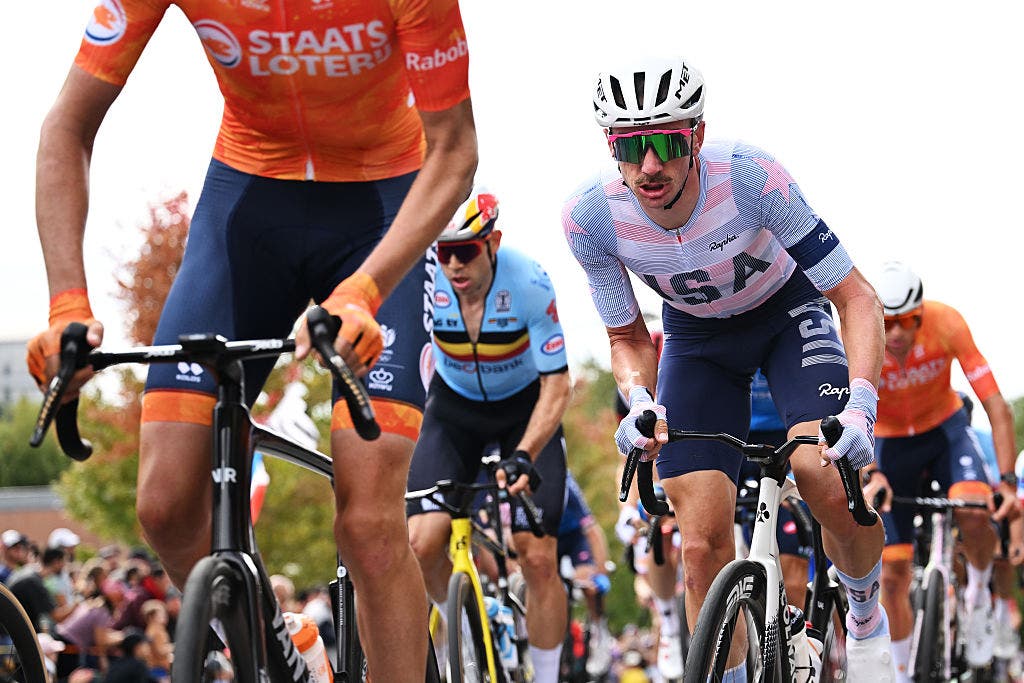
There was no designated leader, and with Tadej Pogačar out with injury, the team had a clear vision of how to race.
They decided the only way to win was to put aside personal ambitions and race as a unit.
“We made a plan [Saturday] night, we set our egos aside a little bit and we decided, okay, we just want an American to win this race,” Jorgenson told Eurosport.
Team USA missed an early break that pulled clear in the opening kilometers. It raised a few eyebrows, but the move contained none of the major favorites and was under control before the race blew up on the decisive Mount-Royal circuit.
Jorgenson had done his homework, too.
“I spent a long time thinking about this, I wrote a little bit of a document last week when I was training in Vermont. I sent it to the guys with some analysis which usually my trade team does for us, but this time I did it myself,” the Idahoan said. “We made a great plan and like I said, we were able to set our egos aside which I think won us this race.”
The team protected their leaders from the wind and crashes on the fast, flat approach, and positioned them perfectly heading into the grueling and attritional finishing circuits.
The Americans were saving their firepower for the moves that mattered.
3. Simmons marked Van der Poel
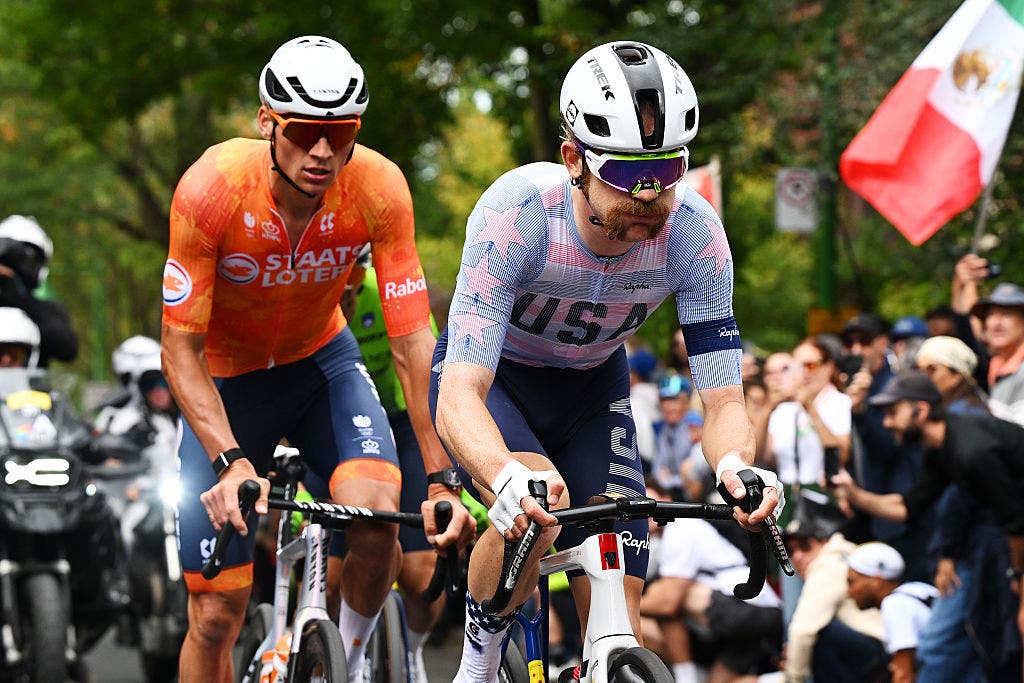
Crunch time came with about 90km to go, when Wout van Aert attacked and Mathieu van der Poel drove the move. It was the first major selection among the five-star favorites.
And who was there? Quinn Simmons.
The 2019 junior world champion rode out of his skin to stay with Van der Poel. When the Dutchman accelerated again, and even when Van Aert was gapped, the Coloradan was still there.
His presence was decisive, because it meant McNulty and Jorgenson could sit behind, and force Mexico, France, and others to spend their energy chasing.
“When we had Quinn ahead, it allowed me and Matteo to follow,” McNulty said.
“I really think that we played the perfect race with Quinn able to follow that move with Wout and Van der Poel and neutralize it,” Jorgenson said. “Then Brandon and I were able to take advantage of Seixas and Del Toro, who spent a bunch of energy.”
Simmons was gapped briefly when the favorites started firing shots on the closing lap, but he chased back and finished fourth at the line, just missing a medal behind Van der Poel.
That was his best elite men’s worlds result, but his biggest contribution had come much earlier in the race.
4. McNulty took his moment
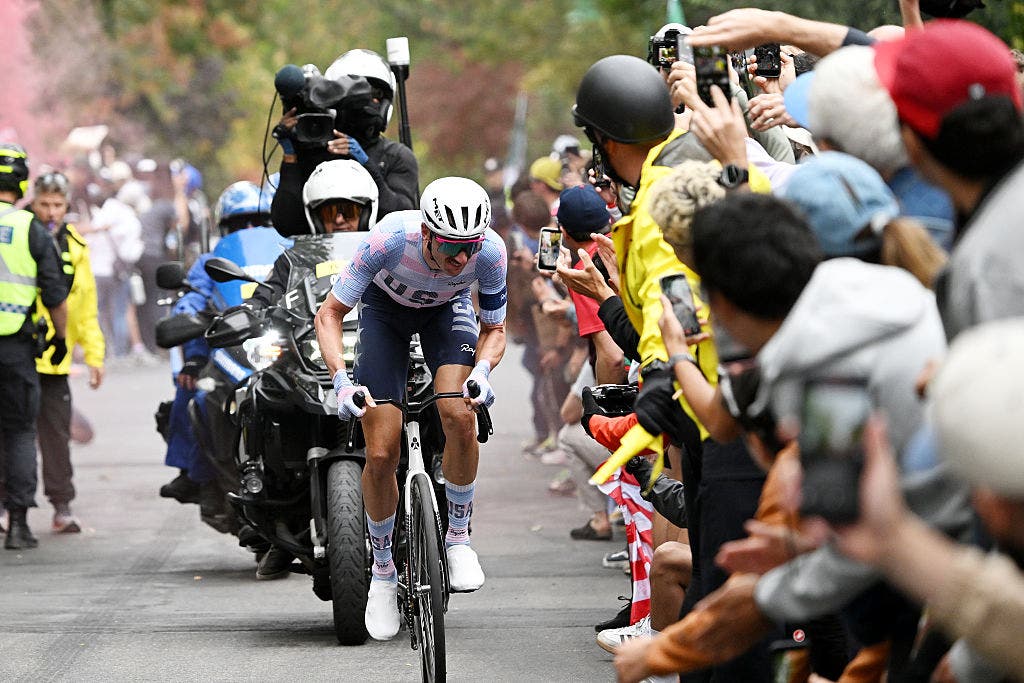
As the leaders came together with just over two laps remaining, all three U.S. contenders were still in the front group. Team USA had the numbers it wanted.
Now someone had to jump.
McNulty was an ideal candidate. He thrives on long, hard efforts, and was hot off fourth in the time trial race.
After winning the 2025 GP Montréal alongside UAE teammate Tadej Pogačar, no one knew these roads better, even if the worlds used a slightly different circuit.
“As soon as it all came back together we could get one of us solo, which was the ultimate goal,” Jorgenson said.
McNulty — a quiet and reserved rider who prefers to let his legs do the talking — was at the back of a split containing Jorgenson along with Del Toro, Seixas, and a stack of favorites all lined out.
Then the Arizonan pounced off the last wheel, swung across the road, and poured everything into the pedals.
No one reacted immediately, and the favorites looked at each other behind him: You pull. No, you pull.
McNulty used his TT legs and knowledge of the course, and just kept going.
5. Jorgenson covered the chase
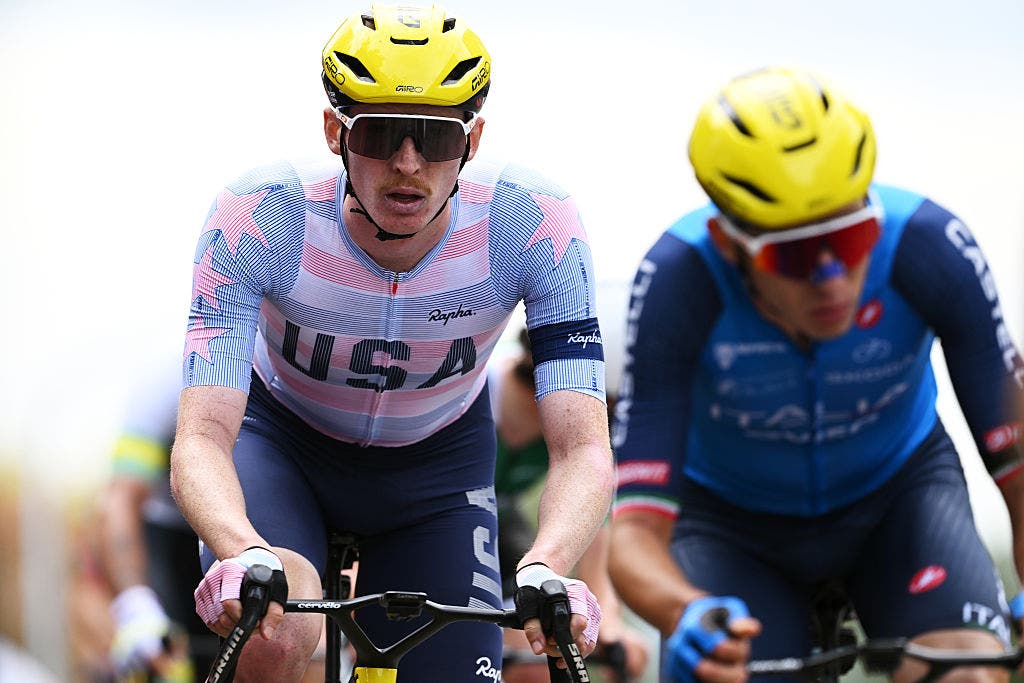
McNulty quickly pushed his advantage to just under a minute at the start of the bell lap, but the last trip up Voie Camillien-Houde climb nearly undid him.
The gap fell below 15 seconds, and the chasers could even see him near the top of the climb. Yet there was a pivotal moment of hesitation, and they did not or could not finish the job.
Jorgenson was a big reason why.
Whenever a major name counter-attacked, Jorgenson marked the wheel. The Visma-Lease a Bike star buried himself covering the endless surges.
Whoever was driving the chase would look back and see a Stars and Stripes jersey shadowing the move. No one was going to close down the gap to McNulty only to have another American on the wheel.
“Thankfully I had crazy legs and I was able to follow a bunch of moves and make some guys a little bit frustrated, which really helps,” Jorgenson said.
It was another key of the American tactical strategy to have as many riders at the front as deep as possible in the race. And if McNulty was reeled in, Jorgenson was ready to go.
That start-and-stall dynamic in the chase behind McNulty proved decisive and stifled the already weary legs from Del Toro, Van der Poel, and Seixas.
“Once the group is small like that, if you get a gap, there is a lot of hesitation usually behind, even if they come close, eventually they sit up again,” McNulty said. “I knew this, and I had this in my mind and never stop. And it worked out this time.”
McNulty carried 23 seconds under the flamme rouge. A 33-year wait for another American elite men’s world champion title was almost over.
6. They won it together
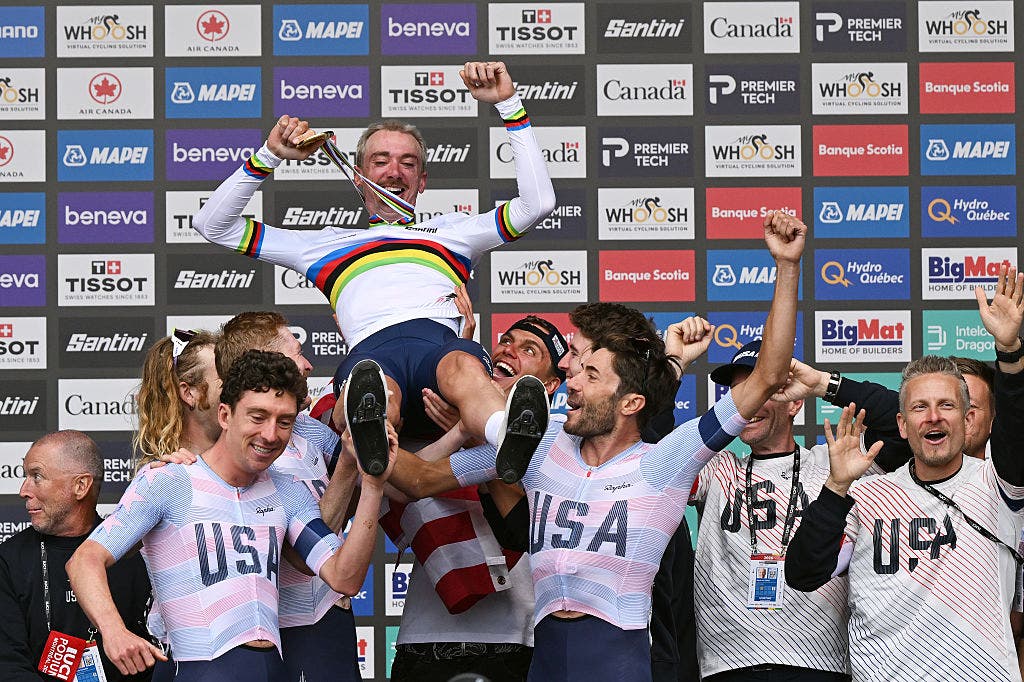
McNulty soloed across the line, collapsed into the arms of his partner, and celebrated with his shocked teammates.
They had just pulled off the biggest win of their careers. And McNulty joined Armstrong and Greg LeMond — a two-time world champ — as the only U.S. elite male worlds winners.
The coming-of-age victory for McNulty means he will don the rainbow jersey for the next year, but this was a team victory.
With three riders in the top 10, the results sheet showed Team USA’s depth and strength.
It also reflected the discipline and professionalism to stick to the team’s plan all the way to the line. No one went rogue and everyone stepped up.
There were probably stronger individual riders than McNulty on Sunday, but no squad made the numbers count like Team USA.
“We said for a few weeks in the team that it’s possible to go for a big result and that we have a super strong squad. We marked everything, we had guys ahead in the moves and just rode really well,” McNulty said. “I’m super grateful for that and how they helped me.”
This was a generational victory as well. Many of these riders have known one another since their junior racing days.
McNulty won the junior world time trial title in 2016. Simmons won the junior road race title in 2019. They’ve raced stints at the USA Cycling’s U23 house in Europe in their late teens.
Most of them have landed in the WorldTour.
On Sunday, that brothers-in-arms shared history played out on the roads in the collective and unselfish way they raced.
“With this team we had, and the whole environment, everything behind it, it was just phenomenal,” Sheehan said.
Vermaerke put it this way on Instagram:
“Lining up with these guys, knowing each other from years and years of racing together with USA Cycling since the junior days, everyone doing their thing, and Brandon finishing it off after the work of Quinn and Matteo in the final to win the World Championships, without a doubt the most special day I’ve been a part of on the bike.”
The Americans came in as underdogs, raced the perfect team race, and went home with the rainbow jersey.
Team USA at 2026 Road Cycling World Championships
| Result and rider | Time |
| 1. Brandon McNulty (USA) | 6:17:04 |
| 2. Michael Matthews (AUS) | +0:13 |
| 3. Mathieu van der Poel (NED) | +0:13 |
| 4. Quinn Simmons (USA) | +0:13 |
| 8. Matteo Jorgenson (USA) | +0:14 |
| 48. Riley Sheehan (USA) | +10:00 |
| 57. Larry Warbasse (USA) | +15:35 |
| Kevin Vermaerke (USA) | DNF |
| Artem Shmidt (USA) | DNF |
| Sean Quinn (USA) | DNF |