Updated September 15, 2026 11:59PM
Is maple syrup the solution to your high-carbohydrate fueling needs?
That’s exactly what Canadian (yes, Canadian) researchers are on a mission to discover in a study that so perfectly reinforces the national stereotype it’s hilarious.
The ongoing project by scientists at the University of Montréal is exploring whether exercising athletes can oxidize maple syrup as well as, if not better than, the leading sport nutrition on the market.
And we’re not talking about servings of syrup you might drizzle on your morning pancakes.
We’re talking “high-carb” servings.
Researchers are pumping test subjects with enough maple syrup to deliver 120 grams of carbohydrate per hour to their working muscles.
For those who missed it, 120 is the magic number of the high-carb fueling revolution.
One hundred and twenty grams per hour is widely considered the maximum amount of carbohydrate most athletes can safely absorb and convert to energy.
However, hitting 120 relies almost entirely on using sports nutrition. Unlike “real food,” gels and drink mixes are perfectly formulated for fast ingestion and conversion to energy.
This new study will show if the all-natural goodness of maple can match the high-carb potential of synthetic sport nutrition.
And while the results will come too late to steer the pros toward the maple aisle ahead of the fast-approaching Montréal road world championships, they could shape your future grocery haul.
Maple syrup, Canada’s superfuel?
Maple syrup has long been considered an unproven sporting superfuel.
It’s got a similar nutrient profile to raw sugar, is low fiber, and, as a tree sap, is as far from being “UPF” (ultra-processed food) as you can get.
Plus, of course, the caramelly elixir tastes excellent.
That’s why maple syrup is a common grocery store fuel for many — we included it in our top-seven alternatives to sports nutrition — and why it’s packaged into energy gels by brands like Untapped and Protein Rebel.
Maple syrup’s fueling secret is its composition. Unlike many natural sugars, maple syrup is composed of sucrose, a disaccharide made up of one glucose molecule and one fructose molecule.
That, in theory, means it can be taken rapidly into the gut and efficiently converted – or “oxidized” – into watts.
Why?
Because glucose and fructose are absorbed into the gut via two separate pathways.
The “glucose gateway” maxes-out before an athlete can reach a “high” carbohydrate threshold. Adding fructose to the mix lets sugar be absorbed via two paths, each with its own transport ceiling.
Two energy sources, two separate absorption pathways — carbohydrate perfection.
So in theory, maple syrup could sustain a high-carb fueling strategy as effectively as scientifically proven sports nutrition, but without all the processing and additives.
The University of Montréal’s new study wants to discover exactly how effectively.
‘Big Maple’ explores its potential as sport nutrition

First, it’s important to point out that the project is backed by “Big Maple.” The maple syrup producers’ group “Producteurs et Productrices Acéricoles du Québec” is partly funding the study.
“The producers would like to know whether maple syrup holds up as an endurance fuel at the intakes athletes now use,” Jonathan Tremblay, lead researcher in the study, told Velo.
The study is a type of maple syrup PR exercise targeted around road worlds, and we swallowed it whole.
Nonetheless, Tremblay assured Velo his study will follow all the same ethical approval and review as any other study from his lab.
“Their funding buys them the study, not the answer,” he said. “If maple syrup turns out to be an unremarkable way to deliver sucrose at 120 grams per hour, that’s the paper we write.”
How the study works
Tremblay’s ongoing study is testing how effectively 32 elite-level male cyclists oxidize carbohydrate from maple, and how it impacts their time trial performance.
Participants ride for two hours on an indoor trainer and then complete a 20km all-out effort. The process is repeated four times across four weekly sessions, each time with a different fuel source. Once with only sweetened water, and three times with diluted maple syrup at doses of 60, 90, and 120 grams of carbohydrates per hour.
All four mixes use a carbon tracer that allows scientists to analyze breath samples to determine how much of the ingested carbohydrate is oxidized.
Pro teams widely use this carbon tracing protocol to establish their athletes’ unique fueling capacities. As we explored recently, ExoAnalytics has also mimicked it in a unique at-home test.
The University of Montréal explained in a press statement that “the research team expects to find correlations between the amount of maple syrup ingested, the oxidation of the sugar from the maple syrup, and time-trial performance.”
In short, the study should set an initial benchmark for how much maple syrup can be used effectively as endurance fuel, and thus whether it’s a viable option for high-carb fueling.
Time to add maple syrup to your grocery haul?
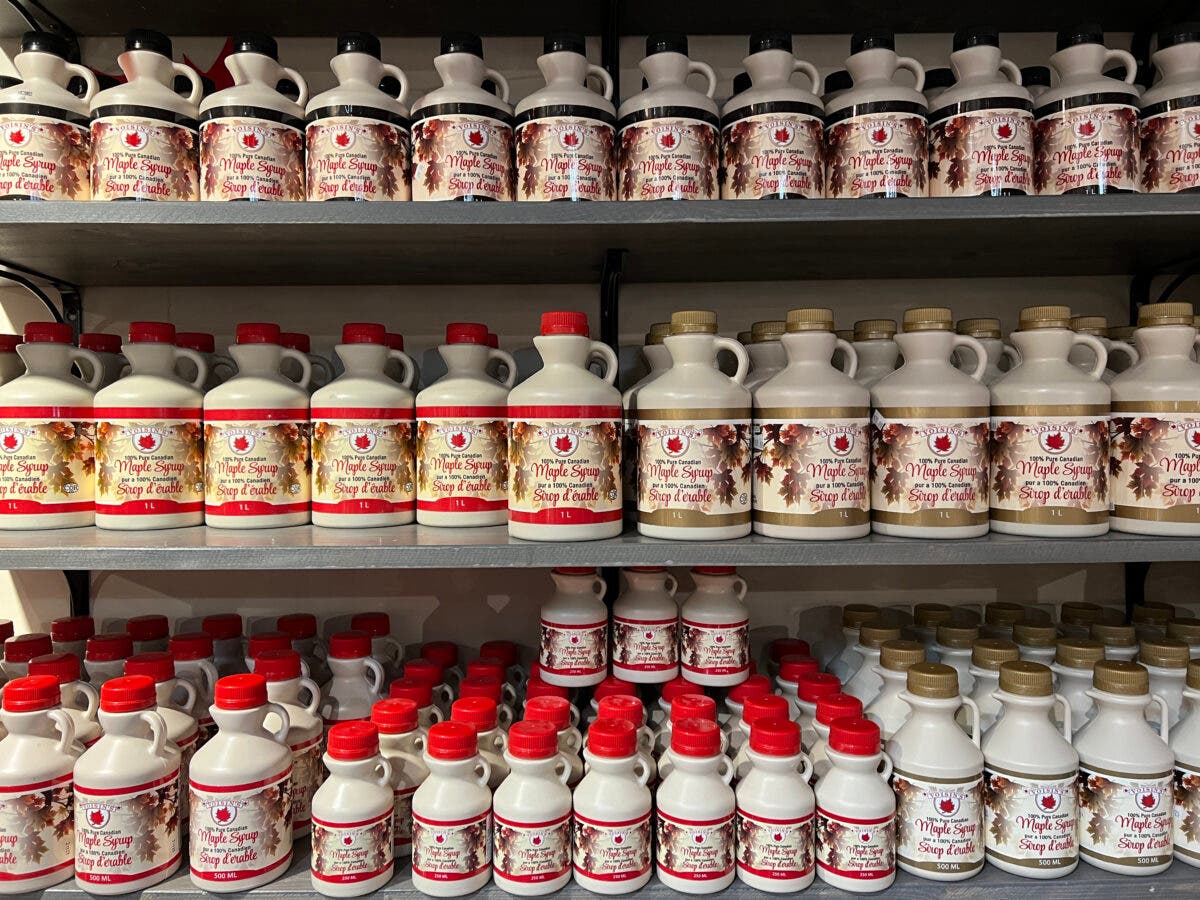
The study is not without its limitations. The test cohort is all male, results could be impacted by their dietary habits, and their unique digestive tolerance and level of “gut training” could complicate results.
However, drawbacks aside, the results could help shape your grocery-store fueling strategy.
Maple syrup ranks alongside bananas, candies, and Coca-Cola for many cyclists looking to escape the sickly, expensive monotony of energy gels.
Maple syrup is of a similar carbohydrate density to table sugar, and as a natural sap, it’s free of processing. It also contains small doses of antioxidants and electrolytes that contribute to performance, recovery, and daily health.
When diluted in water, it’s an easily swig-able solution that tastes better than any “blue raspberry” or “tropical punch” sports nutrition.
And of course, it’s extra popular for athletes in Canada, the powerhouse of the maple industry.
Retired pro Michael Woods told Velo it’s his fallback option when he runs out of drink mix. Gravel privateer Adam Roberge and Ironman legend Lionel Sanders have used Canada’s most stereotypical fuel almost exclusively.
However, until now, the effectiveness of maple syrup as a high-carb solution hasn’t been studied.
How to use maple syrup as an alternative to gels
The results from the University of Montréal’s paper won’t be released for several months yet.
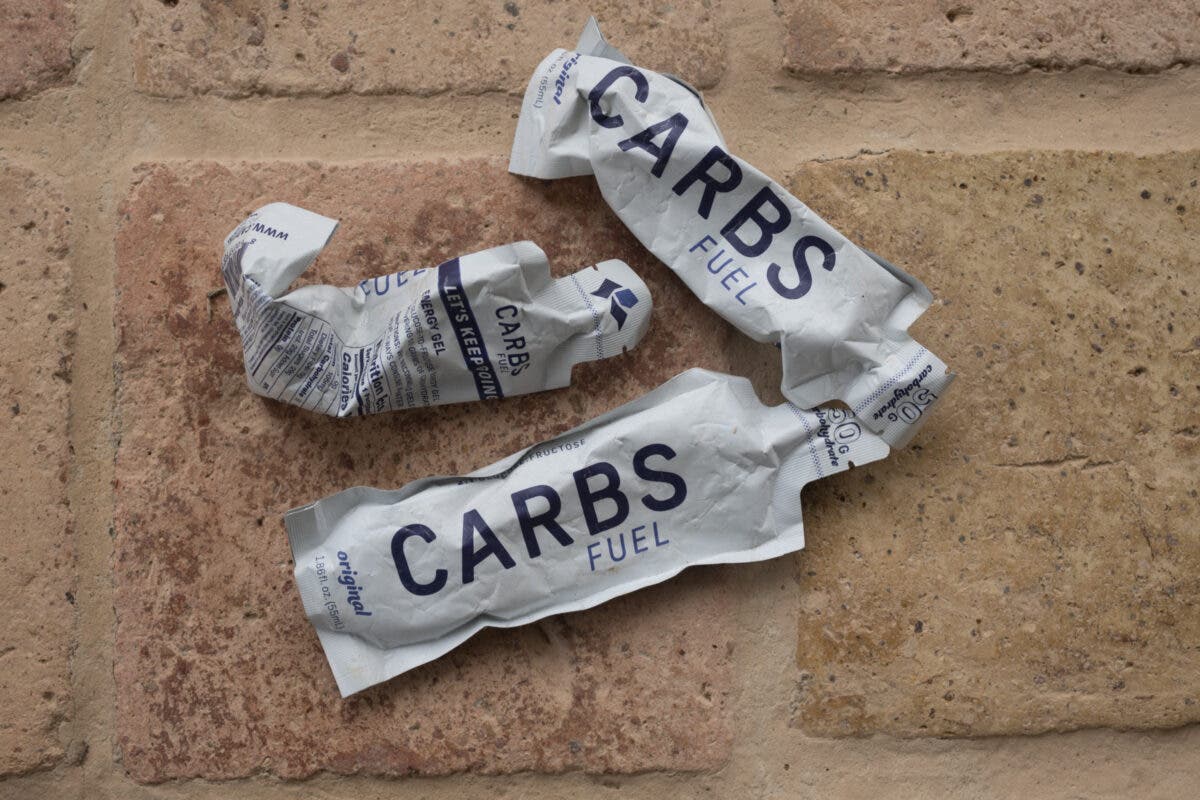
In the meantime, if you want to anecdotally test if maple syrup suits your fueling needs, try mixing two tablespoons (around 35ml) with water to make a 500ml energy drink. That delivers around 110 calories and 27g carbs, which is similar to a lower-power energy gel. It’s also worth adding a dash of salt, unless you’re separately supplementing with electrolytes.
But be warned – the flavor and nutrient benefits of maple might not extend to your wallet.
When we broke down the cost per carbohydrate of various grocery store fueling options in our feature earlier this year, diluted maple syrup was one of the most costly solutions on the shelf.
In the U.S., a liter (~34 fluid oz) of pure, unadulterated maple syrup will set you back $20-25 USD. Pricing is no better for me here in the UK.
However, maple syrup did work out to be significantly more cost-effective than sports nutrition – the price of which is spiraling beyond control. At three or four bucks a gel, the going rate can break the bank for those targeting high-carbohydrate fueling strategies.
The natural pros and carbohydrate cons of maple syrup

All that said, it’s easy to overlook the benefits of sport nutrition as you resentfully choke down the umpteenth gel of your long weekend ride.
Energy gels and carb drinks are pre-packaged, easy to carry and consume, and, in the case of many leading brands, deliver carbs in a perfect glucose-to-fructose ratio.
For those looking to hit 120g of carbohydrate per hour, 1:0.8 glucose-to-fructose is widely accepted as the most stomach-safe and energy-effective ratio. That’s why nearly all the leading brands that partner pro athletes and teams use it.
Maple syrup, however, is approximately a 1:1 glucose-to-fructose mix. Some believe that’s too far from the optimal 1:08 ratio to support the high-carb fueling strategies that prop up modern pro performance.
But that doesn’t mean maple syrup can’t deliver carbohydrate at a suitably significant level to support high-level performance. For many sub-elites, even 90g per hour is sufficient to meet metabolic demand.
Researchers haven’t released any timelines for publishing their findings yet, so stay tuned for more.
In the meantime, if you see Tadej Pogačar swigging from a bidon with a tiny looping handle, you can assume researchers found some surprisingly high-carb potential in maple.