Published September 14, 2026 11:38AM
Welcome to Dropped, a new weekly road and gravel cycling newsletter from Velo that brings you the latest ideas we’re debating endlessly on group rides, and a look behind the scenes of our coverage.
The Crash Interrupts the Story
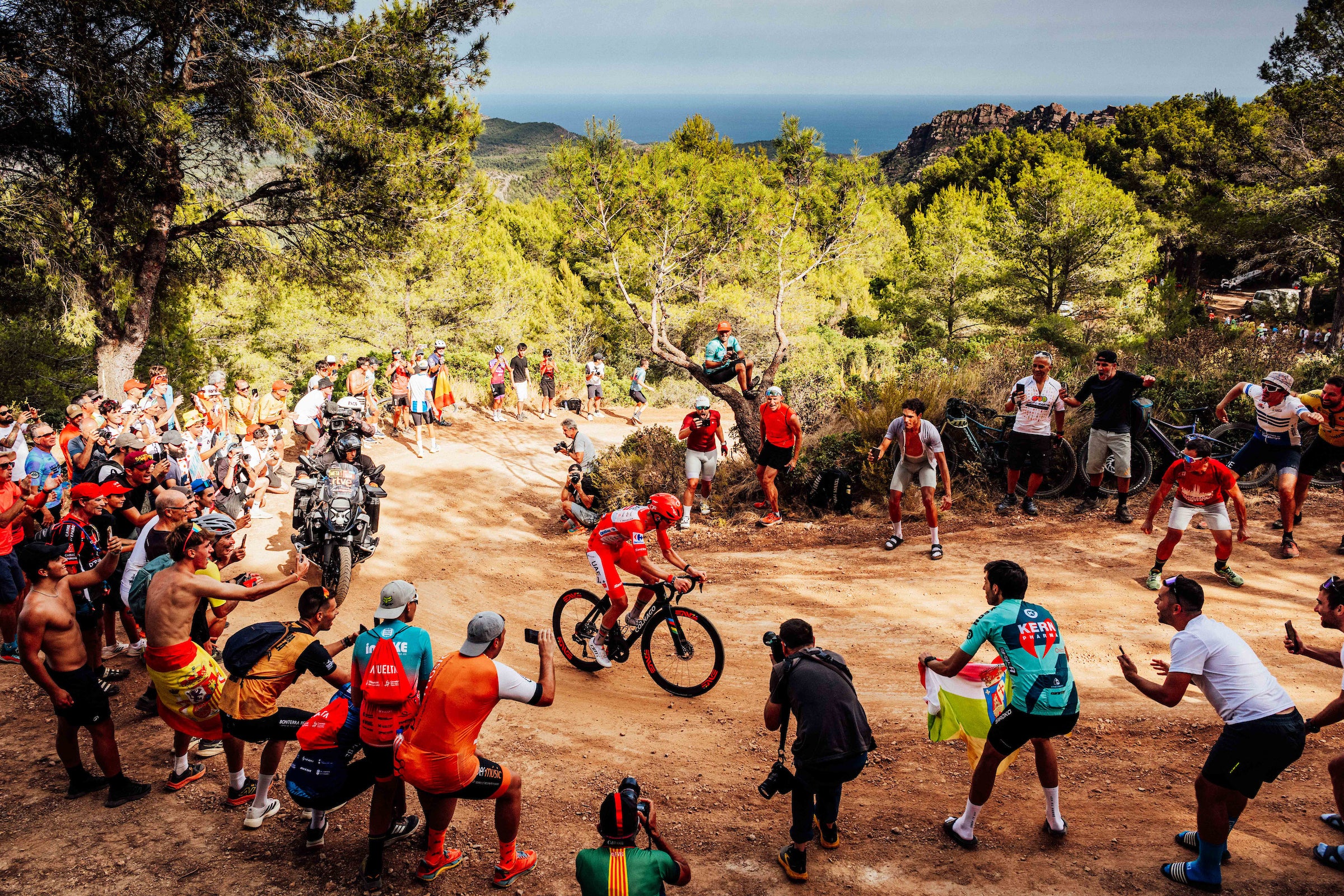
I was literally about to hit “publish” on a story about Tadej Pogačar dominating the Vuelta a España when race radio crackled across the press room: Caída! Crash in the peloton!
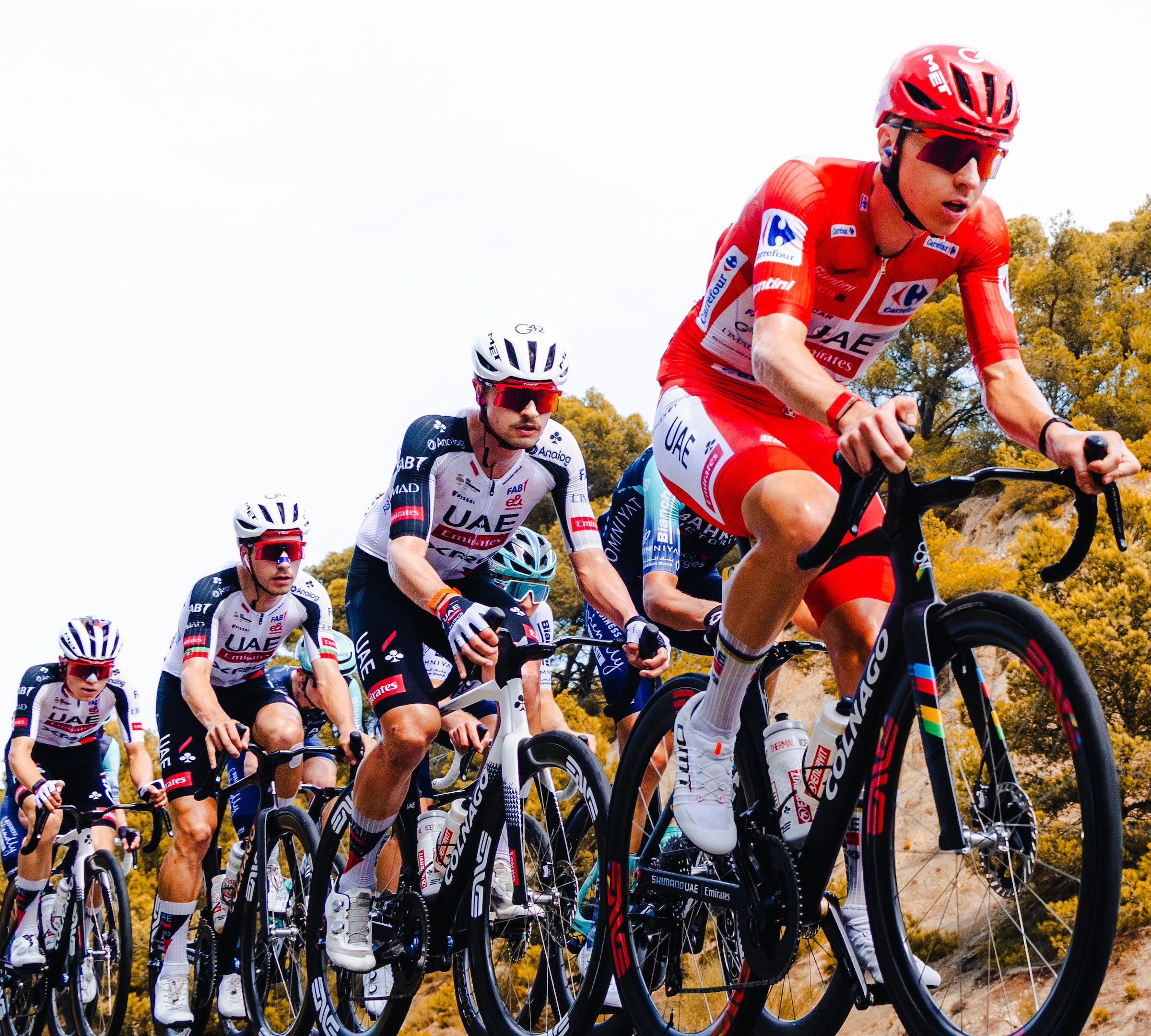
I had spent the week reporting on how thoroughly Pogačar was dominating the Vuelta and professional cycling in general. He wins when he wants to. He has no rival. Elite pros admitted that Pogačar made them look like juniors.
Now the camera found the red jersey lying on the ground.
I froze.
Everything stops when there is a crash in a bike race. Everyone holds their breath and waits for movement. OK, they’re getting up. They’re going to be OK.
But this time was different. Pogačar wasn’t getting up. His left arm dangled at that grotesque angle that every cyclist knows means something is broken.
My reporter instincts kicked in. I quickly posted a story reporting that the race leader had abandoned, grabbed my notebook — yes, I’m so old-school I still carry one — and sprinted toward the finish.
Two races unfolding at once
The Pogačar crash was one of the bigger moments I had been present for in recent cycling history, and was about to remind me just how much covering cycling has changed over the decades.
I first came over to Europe in the 1990s with a $100-a-day gig to cover the European racing season. Believe it or not, that covered my costs and I still had some beer money left over.
Everything about the way journalists work at bike races has radically evolved.
The basics of the job haven’t. You see, you ask, you confirm, you report. It’s the mediums and the pace of the news cycle that are different.
I was hustling around, interviewing riders and sport directors to get confirmed details about what actually happened on the road. But when I looked at my phone, some crazy narratives were already taking on a life of their own online.
Before the peloton reached the finish, videos were circulating online that appeared to show Pogačar striking a piece of black debris. Websites and social media accounts were already declaring what caused the crash and speculating about how badly he was hurt.
This was all before the stage had even finished and anyone who might have seen the crash had crossed the finish line.
When news moved at newspaper speed
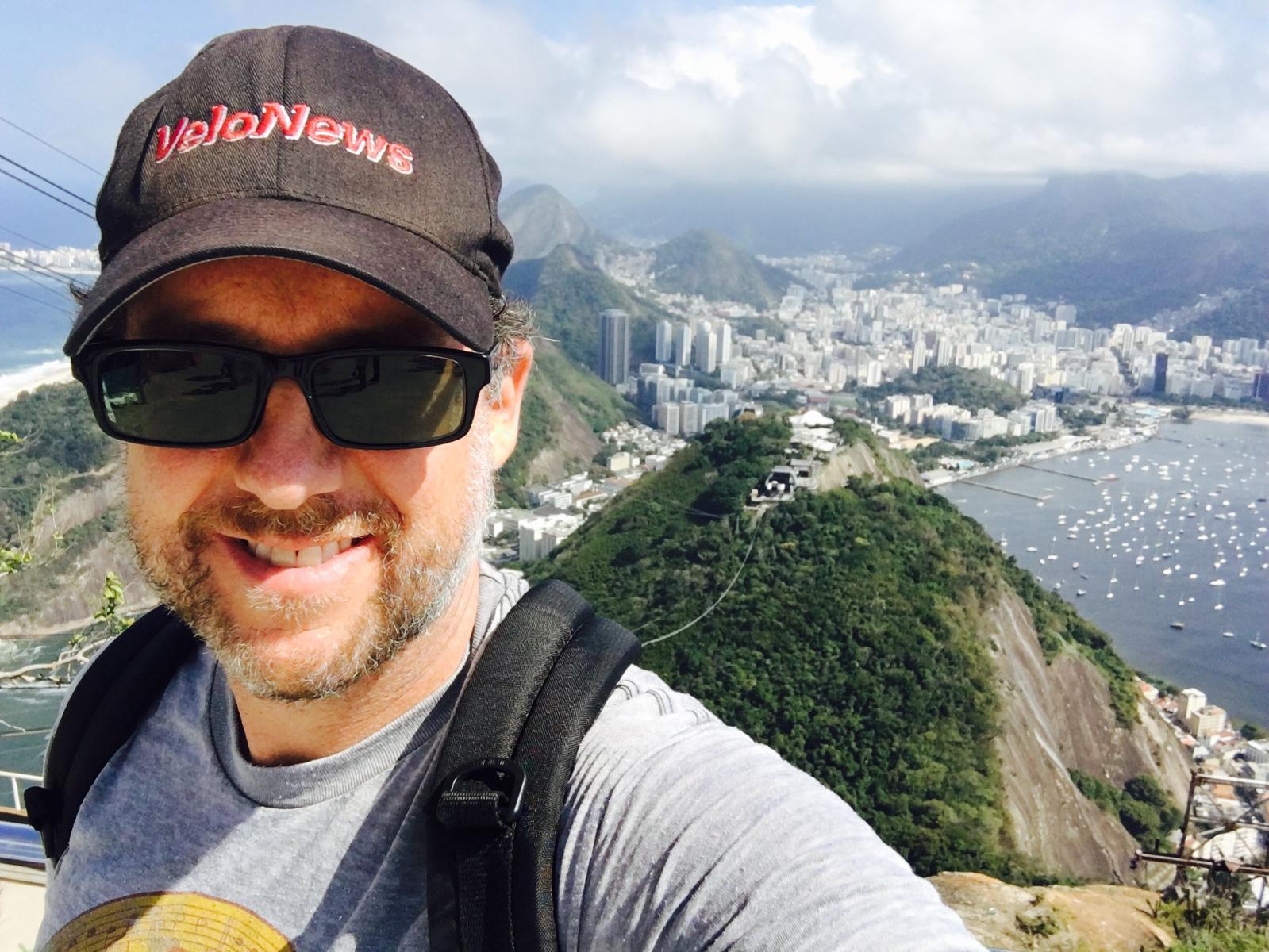
I have been coming to the Vuelta since the late 1990s. It is where I met my wife, and the race has become stitched into my life in ways that go far beyond cycling.
The job looked very different when I started.
In the print era, we typically had an early deadline and a late deadline. Once the newspaper went to press, that was it. If someone scooped you, you had to stare at their headline all day, but at least there was a pause button.
There is no pause anymore.
Back then, the challenge was finding the information and getting it to your editor before deadline. Today, information arrives from every direction before you even have time to ask whether it is accurate.
Just getting online used to be a miracle. There was no Wi-Fi, and there were barely even phone jacks for dial-up. That screeching sound of the modem connecting was the happiest sound on Earth.
The technology was slower, but the news cycle gave us more time to report, make calls, confirm facts, and build the story before it reached readers.
That did not make covering breaking news easy. Far from it.
Raids, protests, and days of uncertainty
I have covered more chaotic stories than Pogačar’s crash.
The Festina Affair brought police raids, arrests, teams being thrown out of the Tour de France, and riders stopping the race in protest. Operación Puerto produced another flood of names, allegations, denials, and documents that shook professional cycling.
Those scandals unfolded over days and weeks. Reporters chased riders, team officials, police, and race organizers in an effort to understand what was happening.
Rumors flew fast, but you had to be there to get the news. During the Festina Affair, the idea of a mobile phone barely existed. Police would raid a hotel, and TV crews and journalists would show up just in time to see the aftermath. Often, it was the police providing the tips. Everyone wanted the headline.
By 2006 and Operación Puerto, things were moving even faster, but there still wasn’t Twitter and the iPhone would not roll out until the following year. The big innovation at the time was the BlackBerry. Remember those?
Rumors still traveled quickly, but usually via gossip flying around the paddock. Today, news arrives instantly on millions of phones, accompanied by slowed-down videos, screenshots, instant analysis, and anonymous accounts claiming to know exactly what had happened.
A cycling scandal once rolled out in a series of raids, hearings, denials, and bans.
Today, an entire narrative can take shape before the peloton reaches the finish.
From print deadlines to Reels
I have watched cycling journalism move through several distinct eras at head-spinning speed.
First, we wrote for the next day’s newspaper. Then websites turned stories into living things that could be updated throughout the day. Twitter transformed every journalist, rider, team, and spectator into a potential news wire service.
Now we have entered the age of Instagram Reels, TikTok clips, screenshots, and videos. An image can reach millions of people and establish the accepted version of events before a reporter has spoken to anyone who was actually there.
For fans, this change has been a tremendous boon. We can publish and update stories with confirmed information almost at light speed. Races are streamed into smartphones. There is no waiting for the morning newspaper to land on the doorstep to learn whether Pogačar finished the stage, went to the hospital, or was out of the Vuelta.
The challenge for journalists is making sure speed does not outrun the truth.
Seeing no longer means believing
There is always pressure to be first, but my journalistic instinct tells me that being first means little if you are wrong.
Today, that means questioning not only rumors but also what appears in front of your eyes. AI-manipulated images have added another layer of skepticism to breaking news.
I repeatedly watched the video about the debris that purportedly took down Pogačar and wondered: Is that actually there? Is this even real?
Days later, there was still no definitive explanation of precisely what brought Pogačar down, except that he was taking a drink from his bidon and had only one hand on the bars.
The next day, Pogačar posted a hospital selfie on Instagram. The injuries appeared to be on his right side, even though the official medical report placed them on his left.
The discrepancy immediately caught my attention. It turned out to be a “mirrored” selfie. The image was genuine, but I did a double take because it could easily have been an AI-generated fake.
That is the strange reality of reporting today. Even when an image comes directly from the rider’s account, you still have to pause and confirm what you are seeing.
The presses never stop
The modern system has obvious advantages. With Pogačar, we could report in rapid succession that he had crashed, that he appeared seriously hurt, that he was out of the Vuelta, and that an ambulance was taking him to the hospital.
Readers did not have to wait until the next morning. Each confirmed detail could be added as soon as it arrived.
Sometimes what’s missing is what it all means.
When I started this career, my biggest fear was missing the story. Now I worry just as much about moving too quickly and getting it wrong.
That may be the biggest way reporting has changed me. Experience has not made me quicker to believe everything I see. It has made me more willing to stop, question it, and wait for confirmation, even while everyone else is sprinting to publish.
No one yells, “Stop the presses!” anymore.
These days, the presses never stop.