Updated July 2, 2026 05:45PM
Pros
- Claimed 21-watt savings over previous generation Orca Aero
- 900 grams for a size 53 frame (saves over 200 grams over last generation)
- Priced more competitively than other WorldTour-level aero bikes
Cons
- Integrated aero water bottle cages more difficult to use than standard cages
- Electronic drivetrain only
Specs
Size tested: 51
Weight: 900 gram frame weight (Size 53)
Price: $12,127 as tested
Brand: Orbea
Verdict
The Orbea Orca Aero makes a huge leap in its fourth generation, saving 5.1 watts for just the bike alone, and much more with a rider. But beyond that, Orbea has made a much better overall racing machine, removing 250 grams from the frame, while increasing stiffness, stability, and handling. Add in 37mm of tire clearance and it’s a thoroughly modernized aero race bike.
It might seem like there’s not much more that can be done to make aero road bikes faster, that in a space where so much advancement has already happened that most new designs are merely iterative improvements.
And to some extent that’s right. There are of course a new wave of boundary pushing aero bikes, the Factor ONE and Colngao Y1Rs among them with crazy looking tube shapes designed to make the most of UCI design limits.
By comparison, take a glance at the new fourth generation Orbea Orca Aero and you would be forgiven for thinking you’re looking at a fairly standard aero bike by modern standards. However, dive in to the small details on this bike and you’ll find creative design solutions pushing aero to a new limit. You will also find a design the Spanish brand claims competes head-to-head with the latest generation hyper-aero bikes on the all-out speed front, in an overall package Orbea thinks makes it a better riding race bike — that is, with a lower frame weight and better handling.
Orbea’s new Orca Aero is a somewhat standard looking aero bike, but it lays claim to some impressive aero credentials. How much faster it is? Orbea claims a 21-watt improvement over the previous generation at 50kph.
We’ll explore that figure and some other aero claims more in a bit. For now, let’s take a look at the design changes Orbea made to make its aero platform even faster.
Quick hits: 7 standout details of the Orbea Orca Aero
- Claimed 21 watt aero savings over previous generation Orca Aero
- Lowest bottom bracket of any modern aero road bike increases stability and speed
- 37mm tire clearance
- Orbea’s MyO customization program let’s you choose paint and spec exactly the bike you want
- 900-gram frame cuts a whopping 250 grams from previous generation
- Spinblock prevents fork from rotating more than 90 degrees and damaging the frame
- Removable integrated service boxes allow you to carry additional gear on the bike
Frame Details: Shaping for Aero
Most of us will rarely touch 50kph outside of a descent, but even at lower speeds there’s still aero gains for the rest of us. Orbea did quite a lot of reshaping of the Orca Aero this time around. In fact, almost no tube shape was left untouched compared to the last version. But the most important changes can be distilled to these five areas: headtube, fork, seat post, bottom bracket, and downtube.
Headtube
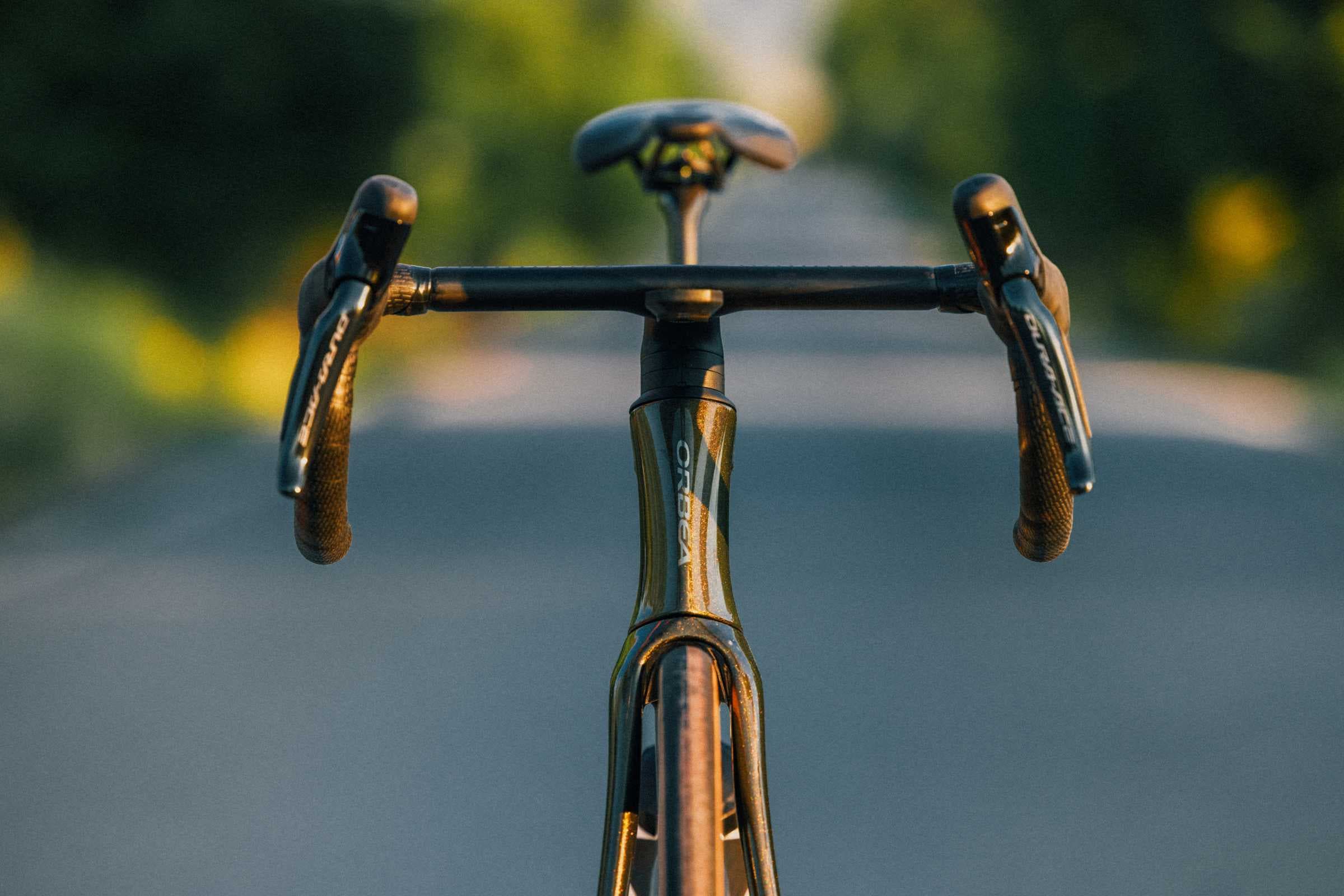
As the leading edge of the frame, the headtube is one of the most important parts of a bike aerodynamically speaking. Naturally, Orbea focused on refining this area, making it narrower, sharper, and moving it more forward. But at the same time, Orbea has also maintained a standard 1-1/8” to 1.5” tapered steerer tube.
Fork
Likewise, as a leading edge of the bike, the fork plays an outsized roll in a bike’s aerodynamics. For generation four, Orbea has refined the NACA aero profiles of the fork blades, and widened out the fork to improve airflow across yaw angles. Though notably, Orbea has not gone extreme with fork width like we are seeing with new cutting edge designs like the Factor ONE. That Factor takes fork width to the UCI limit, but Orbea stays well clear of those limits because its testing showed that a wider fork impacts the aerodynamics of the downtube and when using wider tires.
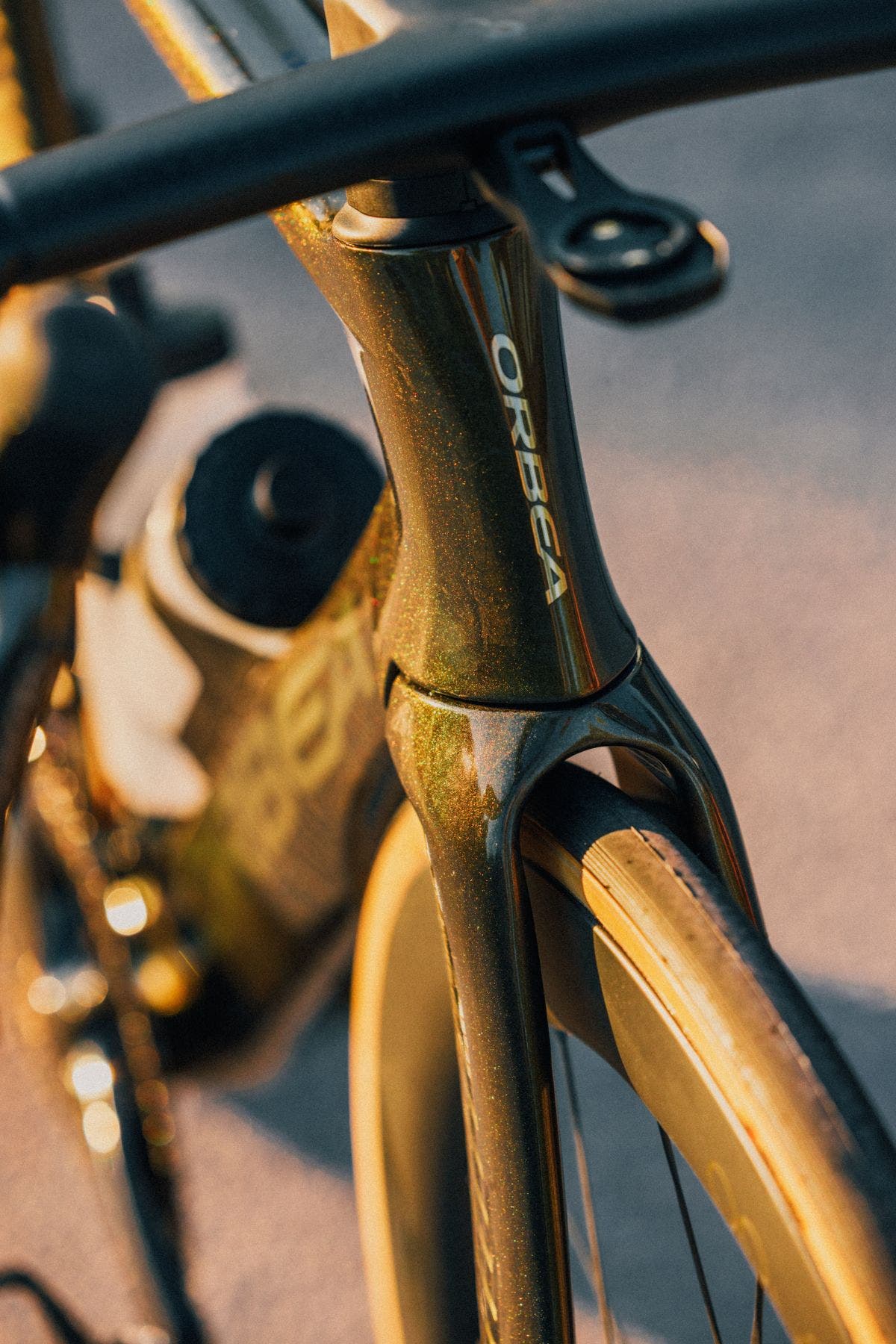
The fork has also been built around maximizing aerodynamics for bigger tires, which pros are increasingly adopting. It’s not unheard of for pros to race 32mm tires on a regular road stage these days, whereas in the past that would have been reserved strictly for Paris-Roubaix. Given this push to wider tires, Orbea has optimized the aerodynamics around tires in the 29-35mm range (37mm is the size limit), and improved the diameter limit of the wheel to 698mm, taking it to the edge of the 700mm UCI diameter limit. Essentially, Orbea sees where tire size trends are going and has designed accordingly.
Downtube and water bottles
Orbea has also found aero savings by widening out the downtube. While going thinner makes sense for the leading edges, the downtube carries the distinct aero challenge of having to carry a water bottle as well, a decidedly non-aero round shape. By going wider with the downtube, Orbea’s designers have been able to channel airflow more seamlessly around the bottle. Orbea has also designed an integrated bottle cage that improves airflow without resorting to oddly shaped aero bottles; yes you can keep your standard round bottles for this bike. The bottle cage positions have also been designed to sit lower in the frame, which also provides an aero benefit.
An additional benefit of widening the downtube is creating a stiffer ride, contributing to Orbea’s goals of improving the bike’s efficiency and ride quality, not just its aerodynamics.
Bottom bracket
The downtube leads us to the next notable aero revision of the Orca Aero: the bottom bracket. Orbea added what is essentially a keel to the bottom bracket area, which guides airflow from the bottom of the bike to the rear wheel. Orbea took this feature to the limit of what the UCI allows. Additionally, Orbea reworked the rest of the bottom bracket shell to help smooth out airflow.
The most interesting aero claim about the bottom bracket, however, comes not from the tube shapes but from the geometry. In part made possible by the adoption of short cranks, Orbea was able to lower the bottom bracket, creating the most BB drop of any aero bike on the market at 78mm. That lowers the rider for a more stable ride, which Orbea says has a massive impact on speed by reducing the pendulum effect of a rider’s pedaling—there’s less energy lost to side to side motion and more energy put into propelling the bike forward. Orbea also says the lower bottom bracket makes for precise cornering.
In the testing phase, Orbea made prototypes with far lower bottom brackets, but found that this is optimal balance of stability and ride quality.
Seat post
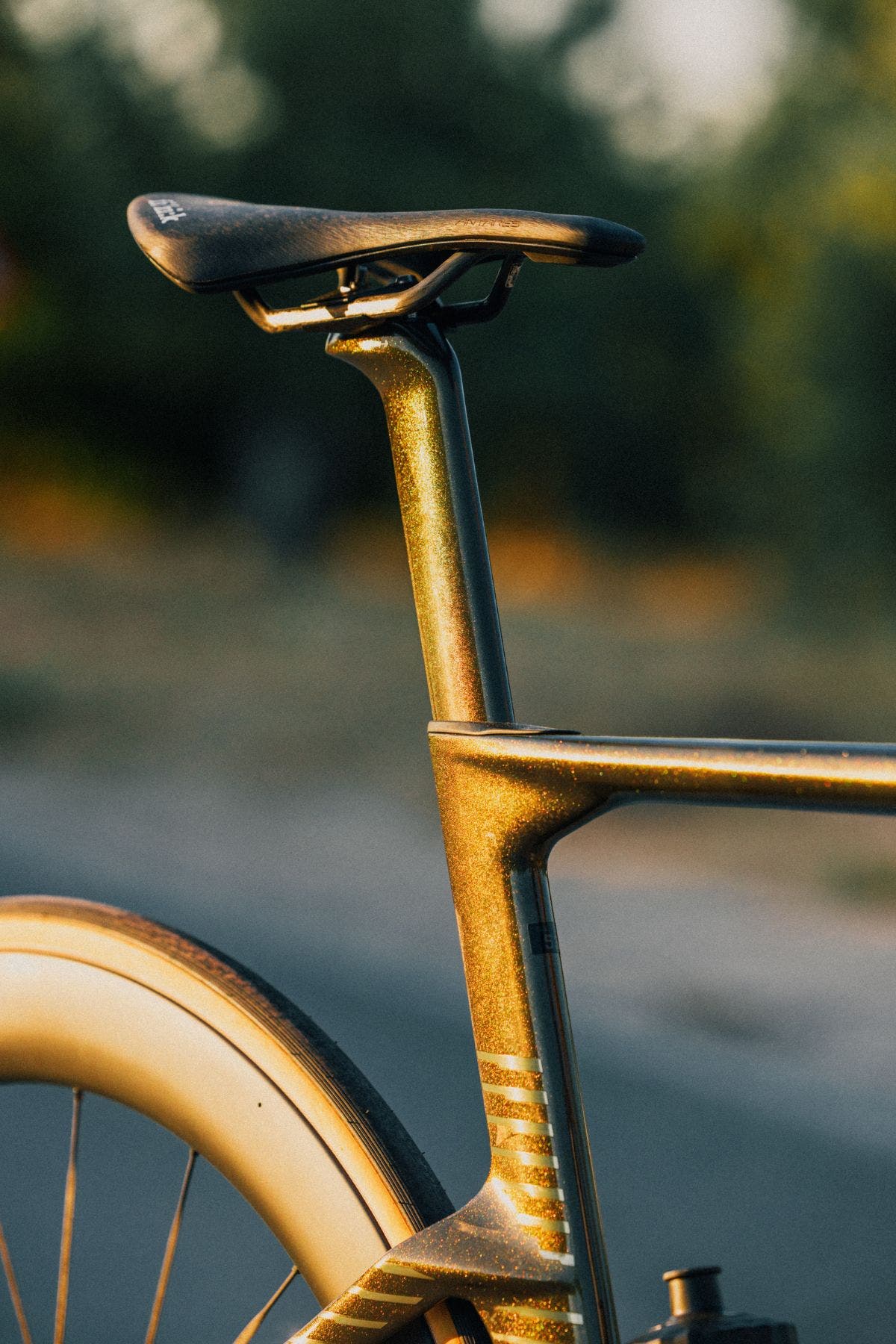
The seat post is one more area of aero improvement for Orbea. Thinner is faster for seat posts, but one limiting factor to how thin a seat post can go is Shimano’s Di2 battery, which is usually housed here. Orbea created a clever workaround. Moving the battery to the bottom bracket area allowed the brand’s designers to thin out the seatpost and eke out more aero savings from the OC RA11 Aero Seatpost.
That’s great, but the home mechanics out there, and the shop mechanics who will have to service these things, are no doubt calling out that that will make accessing the battery a nightmare. Not so, thanks to some clever engineering. Orbea added an access port to the backside of the seat tube, making the battery accessible by removing the rear wheel. You most likely will never need to access the battery after installation anyway, but it’s nice to know it’s not going to require removing a bottom bracket or any other labor intensive task just to service a battery.
In addition to being thinner, the redesigned seatpost also includes a reversible saddle clamp, and it comes in two setbacks: 0-10mm, and 15-25mm.
As a note — not that this is unexpected for high end bikes these days — the Orca Aero can only run electronic drivetrains.
Aero discussion: What’s behind that 21-watt savings claim?
Add up all those aero gains, and you get… 5.1 watts saved over the last generation at 50kph on flat terrain. Yes, you’re right, that is a lot less than the 21-watt figure Orbea is flashing in the marketing materials. Here’s why.
That 5.1 watts saved from the bike alone is just one part of the equation. The rest comes from improved rider efficiencies on the bike. Orbea took a total system approach to designing the new Orca Aero, designing for the fastest bike possible with a rider in real-world conditions, not just the fastest in a wind tunnel. Orbea says that when accounting for the added stability and improved stiffness of the bike, its real world speed is much greater than bike alone, saving 14 additional watts.
That puts us at 19 watts. Where do the other 2 watts come from? Orbea claims the weight savings and stiffness improvement of the new Orca Aero save 2w at 17kph on a 8% climb.
Every brand says its aero bike is the fastest in one way or another. You can cherry pick or massage the data in any number of ways to say that something is the fastest, so take Orbea’s own claims with the necessary grain of salt — 21 watts, after all, is a big number, especially by today’s standards of aero improvement. And remember that’s at 50kph, a speed not even held all the time on flats by the WorldTour peloton.
Orbea’s real world testing protocol does sound thorough, however. The brand described it to me as a standard course where they test different prototypes from Orbea and different competitors’ models and hold as many factors constant as possible, even swapping in the exact same power meter for every test to ensure consistent readings from bike to bike for accurate comparison data.
Bottom line, there are some considerable aero improvements to the fourth generation Orca Aero, but you and I most likely won’t be saving 21 watts all the time far from it. One thing everyone will feel the same, however, is the bike’s improved handling, which I’ll jump into more in the ride experience farther down.
Other notable features
Orbea designed the new OC RA10 integrated handlebar for the new Orca Aero to enhance stiffness. The cockpit features internal cable routing and comes in 13 sizes: 360mm width/80mm stem, 360/90, 360/100, 380/80, 380/90, 380/100, 380/110, 380/120, 400/90, 400/100, 400/110, 400/120, 400/130.
In addition, Orbea’s professional WorldTour riders have access to another 13 sizes, reaching all the way to 360/170, 380/170, and 400/140. If you want to stretch your bike position out that much, then either improve your FTP by 200 watts or so and go pro, or maybe try asking your Orbea dealer nicely if they can make an exception for you.
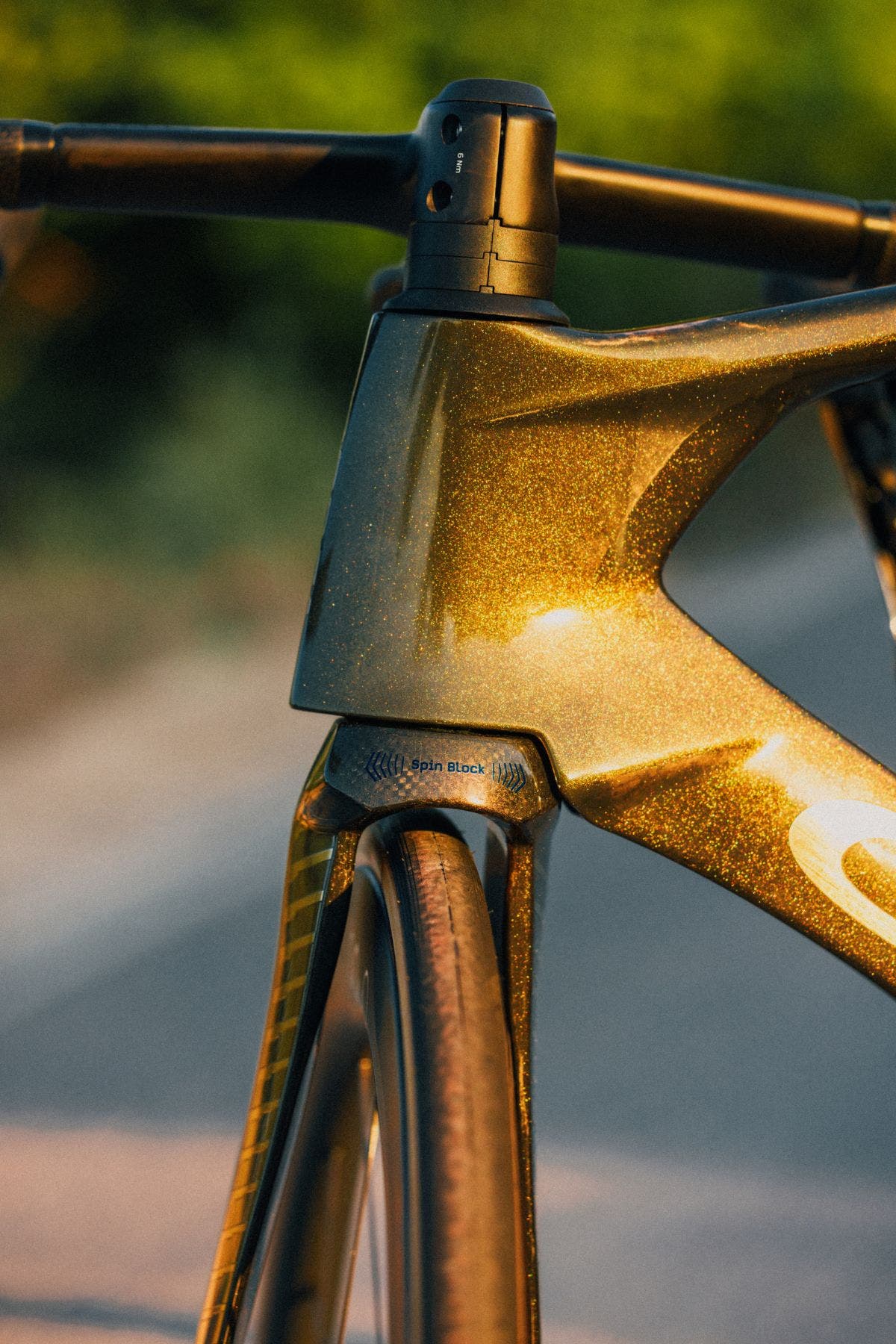
Orbea has designed some more well-thought out features into the package as well. The fork is physically limited by a piece of metal from rotating more than 90 degrees, meaning you can’t smack the fork into the frame during a crash, or while putting the bike away in the garage. Orbea calls it Spinblock and it’s a nice peace of mind that your expensive is bike slightly more protected.
As is to be expected for any new generation bike, it uses SRAM’s Universal Derailleur Hanger (UDH) standard, so you’re covered for using the latest drivetrain tech.
And finally, I’d be remiss if I didn’t mention that this bike looks much better aesthetically than the previous generation, at least in the humble eyes of this reviewer. Realistically, for an aero bike, that should be far down the list of considerations — but let’s not kid ourselves, how a bike looks propped up against the wall at a cafe matters much much more than most would care to admit. Arguably the strangest looking part of this bike is the keel in the bottom bracket, but it’s hardly noticeable, tucked away at the bottom of the frame. I’ve also not been a fan of the look of aero bottle cages in the past, but these ones look all right to me, especially because they accommodate round bottles.
Pricing
Orbea told me they want to be a “performance to money brand.” In other words, the best value aero race bike. Value is an interesting word to throw around for a bike that can cost five figures. However the world of hyper-aero bikes has become hyper-expensive in recent years, in many instances pushing past $15,000 USD.
The top level trim M10i LTD and M11e LTD models, with Shimano Dura-Ace and SRAM Red respectively, and Oquo RA57 LTD wheels wth carbon spokes, cost $12,127 USD. So not exactly cheap by any means, but a comparably good deal to most competitors save Canyon.
While a lot of Orbea’s competitors will switch to lower tier carbon for the next level down builds, Orbea specs all its builds using the same frameset, so that’s another thing to keep in mind when comparison shopping — It’s the same frame, just different spec.
The next tier down, the M21e LTD, drops to $8,268 for SRAM Force, followed by M20i LTD with Shimano Ultegra for $7,386 and M22 LTD with Campagnolo Record for $7,349. The lowest priced version is the M30i LTD with Shimano 105 for $6,284.
Geometry
| Size | 47 | 49 | 51 | 53 | 55 | 57 | 60 |
| Seat Tube (C-T) | 459 | 474 | 499 | 524 | 545 | 565 | 592 |
| Top Tube (EFF) | 505 | 518 | 530 | 543 | 555 | 571 | 584 |
| Head Tube | 84 | 92 | 107 | 122 | 145 | 163 | 190 |
| Chainstay | 408 | 408 | 408 | 408 | 408 | 408 | 408 |
| BB Drop | 78 | 78 | 78 | 78 | 76 | 76 | 76 |
| BB Height | 260/263 | 260/263 | 260/263 | 262/265 | 262/265 | 262/265 | 262/265 |
| Wheelbase | 966 | 971 | 973 | 974 | 985 | 995 | 1009 |
| Head Angle | 70.8 | 71.3 | 72.2 | 72.8 | 73 | 73.2 | 73.2 |
| Seat Angle | 74.5 | 74 | 73.7 | 73.5 | 73.5 | 73.2 | 73.2 |
| Rake | 48 | 48 | 48 | 43 | 43 | 43 | 43 |
| Standover | 723 | 734 | 754 | 776 | 798 | 816 | 842 |
| Reach | 370 | 375 | 380 | 385 | 390 | 397 | 404 |
| Stack | 495 | 504 | 520 | 540 | 560 | 578 | 604 |
| Fork Length | 368 | 368 | 368 | 368 | 368 | 368 | 368 |
| Trail Length | 68.6 | 65.4 | 59.7 | 61.2 | 59.9 | 58.6 | 58.6 |
Ride Experience
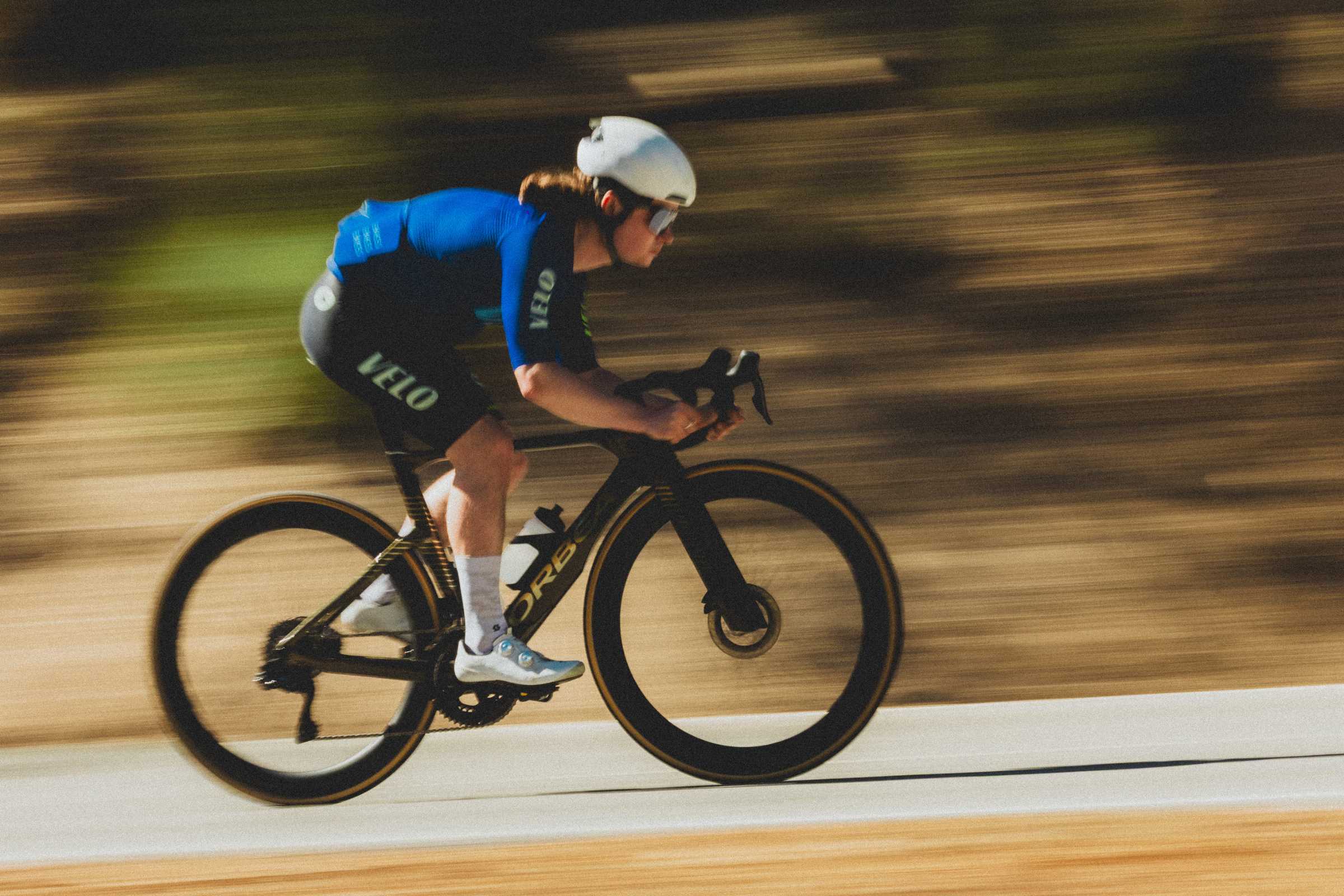
I had the chance to take the Orbea Orca Aero for test rides the south of Spain, near Granada, the very same training roads used by top WorldTour teams while doing altitude training in the nearby Sierra Nevada mountain range. This location is far from the pancake-flat terrain you might expect for testing an aero bike, but it was a perfect proving ground to showcase this bike’s versatile ride quality.
Alternating all day between rolling hills; flat, all-out sections of highway; medium-gradient sustained climbing; and some exhilarating descents gave the Orca Aero ample opportunity to show off.
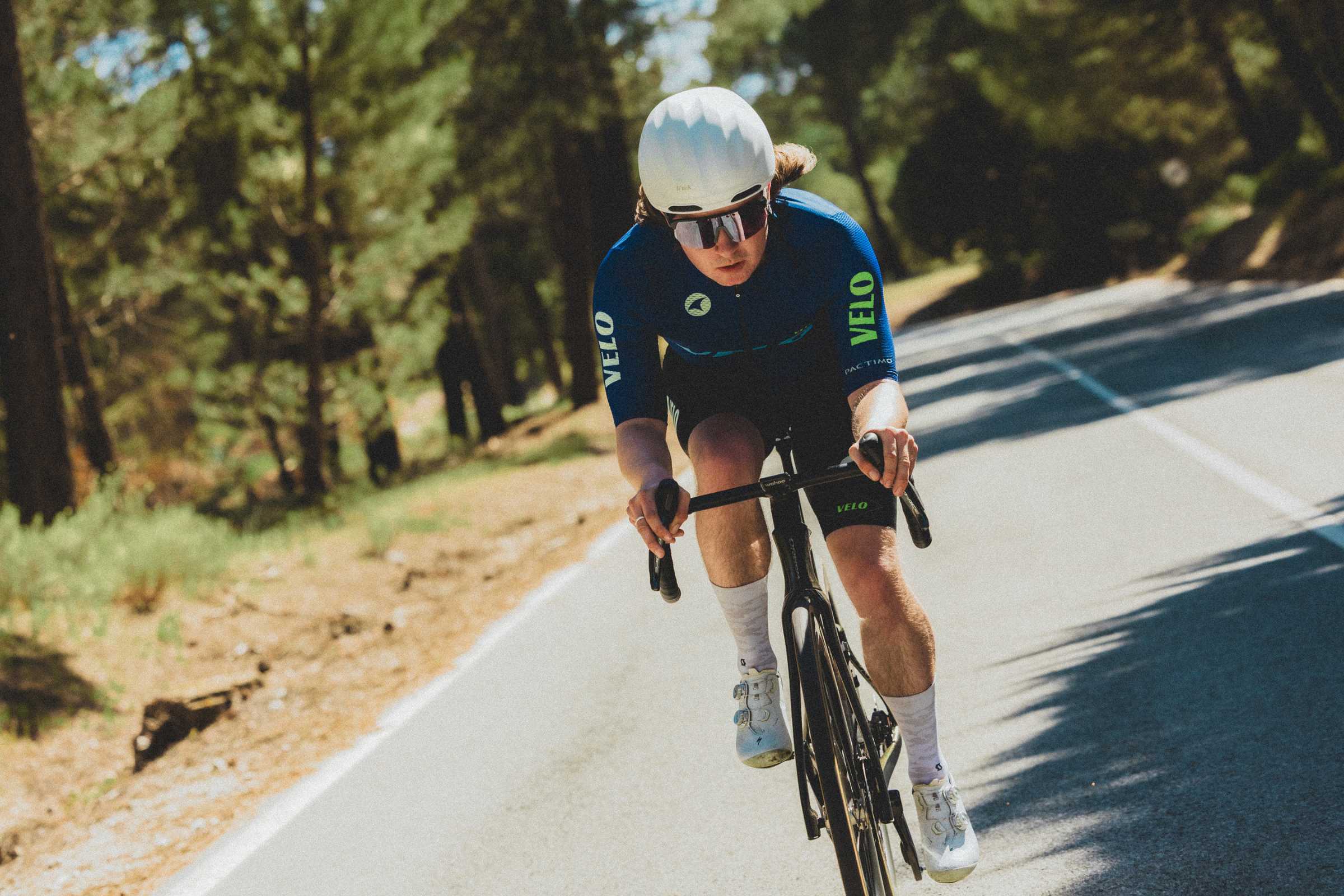
Aero bikes were once a limited option, used only on truly flat days owing to their heavy weight and low stiffness, but the Orca Aero feels like it can do it all, really only being limited on steep climbs.
For a seated climber like myself, I hardly noticed that this bike is a bit heavier than a dedicated climbing bike. Would it have been nice to drop some grams when the road pitched above 5%? For sure, but for the climbs I was testing this bike on, the majority of time was spent in that 3-5% medium-grade climbing sweet spot where aero bikes still excel for riders like myself who are decently fast, but certainly don’t possess a 400-watt FTP. The bike invites you to strap in and keep turning over the pedals, rewarding you with a swift climb.
Descending was a fun time on the Orca Aero as well. I took it on a 30-minute drop down from the Sierra Nevada range into the Granda area and it beautifully handled both sweeping turns and tighter more technical switchbacks. The biggest test came on a section of highway, whose surface had seen better days, that was exposed to crosswinds. I had the misfortune of catching a particularly heavy gust while riding over a pothole, but the Orca Aero handled it well, maintaining course on what could have been a more harrowing moment.
On flats, the Orca Aero feels like any top aero bike, holding onto speed and encouraging you to keep pushing. I can’t confirm Orbea’s specific aero claims, but I can say it’s fast while remaining remarkably comfortable. But even still, out of the saddle, or digging deep for watts, the stiff ride quality comes through. No energy feels wasted and the handling remains precise.
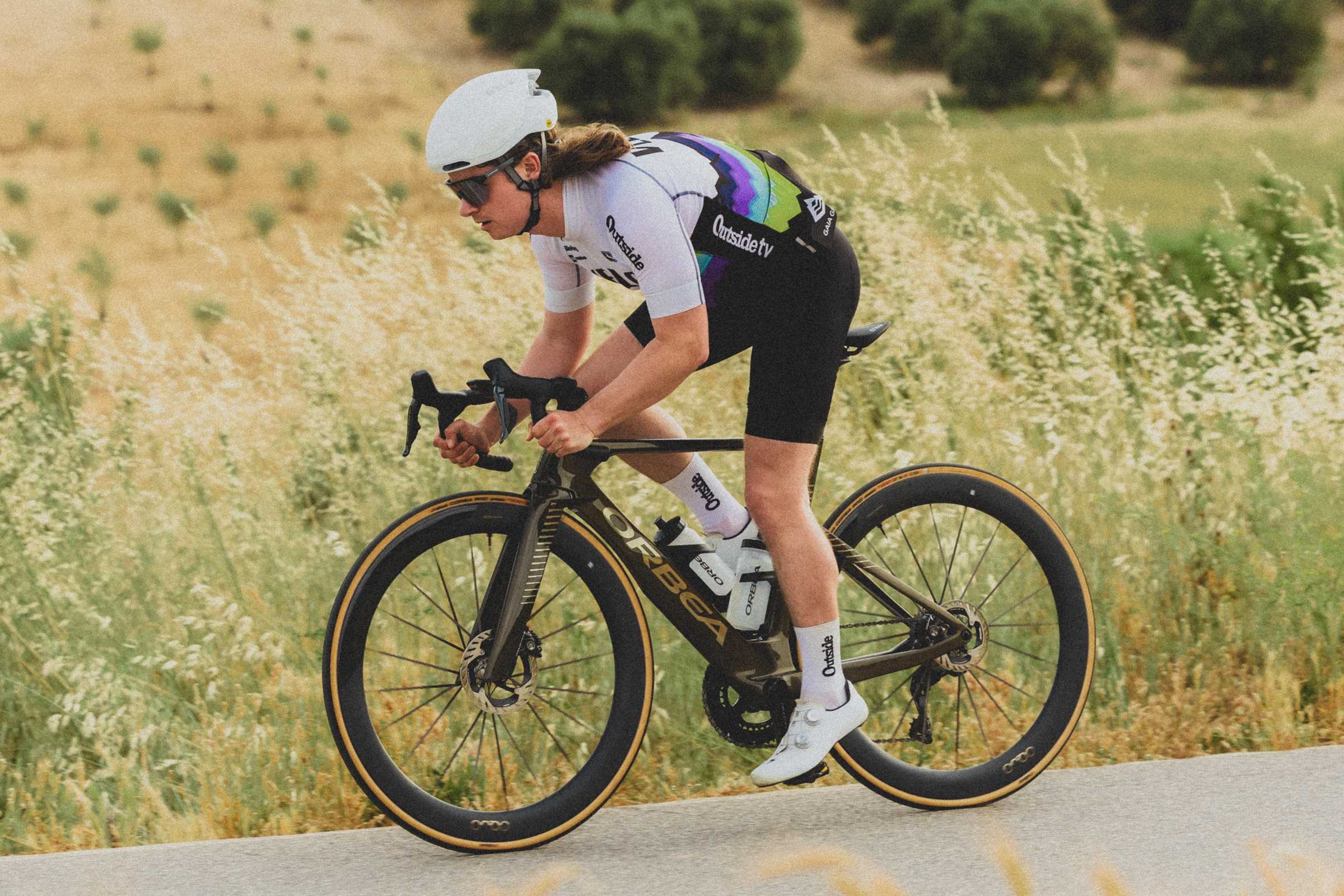
Really, the only real gripe I have with the Orca Aero is that it is a little harder to use the integrated aero downtube bottle cage than a standard cage. I also wasn’t a huge fan of the stock Fizik Vento Antares saddle, but saddles are a deeply personal preference, and something that is easily remedied.
Conclusion
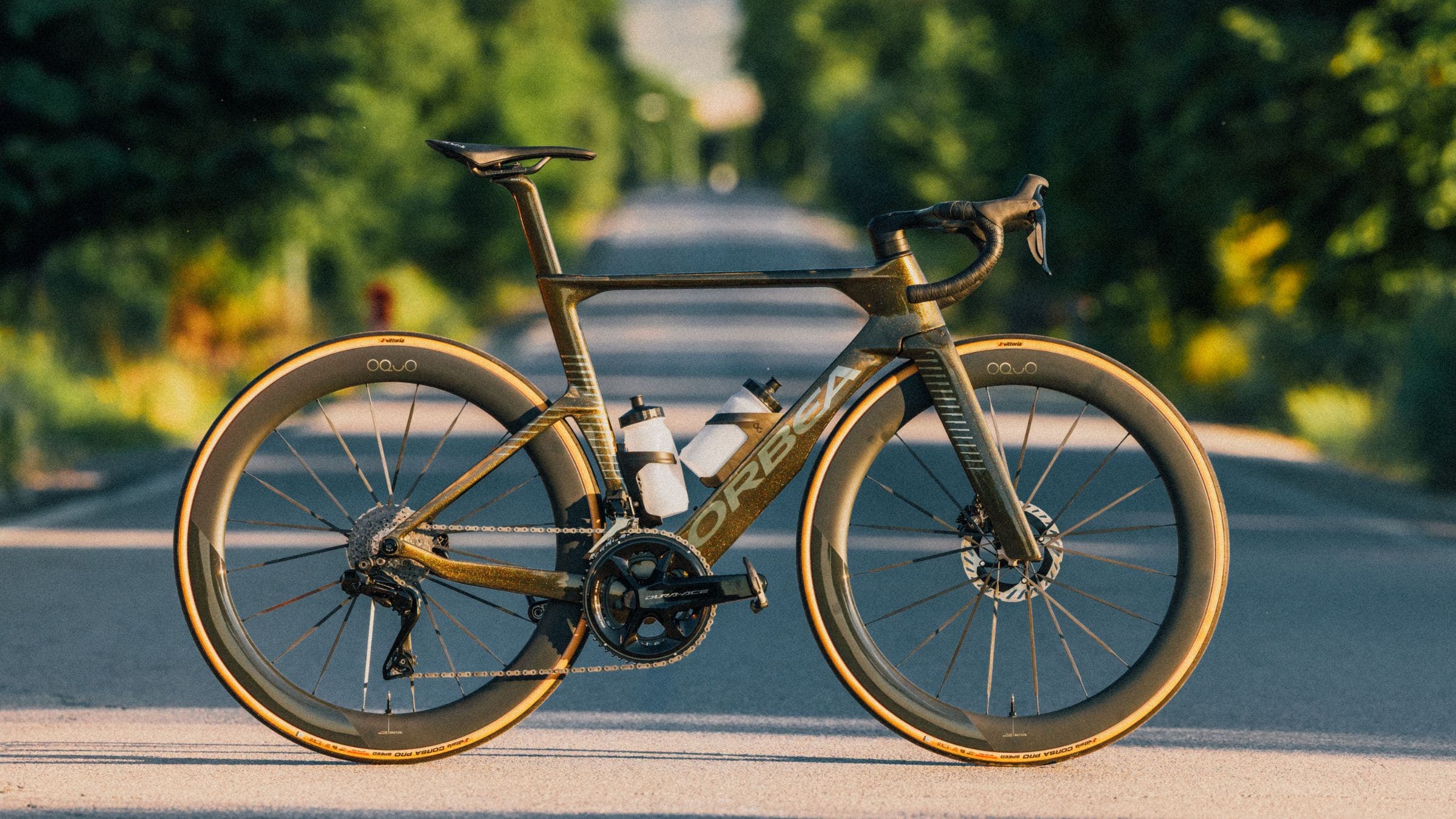
The Orbea Orca Aero generation four offers a well-rounded package with a true aero focus balanced with impeccable ride quality. It’s lightweight for a dedicated aero bike, stiff but not harsh, and is a blast to take on technical roads.
The focus on real-world ride quality pays off in a fun to ride bike. I’d have no qualms making this my daily road bike: it rode well everywhere I took it, was super fast, handled corners great, and took on some dodgy crosswinds with ease. Really the only time I would have second thoughts about choosing this bike is for true climbing days.
Are the aero gains enough to make someone who has the previous generation upgrade? Probably not. But anyone in the market for a new aero bike, or new race bike generally, should give the Orbea a look. Add in the competitive pricing thousands less than many bikes in its class, and customizability through the MyO program, and you have a compelling new entry to the aero bike market.