It’s easy to feel uncomfortable on your bike. You’re seated for hours in more-or-less the same position and repeating the same range of leg movements, while keeping your upper body in a fairly static leant-forward position. It’s even more true if you’re riding indoors than for outdoor cycling.
If your bike isn’t quite set up correctly or some components don’t fit your morphology well, it’s a recipe for discomfort when riding as well as once you finish your ride. It’s frustrating too, as you’ve probably paid a significant amount for your bike and riding kit, and discomfort can ruin your enjoyment of cycling.
Fortunately, a bike fit can remedy the majority of problems and suggest component swaps that will fix comfort niggles. Compared to the price of a bike it’s relatively inexpensive, while a bike fit is often now offered as a free service or at a discounted price when you buy a new bike.
In addition, an optimised fit may help you to maximise your power output. The modern trend is to sit further forward over your cranks, but that could mean other changes such as fitting shorter cranks.
In 2025, we spoke to bike fitting expert Phil Burt about the benefits of a bike fit and trends in bike set-up. Burt is a world authority on the subject, having been head of physiotherapy at British Cycling and Team Sky, authoring two editions of the book Bike Fit and now running his own independent bike fitting service with studios in Manchester and London as well as online bike fit tool MyVeloFit.
Here’s why a bike fit is a cyclist’s best friend and why you should have regular fits, maybe even annually, to check that your setup is still optimised for you as your riding changes and as you age. You can listen to our complete interview with Burt on the Cyclist Magazine Podcast.
Not everybody needs a bike fit
Burt starts off on a controversial note, stating that not everybody actually needs a bike fit. He distinguishes between riders who are micro-adjusters and those who are macro-absorbers.
On micro-adjusters, he says, ‘All of a sudden they’re not comfortable or they’re not optimal, they’re not right.’ That can be something as small as a new saddle with less compression in the padding. They’re constant fiddlers, Burt says, but they do know when they’re just right.
Macro-absorbers, meanwhile, don’t notice major changes. Burt cites Geraint Thomas, who rode half a stage of the Tour de France on the wrong spare bike: ‘They can get away with stuff, but they don’t necessarily know when they’re optimal.’
So, even if you’re a macro-absorber, a bike fit can help you to generate more power or ride for longer.
Some people can be a micro-adjuster in one area, for example if you’ve had an injury or have particular biomechanical issues, but be a macro-absorber for the rest of their body.
A bike fit can help as you age

Burt says that people’s need for a bike fit can change as they age too: ‘The bike fit window starts to narrow as we get older, or changes. For some people it just shifts.’
As they get older, some people get stiffer, he says. If they are sitting at a desk all week and then go out at the weekend to ride, they can have problems.
‘Human beings tend to wear out at the hips first,’ he says. ‘That can change your bike fit window and you have to accommodate that more as you go through time.’
A bike fit can help if you’re riding longer distances
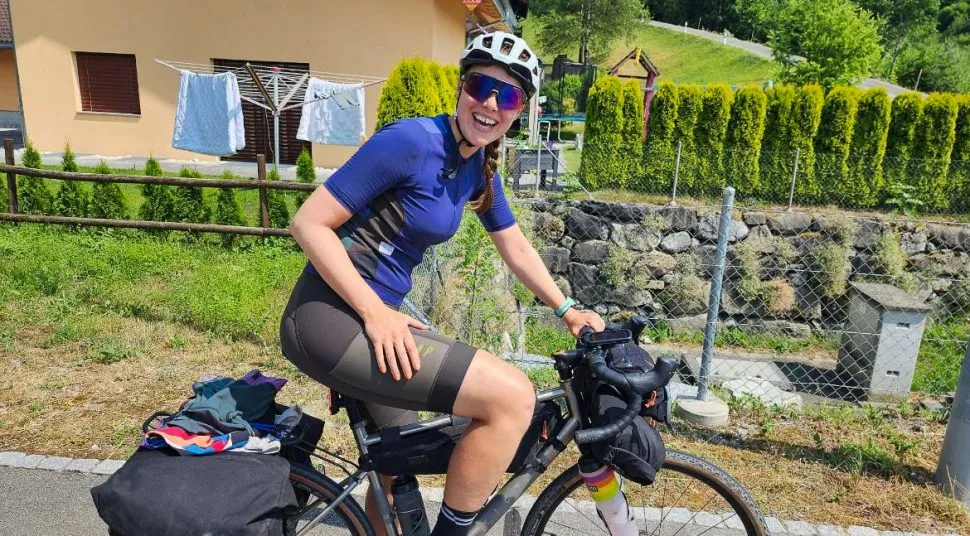
If you’re riding for longer distances and times, Burt expects that you’ll be sore and stiff. But, he asks, ‘Is that there the next day? If it is, that’s probably something you want to do something about.’
He points out that sitting on a saddle on a bike is inherently uncomfortable, because we don’t normally sit on that part of our body. But he says that the mindset that you have to push through saddle pain doesn’t really work and is a recipe for disaster if you keep ignoring it.
‘We can adjust the bike to work with you,’ he says.
A bike fit may be more important for women riders and those at the tall or short end of the height spectrum
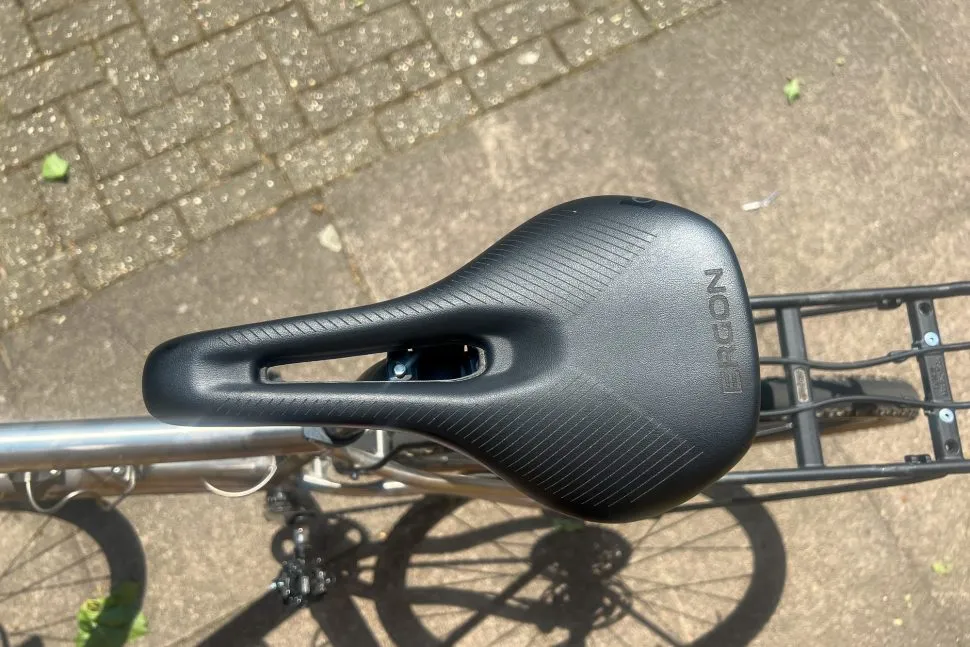
That was mirrored when former Cyclist staff writer Emma Cole visited bike fitter Lee Endres at Bicycle in Richmond ahead of her 2,300km-plus ride to Tunisia.
Endres told Emma that there’s often a greater need to make adjustments for women riders, as stock bikes tend to come with handlebars that are too wide, cranks that are too long and saddles that aren’t comfortable, so he will spend a lot of time testing these key contact points in particular.
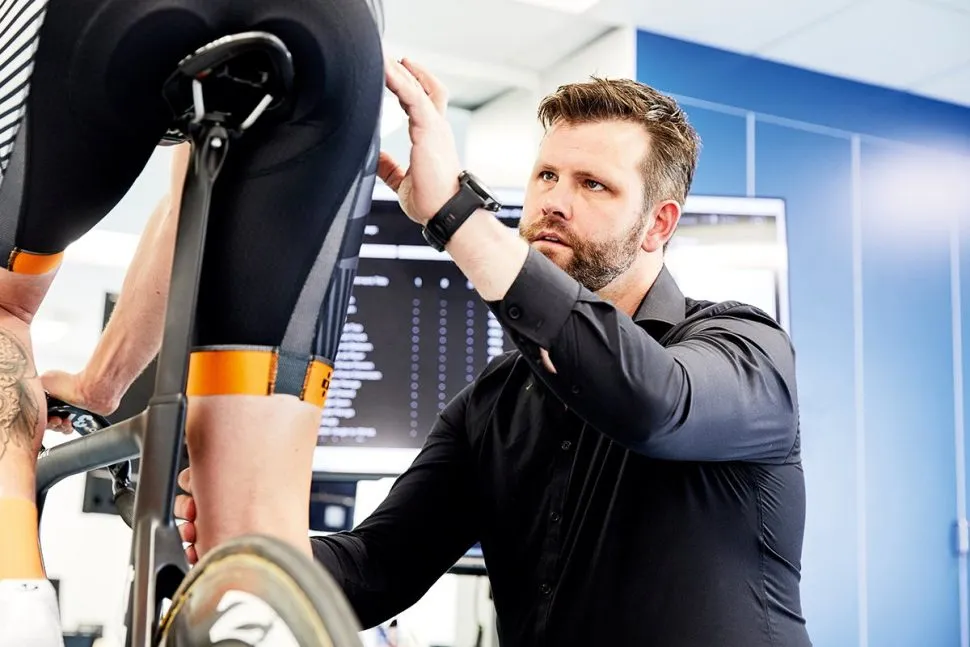
Saddle comfort for women is an area that Burt focuses on too, noting that women’s needs are complex and that they’ve been ill-served by saddle makers in the past.
Smaller and larger frame sizes may need more adjustment to fit both female and male riders, and toe overlap is a common problem for women. Taller women may need shorter cranks as they typically have smaller feet than men of the same height, Endres adds. They generally have narrow shoulders too, so narrower bars can improve hand comfort and ease of reaching the brake levers.
A bike fit can help remedy saddle sores or knee pain
Crank length has been found not to alter power output, but Burt points out that it’s part of your gearing: ‘Shorter cranks aren’t biomechanically more efficient, but they can be biomechanically more suitable.’
A crank length change can help make an off-the-shelf bike work for a rider who doesn’t have fairly standard proportions.
‘It generally closes up the hip at the top of the pedal cycle,’ Burt says. ‘If the hip is getting stiffer as you get older or you’re lowering the front for a more aero position, a 5mm shorter crank length will give back 5° in hip angle. That’s huge in terms of comfort and longer cranks force people to sit quite far back, so it feels as if the bike’s too long for them.’ The result is that they lose power.
But if you shorten the cranks, he points out, you need to move the saddle upwards to retain the leg extension and move it forwards to keep its position relative to the cranks the same. If you have your hip above the cranks, you can bring in the glutes, which are the strongest muscles in the body.
‘People find themselves producing power much more easily and much more of it. It also reduces peak force on the saddle and so can reduce saddle sores too,’ says Burt. ‘Cycling is completely symmetrical, as the distance to the pedals is the same on both sides, but nearly all human beings are slightly asymmetrical.’ Shorter cranks can be a powerful way to correct the asymmetry.
A bike fit can also help with foot pain, if your feet are misaligned, your shoe fit isn’t optimal, or your cleats not well-positioned on your shoes. Shims and wedges can be added to a shoe, orthopaedic footbeds fitted or pedals with a different stance width or float used.
Indoor cycling highlights fit problems
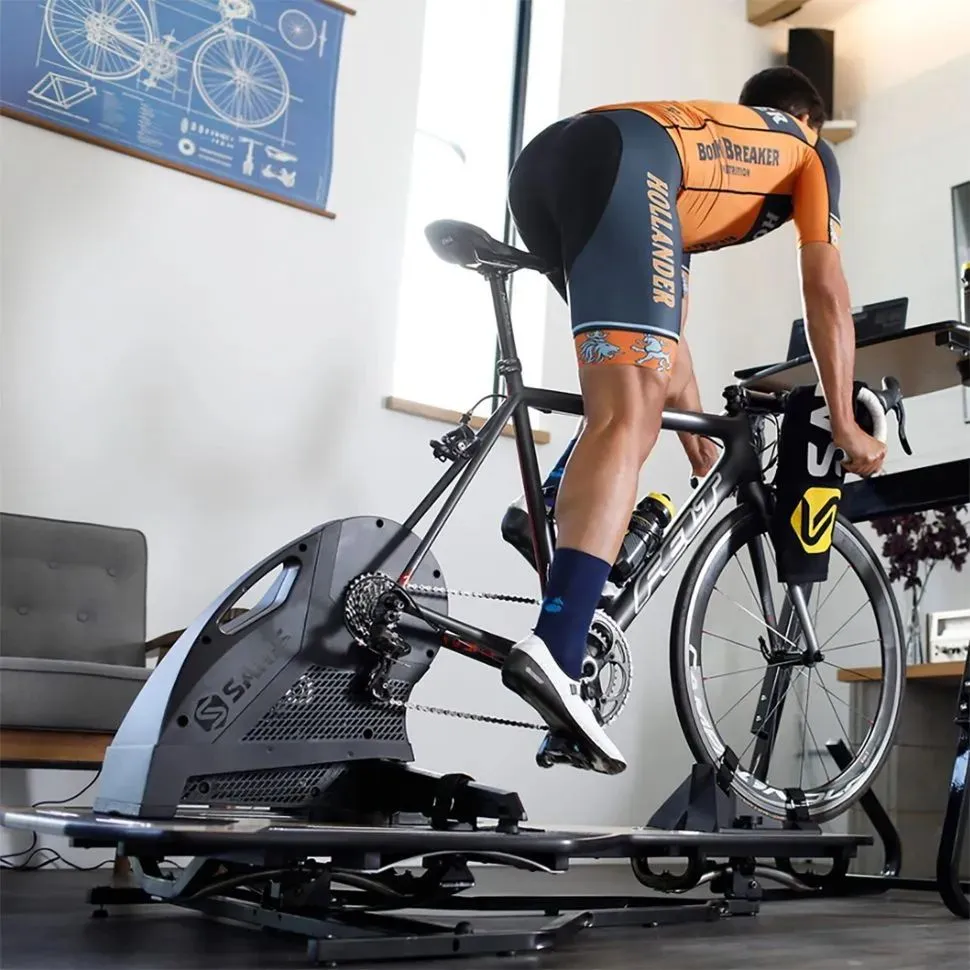
Burt notes that with Covid, people’s workout load went up and was delivered in a more fixed position. Indoor cycling is different to outdoor cycling and there was a massive increase in the number of riders seeking bike fit advice.
‘Saddle contact time tends to go through the roof, there’s less in and out of the saddle and the bike’s not moving as much underneath you, both forwards and backwards and sideways. You find your weak spot on the bike quicker,’ he says.
Burt suggests putting a timer on your bike computer and getting out of the saddle every ten minutes for two or three seconds, as this can make a massive difference. Also point your fan at your groin to keep your seat pad drier, as damp skin plus rubbing is a recipe for saddle sores. Rocker plates and trainers with fore and aft motion can both help reduce saddle pressure too.
Self-help options
So, unless you’re a macro-absorber who’s content with your bike fit, for the majority of riders there’s much to be gained from a bike fit. There’s a lot you can do yourself too, such as setting your saddle position correctly and experimenting with different saddles if yours isn’t comfortable. Many saddle brands offer money-back trials, saddle fitting and even saddle libraries to help you to choose.
There are plenty of apps online to assist as well. Burt points out that AI-driven tools on smartphones are emerging that can perform much of the data capture and analysis that a professional bike fit studio would perform. He has his own bike fit tool, MyVeloFit, that helps you to improve your on-bike position and bike set-up without doing a full in-person bike fit.