The acquisition brings real-world video routes into the Zwift ecosystem, streamlining hardware standards and building an event portfolio that poses a potential challenge to the UCI.
(Photo: Josh Ross/Velo)
Updated April 29, 2026 01:19PM
Zwift announced today that it has completed the strategic acquisition of Rouvy, bringing the real-world indoor cycling platform under its corporate umbrella and integrating a major segment of the virtual cycling market.
While the announcement makes no mention of exact financial details, it outlines a strategy to keep the platforms separate for the immediate future. Zwift stated “further updates are planned over the coming months,” and that leaves the consumer experience largely unchanged for now. The two software packages will continue to operate independently, with Rouvy maintaining its own differentiated development roadmap, current team, and separate subscription packages.
Strategically, the acquisition immediately adds real-world video simulation to Zwift’s portfolio. Zwift built its user base on gamified, animated environments — both completely fictional like Watopia, and stylized versions of real places like New York and London. This acquisition allows Zwift to capture and retain the demographic of riders who prefer the realism of actual video routes, keeping their subscription revenue within the broader company.
Expanding the Hardware Ecosystem
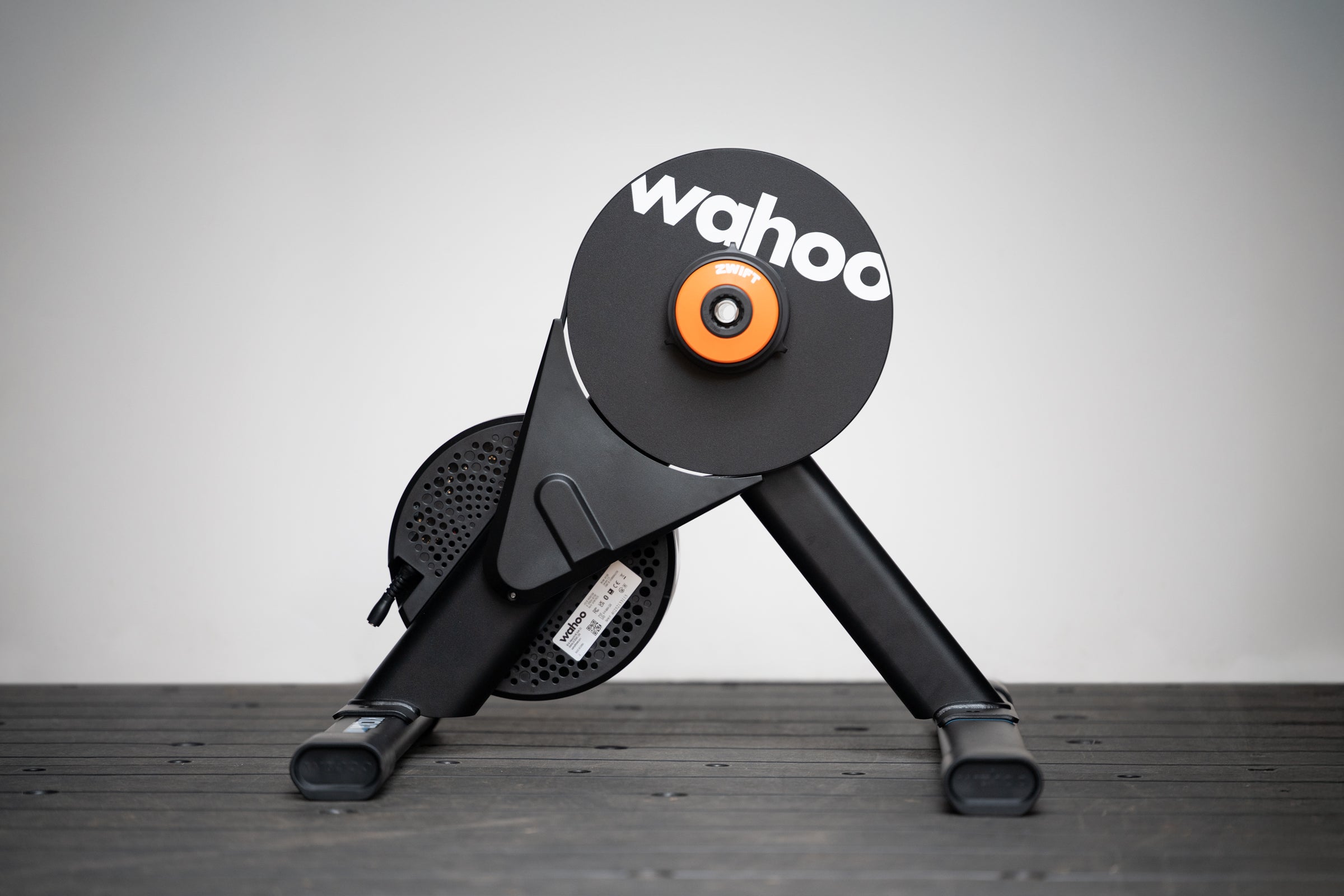
While Zwift’s software interface has remained relatively consistent, the indoor cycling market has seen significant turbulence regarding hardware. Following a 2022 partnership with JetBlack and subsequent intellectual property disputes with Wahoo, Zwift pivoted its focus toward simplifying setup process for consumers to start riding virtually indoors.
A year later, the company introduced the Cog and Click system. The design solved a major point of friction in the user experience by replacing standard rear cassettes with a single-speed cog, moving the system entirely to virtual shifting.
However, that proprietary virtual shifting created a walled hardware ecosystem. If a consumer was uninterested in using Zwift’s software, their Zwift-branded hardware was severely limited on other platforms. In early 2025, Rouvy bypassed this restriction by reverse-engineering the Zwift protocol, allowing its users to utilize Zwift’s virtual shifting hardware natively within the Rouvy app.
Today’s acquisition officially absorbs that workaround. Rather than engaging in an ongoing software dispute to block third-party usage, Zwift has brought Rouvy into its official ecosystem. The acquisition ensures that riders heavily invested in Zwift hardware maintain full functionality across both platforms, effectively expanding Zwift’s hardware dominance into the real-world video segment of the market.

Consolidating Digital Licensing and Esports Governance
Beyond capturing subscribers and securing hardware standards, the acquisition carries significant implications for the future governance of cycling esports.
A core component of Rouvy’s recent strategy has been securing the digital rights to high-profile real-world race locations. Through partnerships with IRONMAN, the Life Time Grand Prix, Lidl-Trek, and Visma-Lease a Bike, Rouvy allows users to virtually ride and recon the exact courses they will eventually compete on. By absorbing Rouvy, Zwift now owns the digital licensing for these major real-world events.
This consolidation of digital real estate further stymies the UCI’s attempts to govern esports through the UCI Cycling Esports World Championships.
The struggle for influence has been highly visible since the UCI shifted the championship away from Zwift—which hosted the 2020, 2022, and 2023 events—to MyWhoosh for the 2024 through 2026 editions. As the UCI partnered with the free-to-use, UAE-backed platform, Zwift responded by launching its own independent series, the Zwift Games.
The resulting participation and viewership metrics highlight a divide between traditional governance and platform loyalty. Reporting from Escape Collective noted that the 2023 Zwift Esports World Championship livestream generated roughly 157,000 views, compared to 48,900 for the 2024 edition on MyWhoosh. Meanwhile, Zwift Insider reported that the independent 2024 Zwift Games drew over 80,000 riders completing more than 215,000 races, with almost 50 individual races attracting over 1,000 starters. By contrast, the 2025 UCI live event in Abu Dhabi featured an exclusive field of 22 women and 22 men.
While Rouvy’s estimated 300,000 subscribers are a fraction of the roughly one million active users on Zwift reported by the5krunner in 2024, the acquisition represents a broader strategic victory. By consolidating the user base, the hardware standards, and the digital event licenses, Zwift continues to solidify its position as the dominant authority in indoor cycling, operating largely independent of traditional sporting governance.
For more information on the acquisition, visit the Zwift website.