The 2026 Giro d’Italia will start in Bulgaria before crossing into Italian soil and covering a 3,459km route that will feature seven mountaintop finishes and 49,000 metres of climbing, culminating in a leg-breaking high-altitude finale that will set the scene for a dramatic fight for the maglia rosa before a traditional celebratory procession into Rome.
One time trial will shift the dynamics away from the mountain stages and could mark a decisive moment if the race comes down to mere seconds. However, it is more likely that the battle for the overall title will be fought on the slopes of the Blockhaus and Pila, and then in the mountain-heavy final week atop Alleghe (Piani di Pezzè) and Piancavallo.
Article continues below
Stage 7: Formia – Blockhaus (244km)
The peloton will face the longest stage of this Giro d’Italia in the first nine days of racing, and while some longer Grand Tour stages often have a flatter transitional feel, stage 7 will be one of the most decisive races for the overall contenders with a finish atop the famed Blockhaus.
It will mark the first of seven summit finishes of this Giro d’Italia, and while there are uphill finishes aplenty, the big ones to follow Blockhaus include summit finishes on stage 8 at Fermo, stage 14 at Pila, stage 16 at Carì, stage 17 at Anadlo, stage 19 at Alleghe (Piani di Pezzè) and stage 20 at Piancavallo.
The peloton will set off on a large loop along the coast through Sperlonga and Gaeta before heading inland, where the climbing starts after 133km and doesn’t relent until the finish line.
The climbing will begin on the slopes of the category 2 Roccaraso, which is only 6.9km with an average gradient of 6.5%, but the steeper sections are closer to 12%. They will then tackle uncategorized climbs over Serra Malvone and Passo San Leonardo, which are only a taste of what lies ahead as the Blockhaus looms.
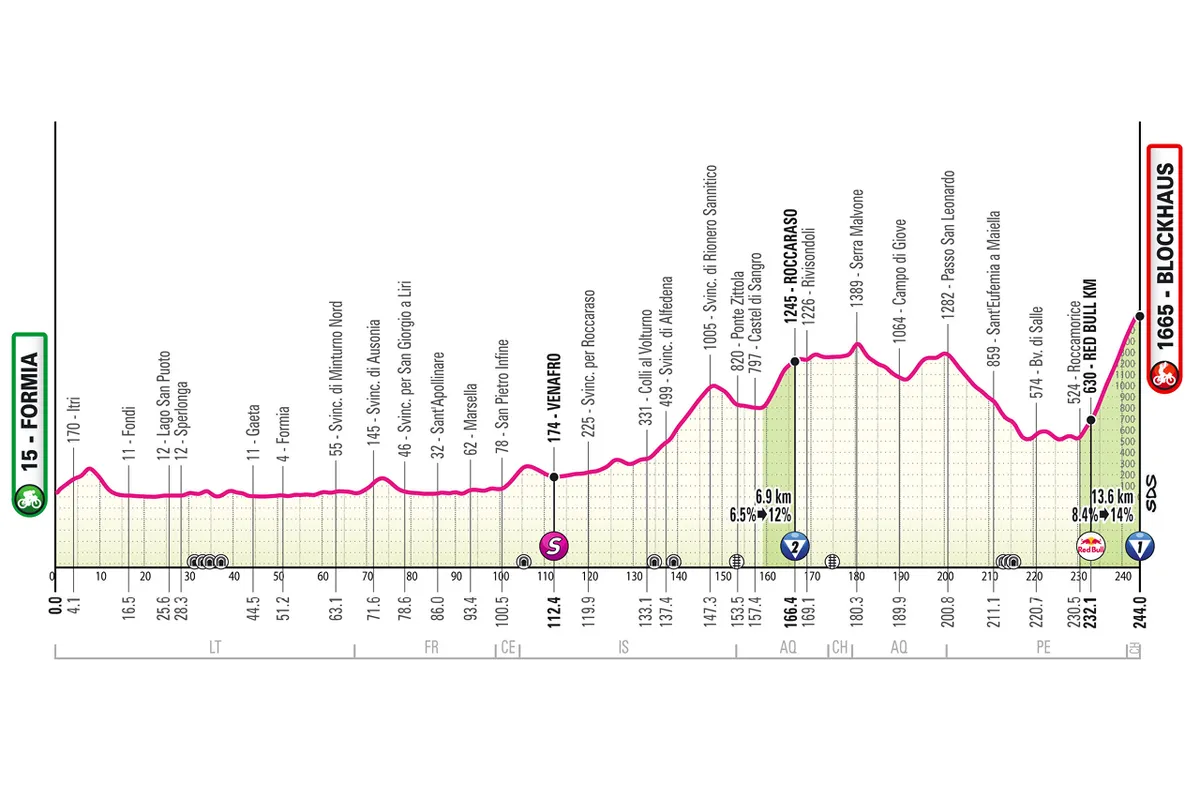
Without ascents like the Zoncolan, Mortirolo or Stelvio, Blockhaus will stand alone as one of the most recognisable climbs along this year’s Giro d’Italia. On the technical side, the climb uses the steep 13.6km-long Roccamorice narrow road with numerous hairpins. For almost 10km, gradients remain above 9%, with peaks up to 14% before the slopes ease slightly heading into the closing kilometre.
It debuted in 1967 on a stage won by Eddy Merckx, and later the site of a GC showdown between Francesco Moser and Laurent Fignon in 1984 (although Moreno Argentin triumphed at the summit). Other notable victories went to Nairo Quintana in 2017 and Jai Hindley in 2022. At the women’s Giro d’Italia in 2024, Neve Bradbury crossed the line with the victory ahead of Lotte Kopecky and eventual overall winner Elisa Longo Borghini.
Stage 10: Viareggio – Massa (40.2km ITT)
The peloton ends the first week of the Giro d’Italia with back-to-back ascents on Blockhaus and Corno alle Scale before being rewarded with some reprieve on the second rest day. While the GC contenders won’t see the next major climb until stage 14, they will need to shift strategy toward the individual time trial on stage 10.
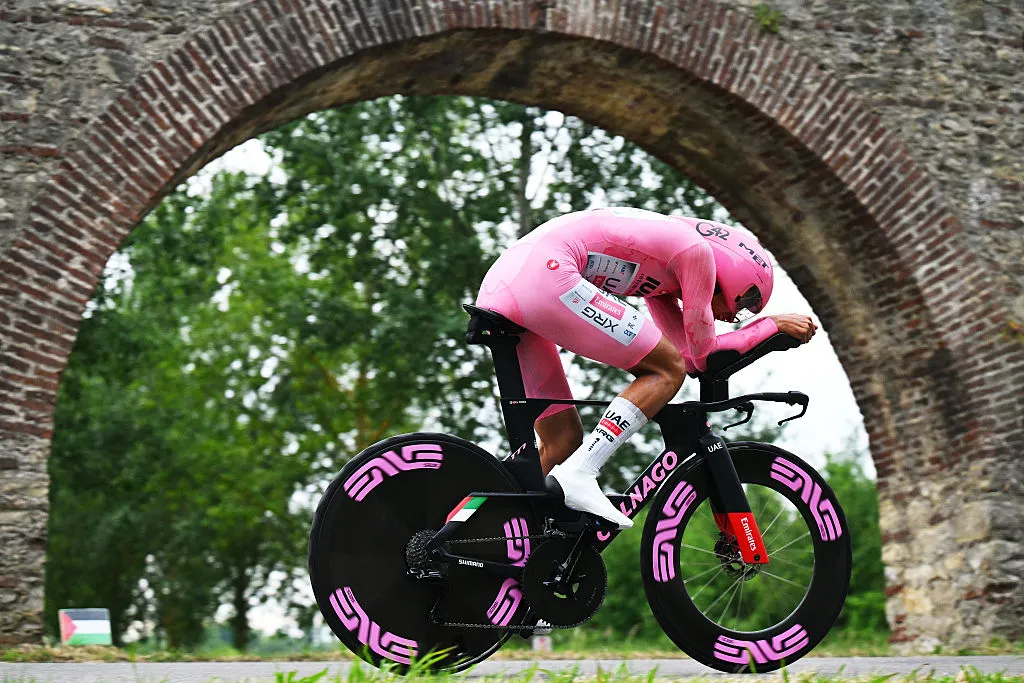
The riders will take to the starting ramp on the Tuscan coast for what is the only individual time trial of this edition. The 40.2km flat course heads south from Viareggio through the pine forest until the first U-turn at Marina di Torre del Lago, which is 9km into the route.
The riders will then head back along the same road to Viareggio, where the route joins the seafront heading north, and cross the first checkpoint at Viale Daniele Marinin (16.7km).
The course follows the Versilia coastline, crossing the second checkpoint at Forte dei Marmi (28.9km) and heading toward Marina di Massa. The course then turns inland to reach the second U-turn in Rinchiostra, at the third checkpoint (38.4km).
The closing kilometres will include two technical corners at 1km and 150 metres from the finish line in Massa.
The flat and fast time trial may not be enough to counter-balance all the climbing and the seven summit finishes at this year’s Giro d’Italia, but in a race where every second counts, it could still make a difference in a tight overall classification.
Stage 14: Aosta – Pila (Gressan) (133km)
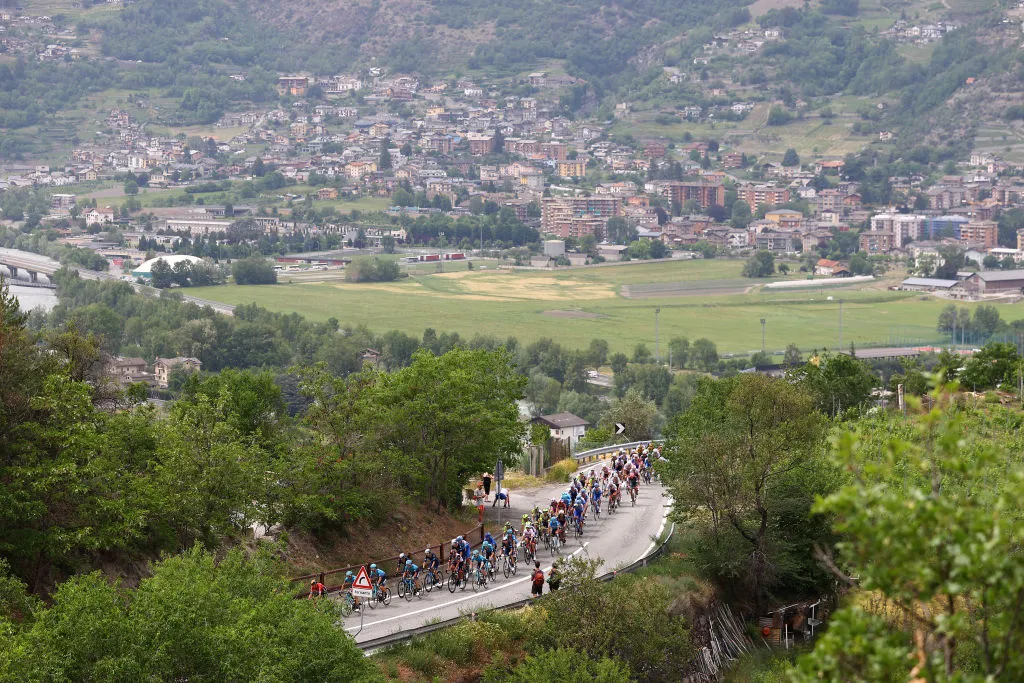
The second week of racing may start with a flat and fast time trial, but it will end with the third of seven summit finishes on stage 14 atop the climb in Pila, at 1,793 metres.
Starting in Aosta, it will be a short but intense route, 4,350 metres of elevation gain over just 133km of racing.
It will be a challenge from the very beginning with a category 1 ascent to Saint-Barthélémy, a 15km climb with an average gradient of 6.1% but that hits 13% in some sections.
A fast descent won’t give stragglers much time to catch back up before the climbing through Valpelline valley roads toward Doues, the category 3 climb being the least demanding of the stage.
The peloton will hit another category 1 ascent at Lin Noir, a 7.4km climb at 7.9% with pitches as steep as 12%, and with almost no reprieve the will face the category 2 Verrogne, a 5.6km climb at 6.9% and steeper sections at 12%.
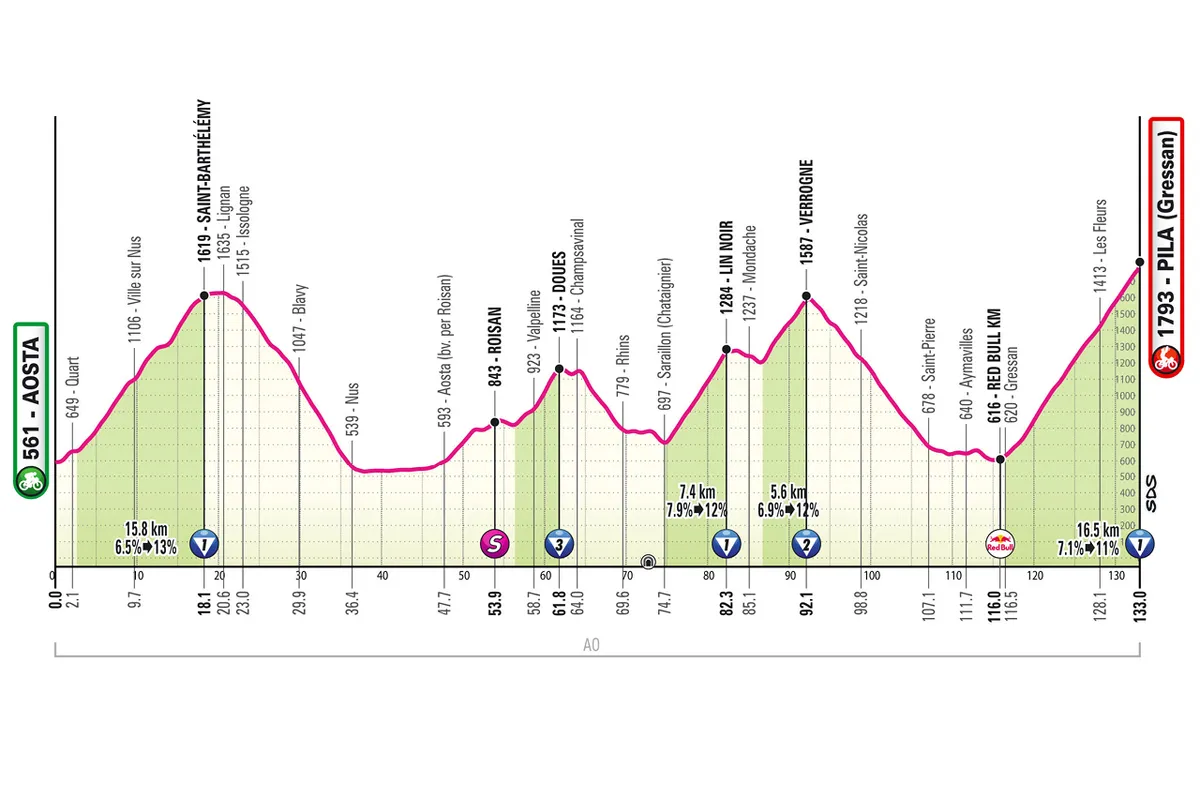
The racing will then reach the final climb of the day, the category 1 ascent to Pila, which has been a regular feature of the race in the 1980s and 1990s. The summit finish returns in 2026 after a 30-year absence. This year, however, the peloton will ascend from the Gressan side. It is 16.5km, rising steadily at 7.1%, but reaching 11% at 3 km from the finish line in Pila.
Stage 19: Feltre – Alleghe (Piani di Pezzè) (151km)
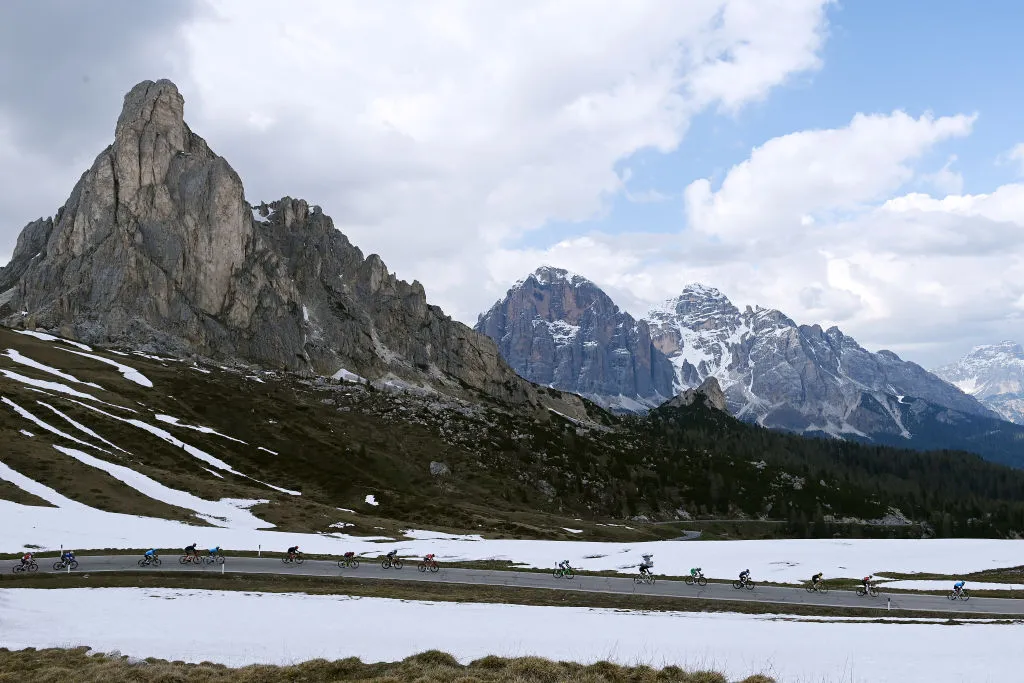
The long battle for the maglia rosa continues well into the third week of this edition of the Giro d’Italia, with plenty of opportunities for gains and losses on the summit finishes of stage 16 at Carì and stage 17 at Anadlo before the back-to-back grand finale on stage 19 at Alleghe (Piani di Pezzè) and stage 20 at Piancavallo.
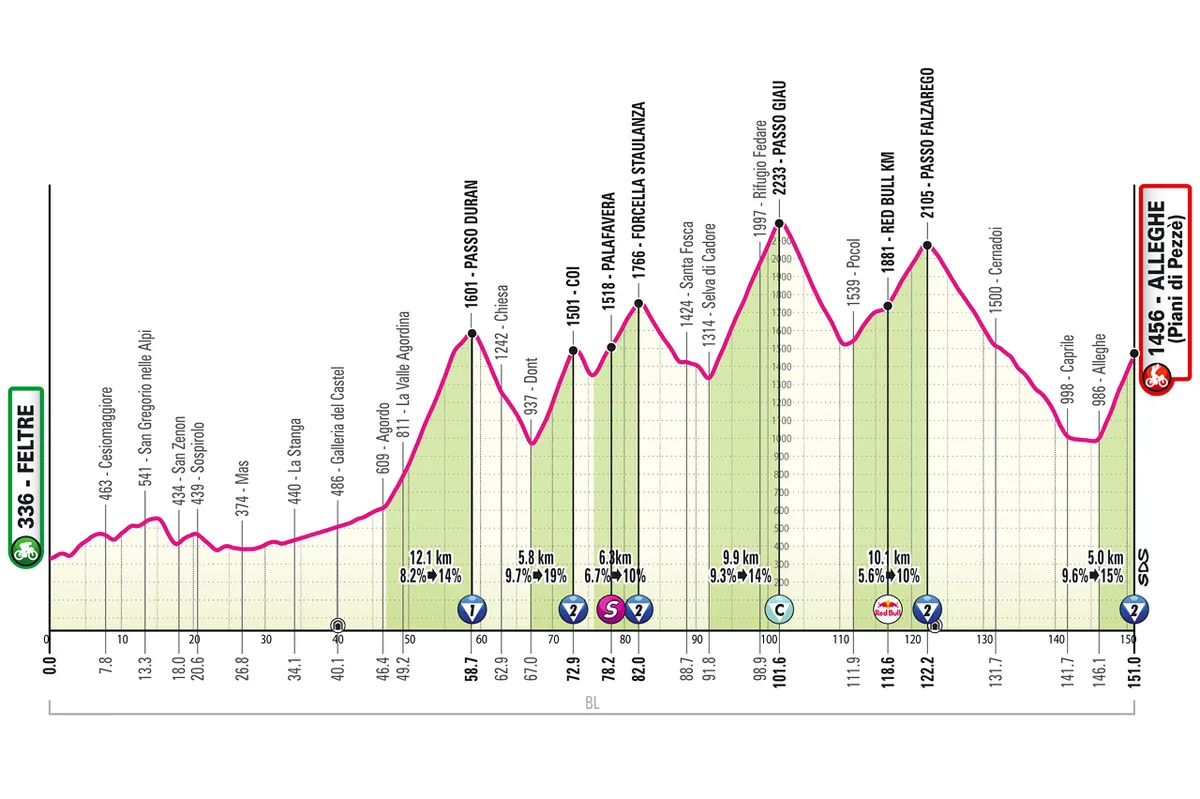
Stage 19, tipped as the Queen stage of this Giro d’Italia, will take the peloton on a trek through the Dolomites from Feltre to Alleghe (Piani di Pezzè), where riders face a leg-breaking 5,000 metres of climbing over 155km.
There are a daunting six categorised climbs on tap, beginning with the category 1 Passo Duran, a 12.1km at 8.2% with steeper sections at 14%. It is quickly followed by a succession of category 2 Coi, 5.8km and averaging 9.7%, but with slopes of 19%. Then, it’s the the category 2 Forcella Staulanza is 6.3km at a much more manageable 6.7% before reaching the hors category Passo Giau that is 9.9km at a more punishing average gradient of 9.3%.
The Passo Giau is designated as this edition’s Cima Coppi, the race’s highest point, rising to 2,233 metres above sea level. The stage then crosses over the category 2 Passo Falzarego, a 10.1km with an average gradient of 5.6% and maxing out at 10% in some sections.
After a fast descent to Alleghe, the riders will face one last climb of the day on the 5km ramp of the Pian di Pezzè, with gradients of up to 15% along narrow roads that feature eight hairpins, and with the last final kilometre remaining averaging 11%, it will be a true test of strength all the way to the line.
Stage 20: Gemona del Friuli – Piancavallo (200km)
The peloton will undoubtedly be relieved to have reached the near-end of this Giro d’Italia, and the overall contenders will have one final opportunity to have an impact on the race for the maglia rosa on stage 20.
It will be a challenging final mountain stage with 3,750 metres of elevation gain, and where one rider will all but seal the overall victory before the ride into Rome the following day.
Starting from Gemona del Friuli and travelling through flatter valley roads, the peloton takes on the Clauzetto climb mid-stage, a 6.9km climb with an average gradient of 5.7%, before heading toward the Val Cosa for the start of a 53km closing circuit with the double ascent of Piancavallo.
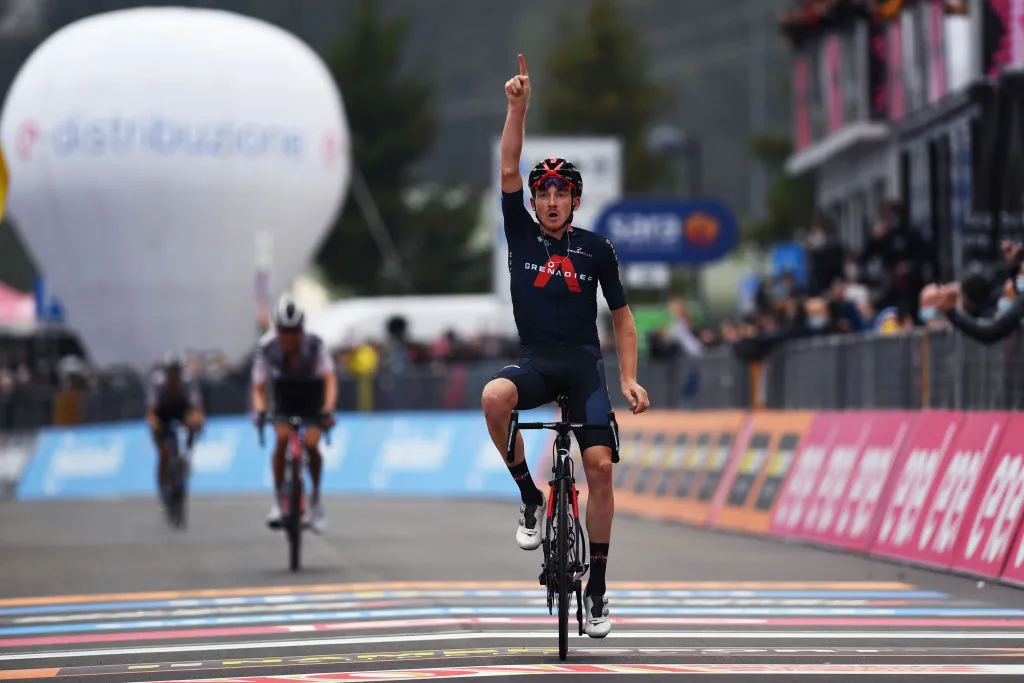
Piancavallo is a 14.4km climb that rises at 8.9% and, with pitches as steep as 14%, and is where Tao Geoghegan Hart triumphed in 2020 on the way to overall victory.
The riders will crest the ascent for the first time with 50km to go, then follow a technical descent that includes a tunnel over more than 4km, bringing the field back into Aviano for the final climb.
For one final time, the peloton will tackle the first unrelenting 10km of the Piancavallo before a brief reprieve gives way to 8% gradients that persist across the final 4.5km of the climb, which includes a technical final kilometre into the finish line where the winner of the 2026 Giro d’Italia will be crowned.
Who will challenge Jonas Vingegaard at this year’s Giro d’Italia? Subscribe to Cyclingnews for unlimited access to our coverage of the Corsa Rosa. Enjoy unrivalled reporting from our team of journalists on the ground, including breaking news, analysis, and more, from every stage as it happens, plus access to the Cyclingnews app to follow the action on the go! Find out more.