Over the course of the Spring Classics, I’ve certainly not been alone in asking the question: how do you beat Tadej Pogačar? The opening stages of yesterday’s Liège-Bastogne-Liège looked to me like several teams were searching for that answer, as a large breakaway went clear and built up an advantage that exceeded three minutes for a while.
Compared to the likes of Paris-Roubaix, forming a breakaway in La Doyenne is easier, given the route’s elevation and the smaller selection of riders actually capable of getting up the road. I must admit that I was rather surprised to see so many riders, including Remco Evenepoel, in the breakaway by the time the TV coverage came around, though.
This breakaway action did force UAE Team Emirates-XRG to burn their matches sooner than they’d have maybe liked, with Pavel Sivakov and Tim Wellens putting in some crazy efforts at the front to sew the race back together. But ultimately, it was never going to change Pogačar’s plan. It was a mad, energy-sapping pace heading into La Redoute that made positioning vital. So when Benoît Cosnefroy delivered Pogačar into La Redoute at the front of the strung-out bunch, well, he made everyone else pay. The manner in which he hit that climb at such speed, my God, it’s just mindblowing the way he can do it.
After his Liège exploits, is Seixas Tour de France ready?
Of course, one rider who could handle his La Redoute acceleration was Paul Seixas, but fast forward to the Côte de la Roche-aux-Faucons, and Pogačar didn’t even come out of his saddle as he rode away from him. The UAE man had another gear there. Either he didn’t have to make a huge effort, or perhaps Seixas just frankly ran out of power there.
Regardless, it was the first Monument where the Frenchman came into the race as a main favourite, especially after his La Flèche Wallonne win, so the expectations were high, and he definitely lived up to them. His positioning, in particular, was impressive. You can be a great bike racer and get over testing climbs, but positioning yourself well on the likes of La Redoute is so difficult. Seixas did it very well, and that’s the talent you need to get yourself in the wheel of Pogačar when he kicks on.
Over the top of La Redoute, Seixas rode with Pogačar because he didn’t want to get into a tactical game and allow the other riders a chance to return, which is understandable. What’s more, if you’re not riding, Pogačar could very well sit up too, and then the situation would become much more complex. Although if he had held something back, perhaps he could’ve kept up on the Côte de la Roche-aux-Faucons. Regardless, he had to go so deep on La Redoute, but was then able to recover and offer turns. It shows he’s clearly not afraid of racing Pogačar, and to have that mentality to want to do that is a very good thing.
It was a major test to see what he could do against the Slovenian on an Ardennes Classic stage, and he lived up to it big time. The 19-year-old has the talent, but he also has the rest of the package too, in a similar vein to Pogačar – he can do both stage races and Monuments. I’m sure Pogačar is looking over his shoulder and thinking, ‘wow, this guy is catching up quickly!’
Naturally, that rise is only going to put more pressure on him in France. I stand by my opinion that I made in my Cyclingnews column after Strade Bianche that he shouldn’t race the Tour de France this year. At just 19, he’s already doing a lot of racing, and there’s a point where you need to put the brakes on. So the question really ought to be, why do the team want him to race Le Tour so early? There are rumours regarding his future which could be driving it, but that’s always the case with a talent like Seixas, so it’s hard to say.
While Seixas’ near future is yet to be decided, Pogačar immediately turns his attention to stage racing with the Tour de Romandie tomorrow. He’s had a successful Classics campaign, but when you look at it, he hasn’t raced loads. These two stages races ahead of July, Romandie and the Tour de Suisse, will be good preparation, and of course, they’re races he’s yet to win, which seems to be something he likes, getting as many on his palmarès as possible.
Vollering’s vicious seated attack and the Classics’ mind-blowing speeds
Meanwhile, in the women’s race, Demi Vollering simply had more power than everybody else. She forced a gap on La Redoute while still seated in her saddle, and considering the gradient of the climb, there are very few male or female riders capable of that; you’d have to go back a long way. From there, it became so difficult for the chasing group to reel her in because while Vollering is riding all out, the other will have one eye on saving something should the race come back together. No one wants to give 100 per cent for someone else, so the gap just grows and grows.
When Anna van der Breggen bridged across to the second group, she almost went straight through them and out the other side, which showed that they weren’t giving everything to hunt down the top spot of the podium, but that’s often the case, and in men’s racing too.
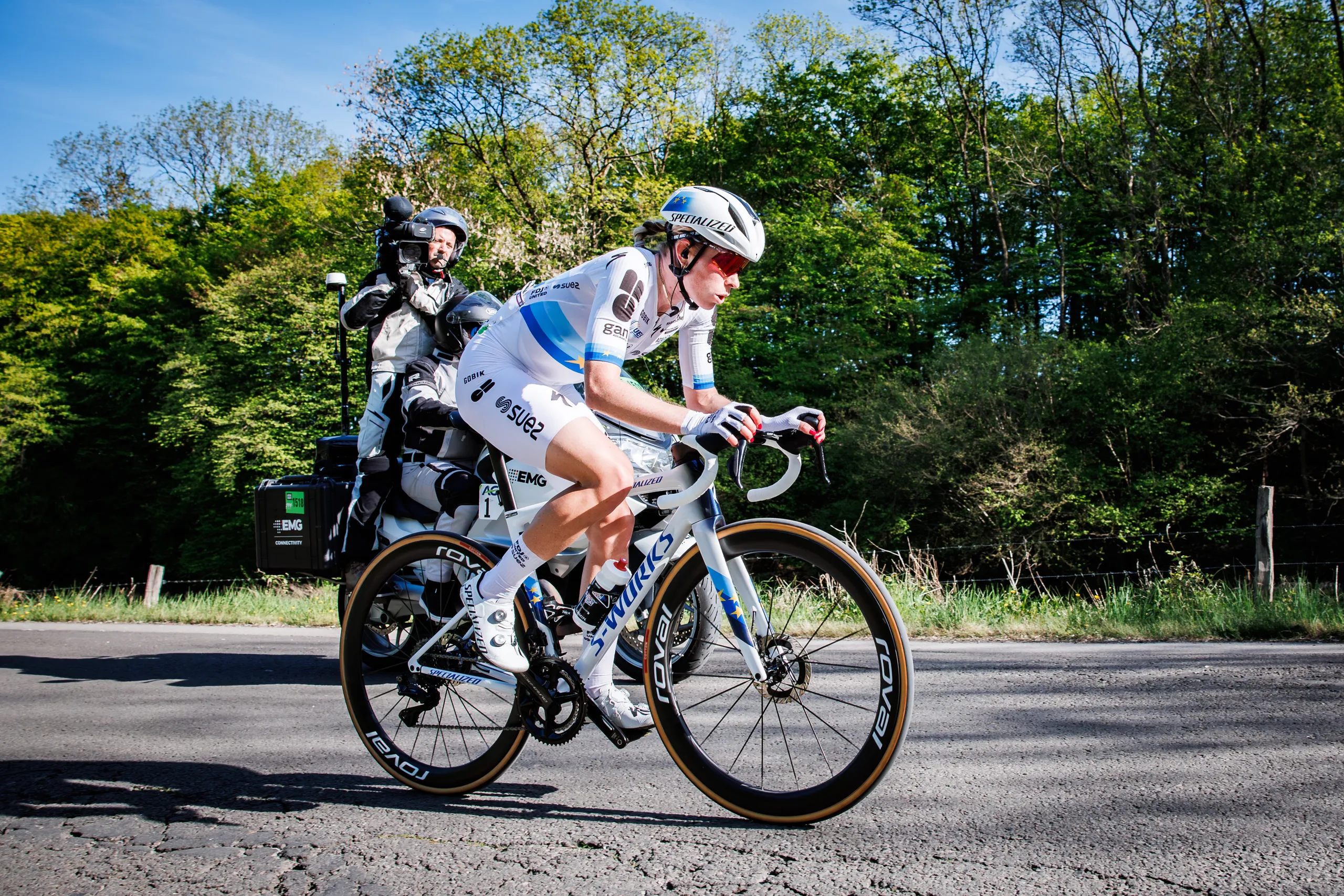
The women’s race also shone a light on two up-and-coming talents, too, in Paula Blasi and Isabella Holmgren. Blasi won Amstel Gold Ladies a week prior, and these young talents are becoming more common in the Classics, which is exactly what we need, because you don’t want it to always be the same two or three riders dominating proceedings.
The women’s race at Liège wrapped up another Spring Classics campaign, with this year’s races delivering some amazing racing and incredible drama. Of course, on the men’s side, Pogačar has been dominant, but my main takeaway is the pace that this year’s editions have been ridden at, with each and every Classic getting faster year after year. The action is also getting underway earlier and earlier, with the large breakaway in the men’s a clear example of this. A decade ago, the peloton would only really get going with 100km remaining; now it’s all-action from 260km out.