Published April 21, 2026 09:48AM
Pros
Extremely customizable for any bikepacking setup
Room for up to 56mm/2.2” tires
SRAM UDH
T47 Bottom Bracket
500 Series OCLV Carbon
Front and rear suspension
18 frame mounts and adjustable multi-mounts
Cons
Heavy at 24.78 lbs without rack (rack weights another 760 grams)
Full suspension could be overkill for some gravel roads
Handlebar sweep might be too aggressive for some
Dropper post feels like overkill
Specs
Size tested: Small (49cm)
Weight: 11.28 kg / 24.87 lbs (quoted by Trek in size ML with sealant and excluding rear rack)
Build: CheckOUT SL 7 AXS
Price: $8,999.99 (as tested)
Brand: Trek
Verdict
Whether you call it a drop bar mountain bike or a full-suspension gravel grinder, the Trek CheckOUT is the ideal rig for those that want to push the envelope of adventure, terrain and bikepacking—without being in a big rush.
Remember that last scene in Back to the Future, when Doc turns to Marty and says, “Roads, where we’re going we don’t need roads.” Well, the Trek CheckOUT is kinda like that. Except the quote would be: ‘Lines, we don’t need lines,’ as this full-suspension all-terrain machine flies over anything in its path thanks to the massive 55mm Bontrager Betasso tires and full suspension setup. It’s the type of bike that opens up an entire new world of riding possibilities—from low-key mountain biking, to epic multi-day adventuring. The CheckOUT really does live up to its name.
Quick hits: 7 standout details of the Trek Checkout
- Tested bike weight 24.78 lbs ready to ride without pedals or rear rack
- There’s no rider weight limit on the wheels (which means, no cargo weight limit either)
- Max tire clearance of 56mm / 2.2”
- Frame features 18 multi-mounts, with another 15 mounts on the rack
- RockShox Rudy XL Ultimate delivering 60mm travel in the front and the RockShox SIDluxe Ultimate 3P offering 55mm travel in the rear
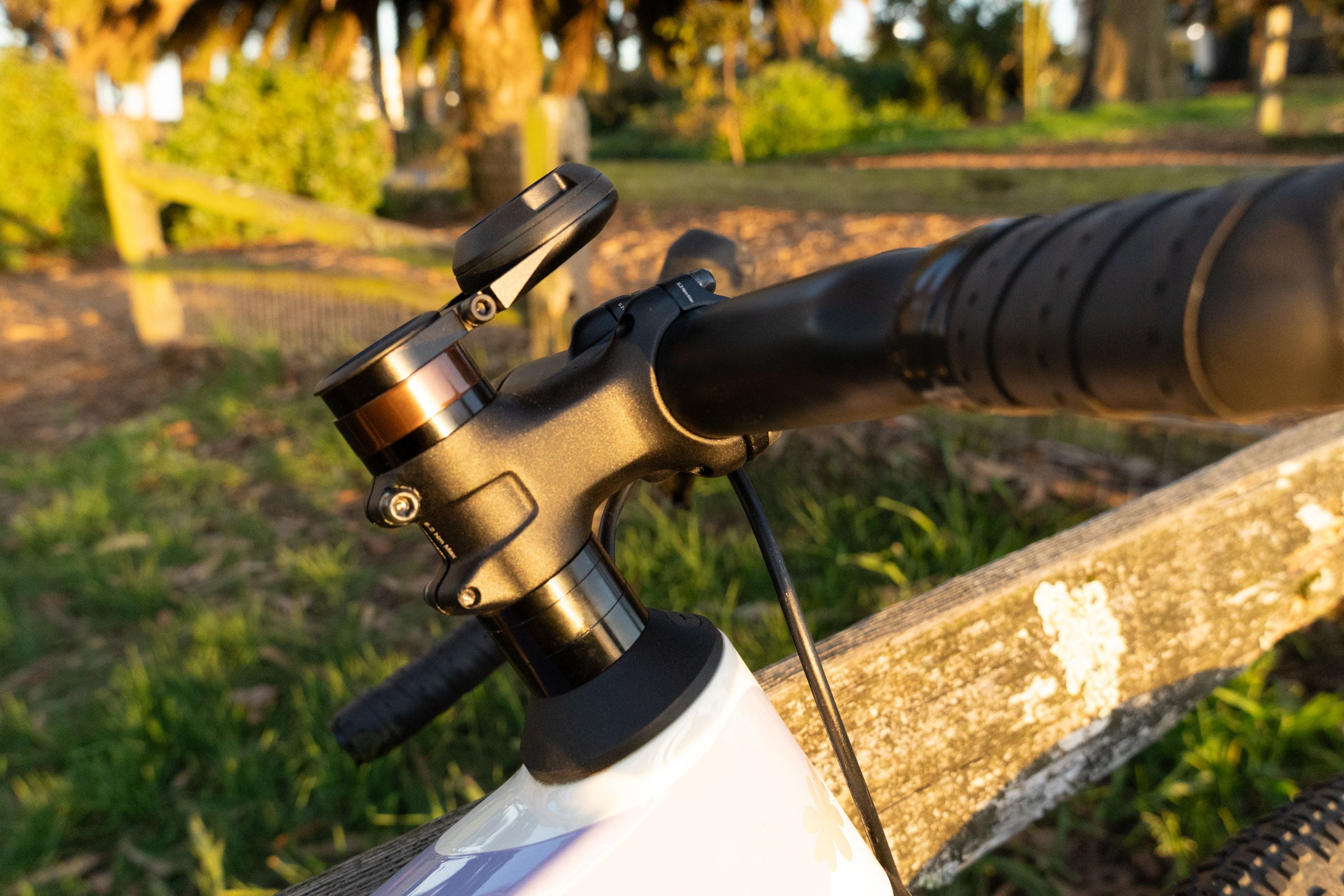
- Versatile cable routing with three options: either fully internal through the headset, or downtube. Or an external option (perfect for big adventure types that might need some trail side fixes)
- UDH and 1x SRAM Force/Eagle AXS mullet set up (38T in the front and 10-52T out back)
- For more information visit the Trek Website
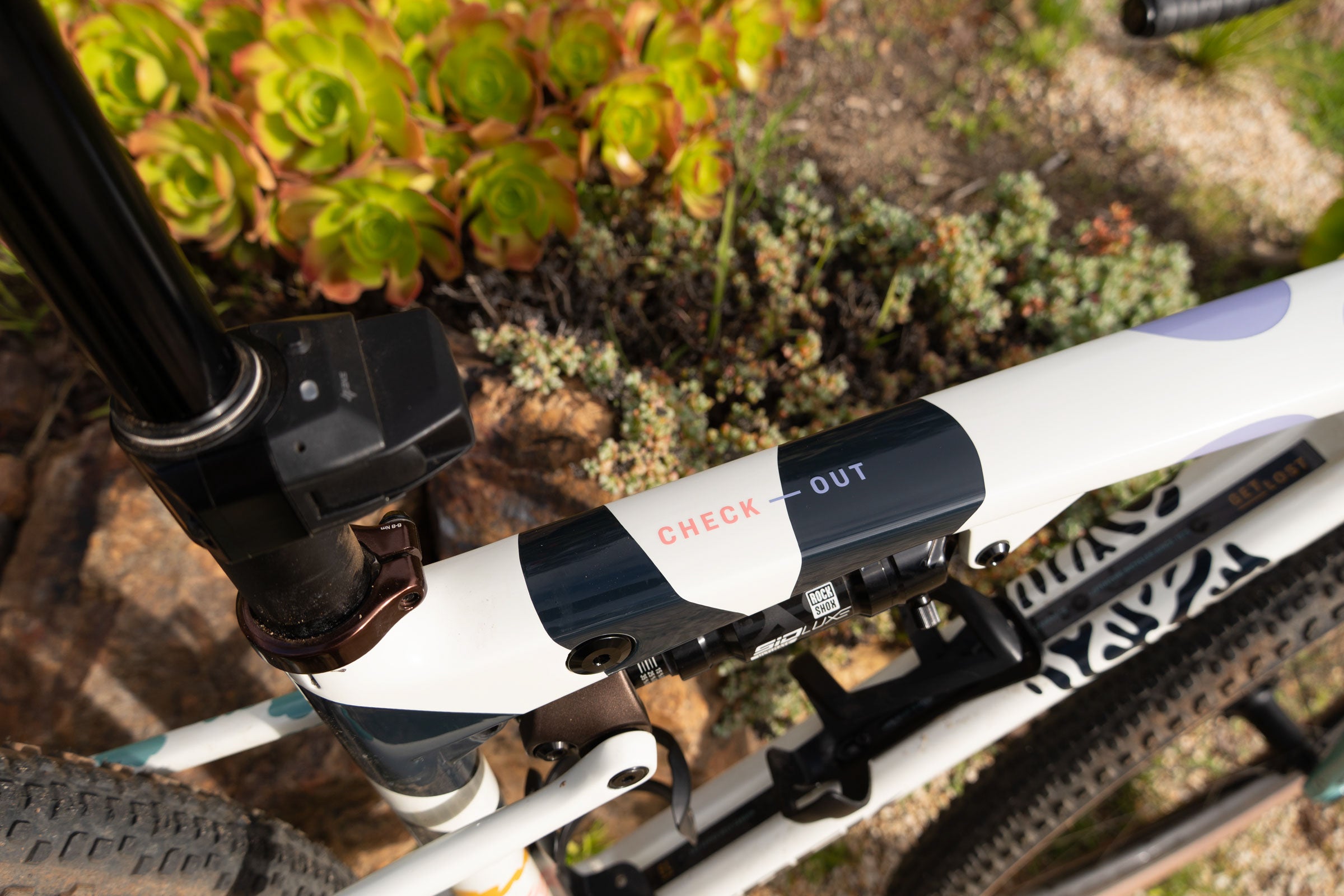
Trek Checkout frame details
At first glance this bike looks a little sus. Sure, the paint scheme is sick but the overall profile is polarizing. Trust and believe, there’s a method to the madness.
Trek calls this their “Gravel Adventure Geometry.” High stack, long reach, tiny stem (60mm on the small size), and extended wheel base. On one hand it’s tailored to those that want to get deep into the rough stuff. The CheckOUT’s mountain bike DNA is on full display with the longer reach and 69-degree headtube angle that delivers greater stability. With a slightly longer reach than most gravel bikes, you can certainly feel the stability, which I translated as an opportunity to empower riders to take on more aggressive terrain.
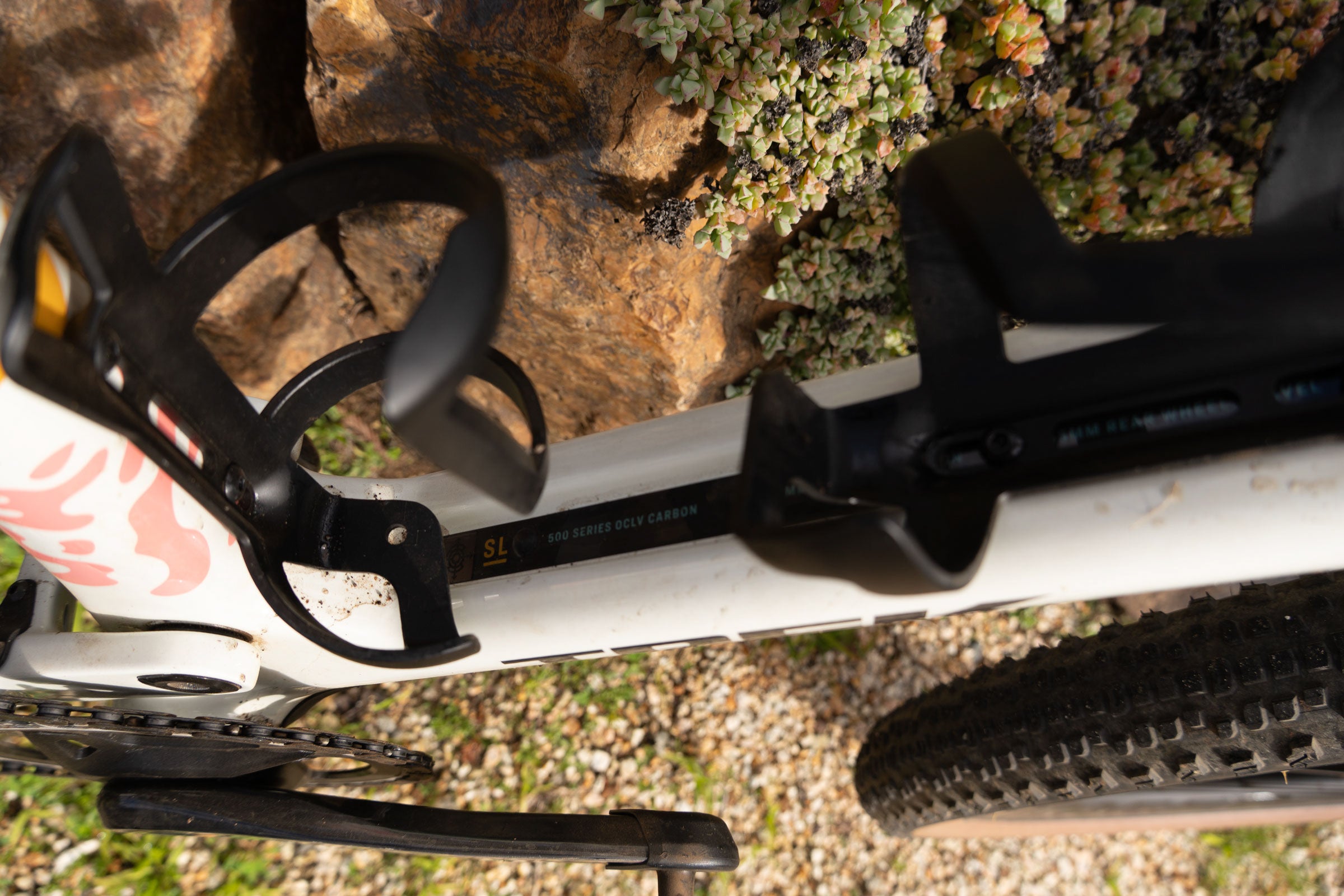
The frame shares the same carbon as other classic Trek frames like the Emonda SL and Domane SL. The 500 Series OCLV carbon offers “a balance of weight, stiffness and durability.” This carbon is slightly heavier and not as stiff as the 700 and 800 series.
The frame has 18 frame mounts and adjustable multi-mounts (metal plates developed by Trek to give riders more flexibility to mount whatever…wherever). The purpose-built storyline isn’t lip service. It comes to life in a very real, and very usable way, empowering riders to really dial in their setup however it makes the most sense for them.
The rear rack features 15 more mounting points with a unique design that keeps loads (up to 22 lbs) out of the way of the rear suspension, without interrupting use of the dropper. Trek used a unique set of pivot points in this construction, so cargo doesn’t compress the suspension. Instead, it’s held independently of the rear shock.
This clever thinking comes at an aesthetic cost. It’s giving commuter vibes. And while it’s not a beauty contest, it kills the cool factor. Unless you’re bikepacking, the majority of riders would do well to lose the rack (which I did in my testing) improving the overall feel and weight of the bike.
Finally, for the bikepacking crowd, Trek partnered with Topo to offer some full frame bags perfectly tailored for each frame size (in colorways that complement the paint scheme). It’s a nice touch and one less variable for riders to tailor their post-purchase setup.
Build details
Here’s everything you need to know about the SL 7 AXS build I tested:
The CheckOUT SL 7 AXS comes standard with a SRAM group set. The shifters are the Force AXS E1 which have a nice feel to them. Many levers are too bulky for smaller hands, these felt just right. At this point, you’ve heard plenty about the performance of SRAM brakes since the last generation but on a bike like this it becomes a big advantage. I could feather the levers and feedback was immediate, shedding speed without jerking or deadspots.
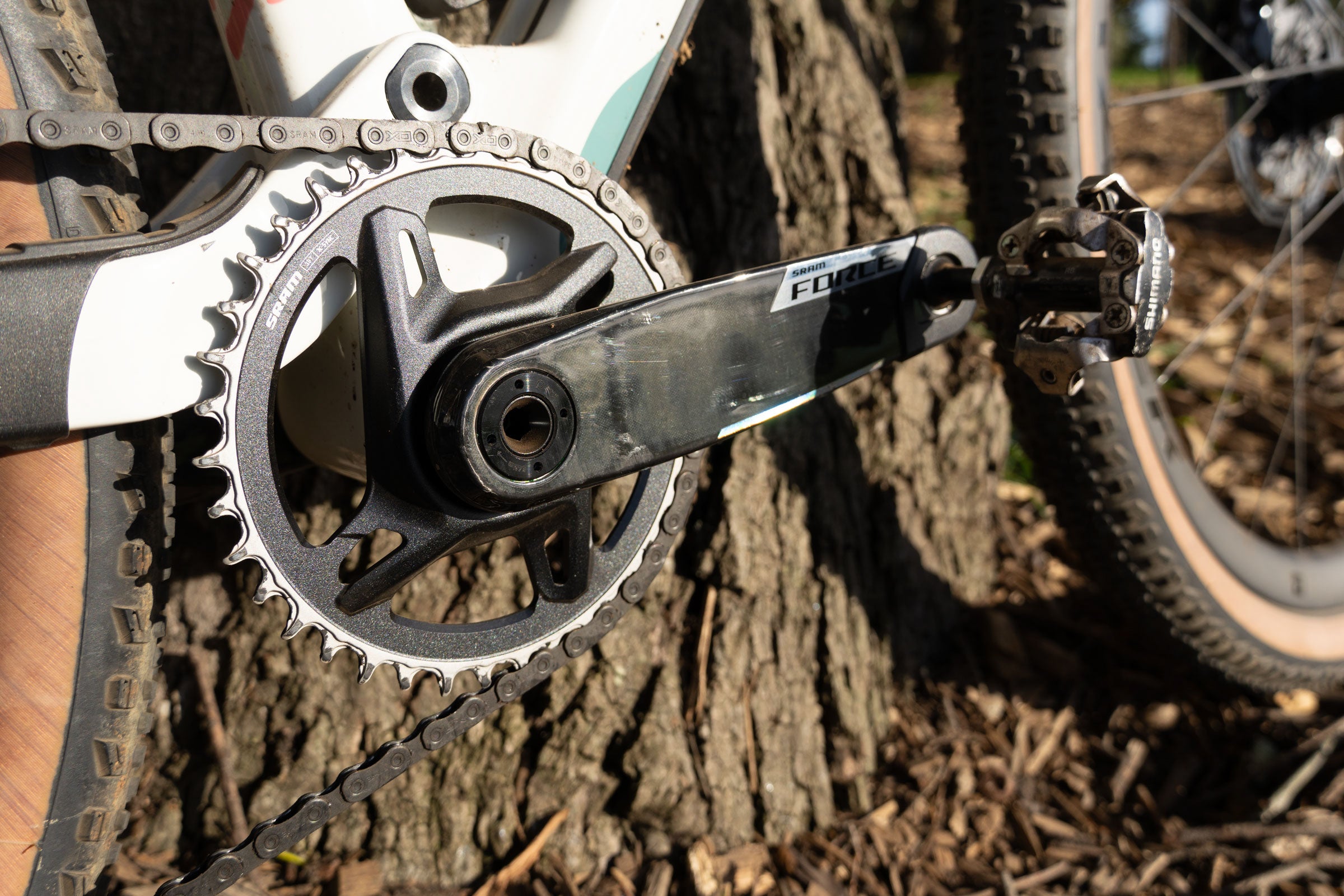
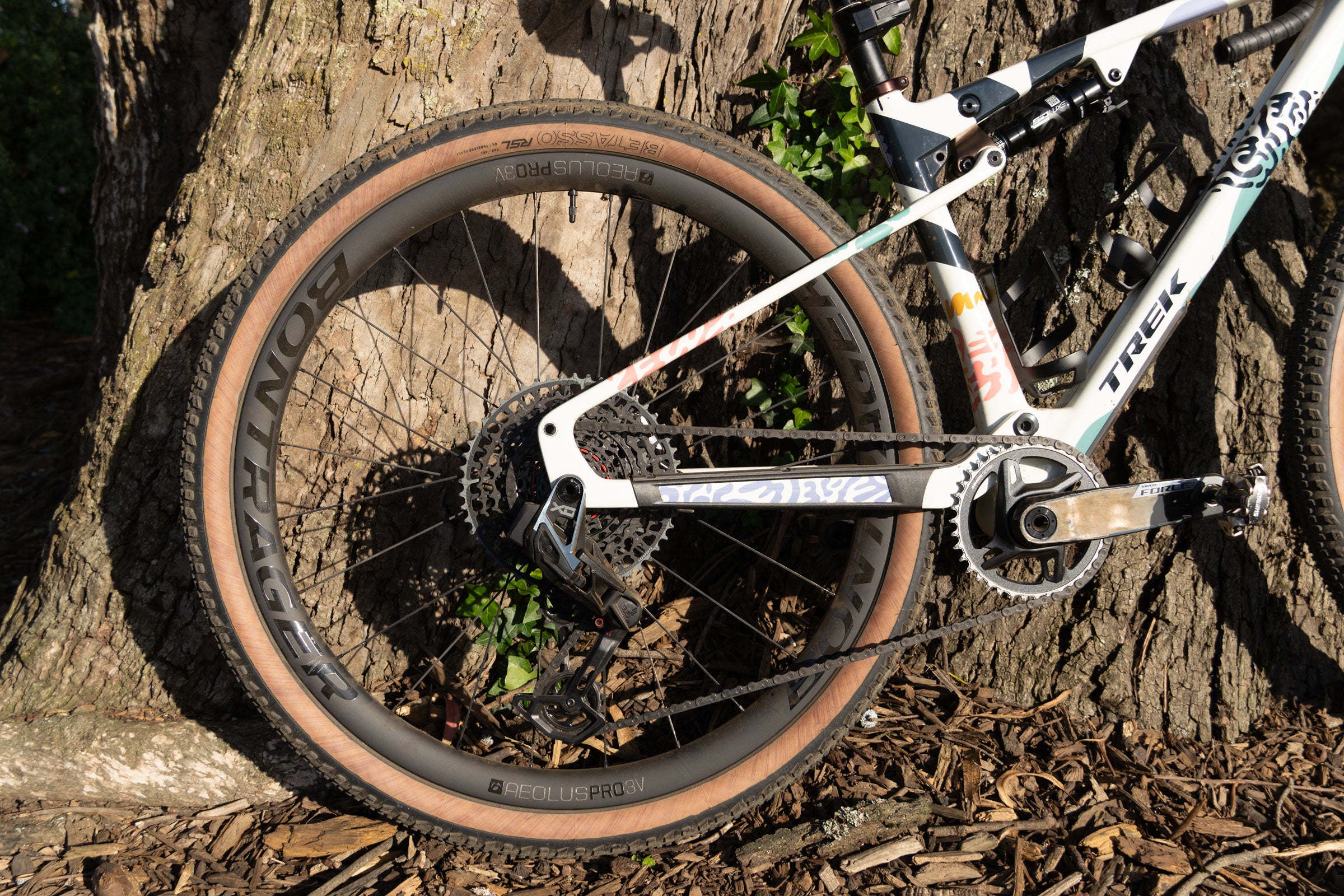
The SRAM Force 1 crank (165mm on the small, 49cm frame) features a 38T chain ring and a wide Eagle XS 10-52T, 12-speed cassette in the back.
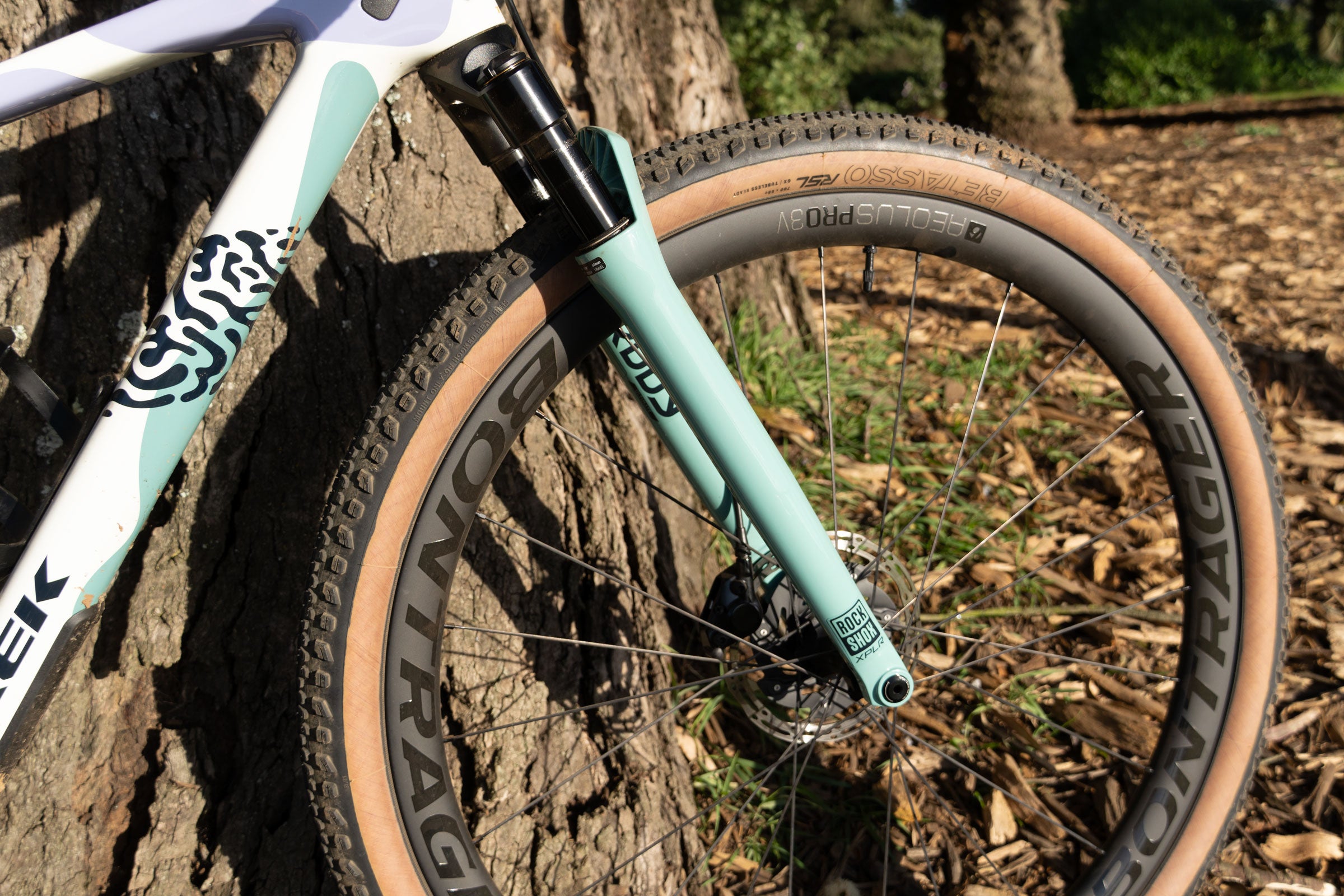
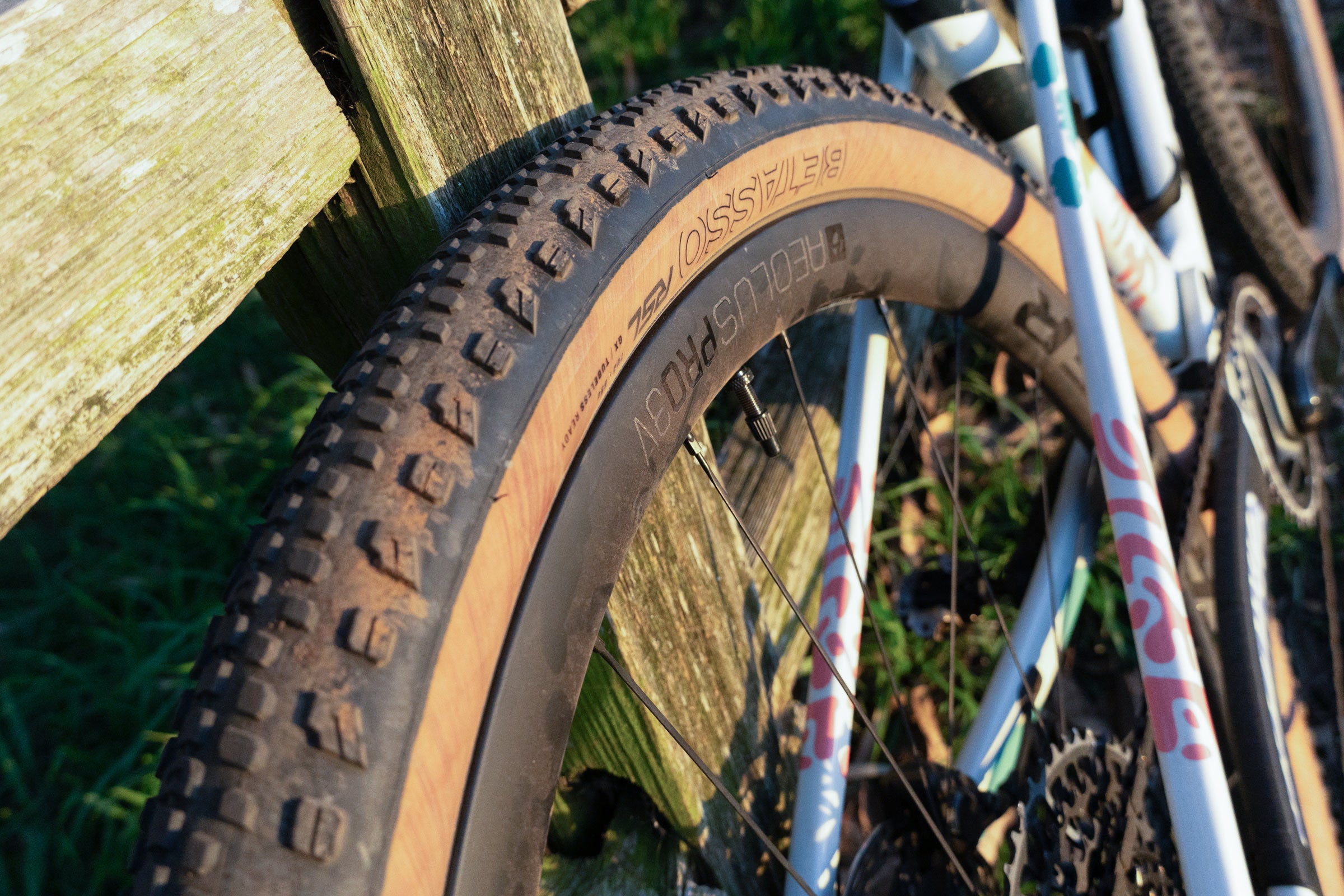
Running robust 55mm Bontrager Betasso RSL GX, tubeless-ready tires. They’re beefy for a traditional gravel bike, but on rougher terrain, you soon realize the extra compliance is welcome.
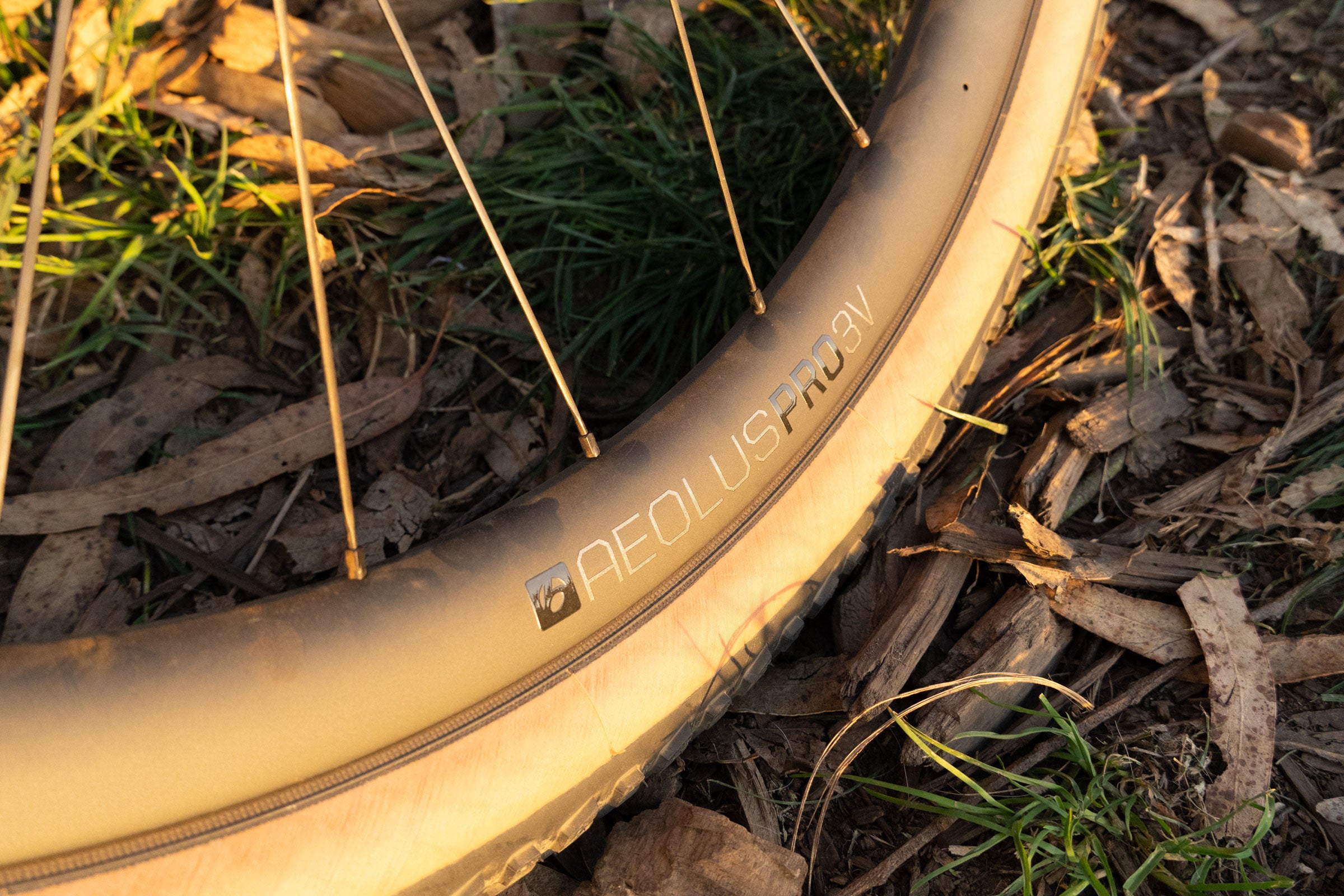
These sit on a set of Bontrager Aeolus Pro 3V OCLV carbon rims. Featuring a 25mm inner rim width and a Rapid Drive 108 road hub. They aren’t lightest at (1575g for the pair) but this sis a wheel meat to survive a lot and in that context the weight makes sense. Tubeless-ready of course and no rider/bike weight limit is nice to see on a bike meant to haul gear.
If these wheels look familiar, that’s because they’re also standard on Trek’s Checkmate SLR 7. Pair these wheels with the CheckOUT and they deliver a massive 56mm/2.2” max tire clearance for all the comfort and confidence.
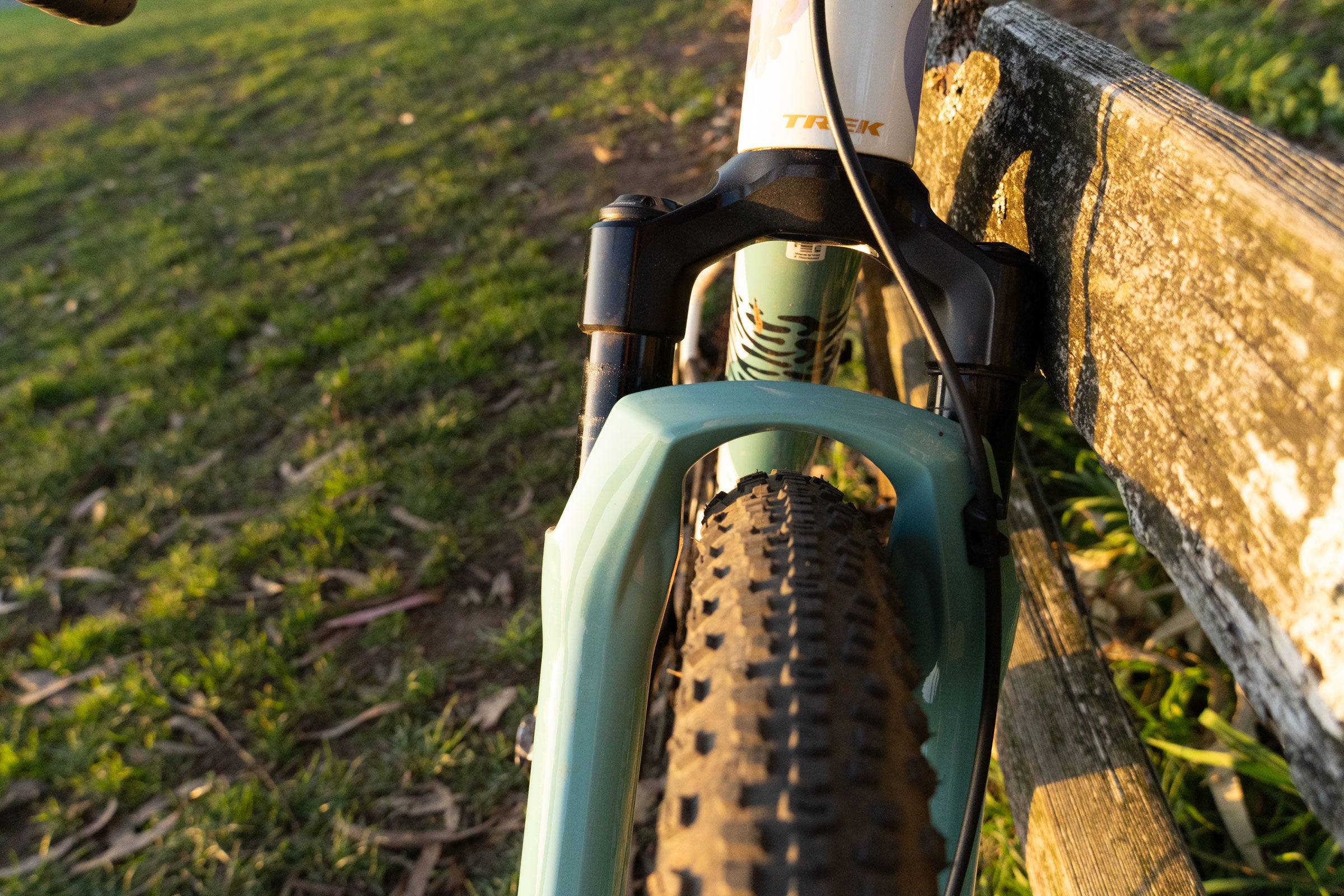
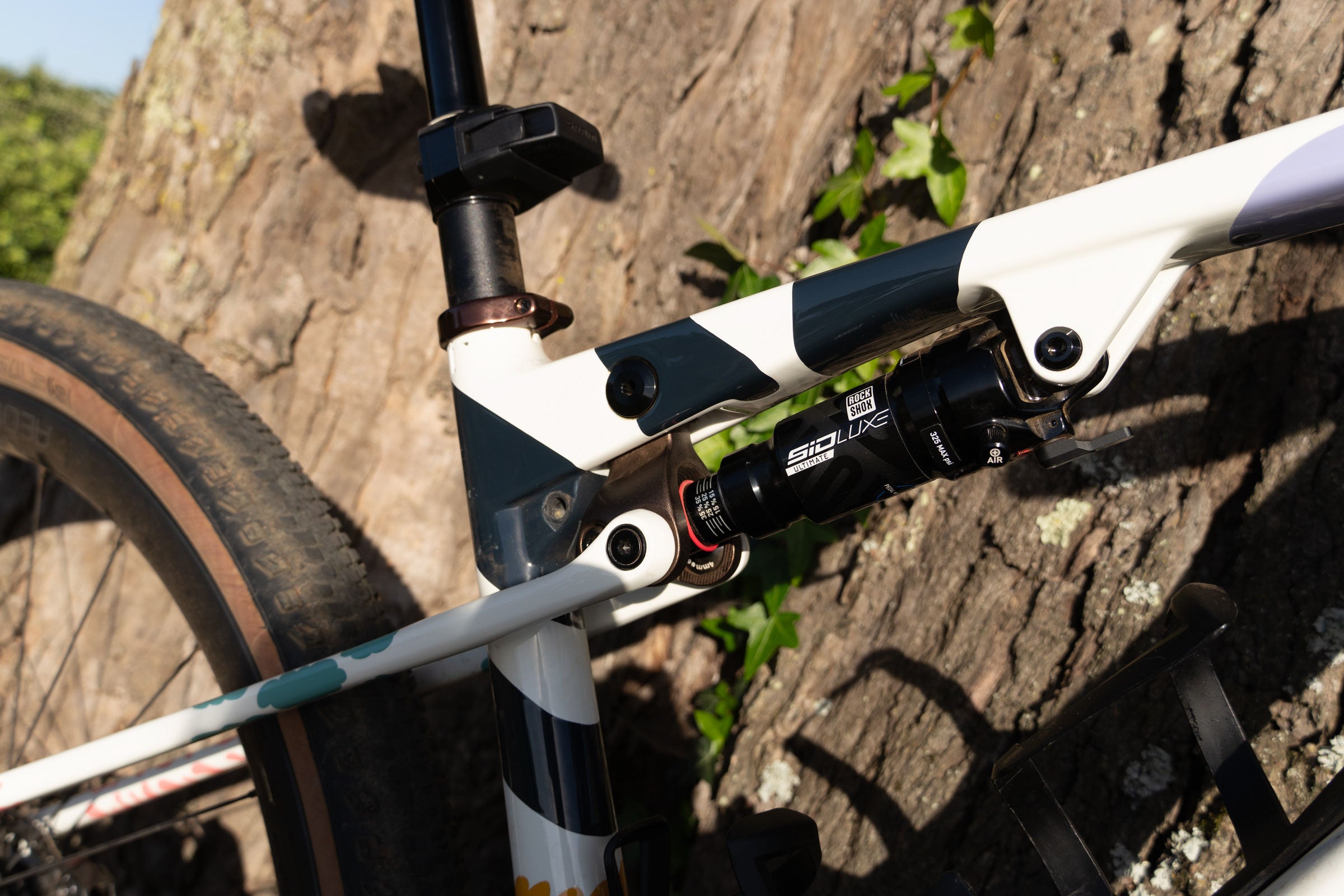
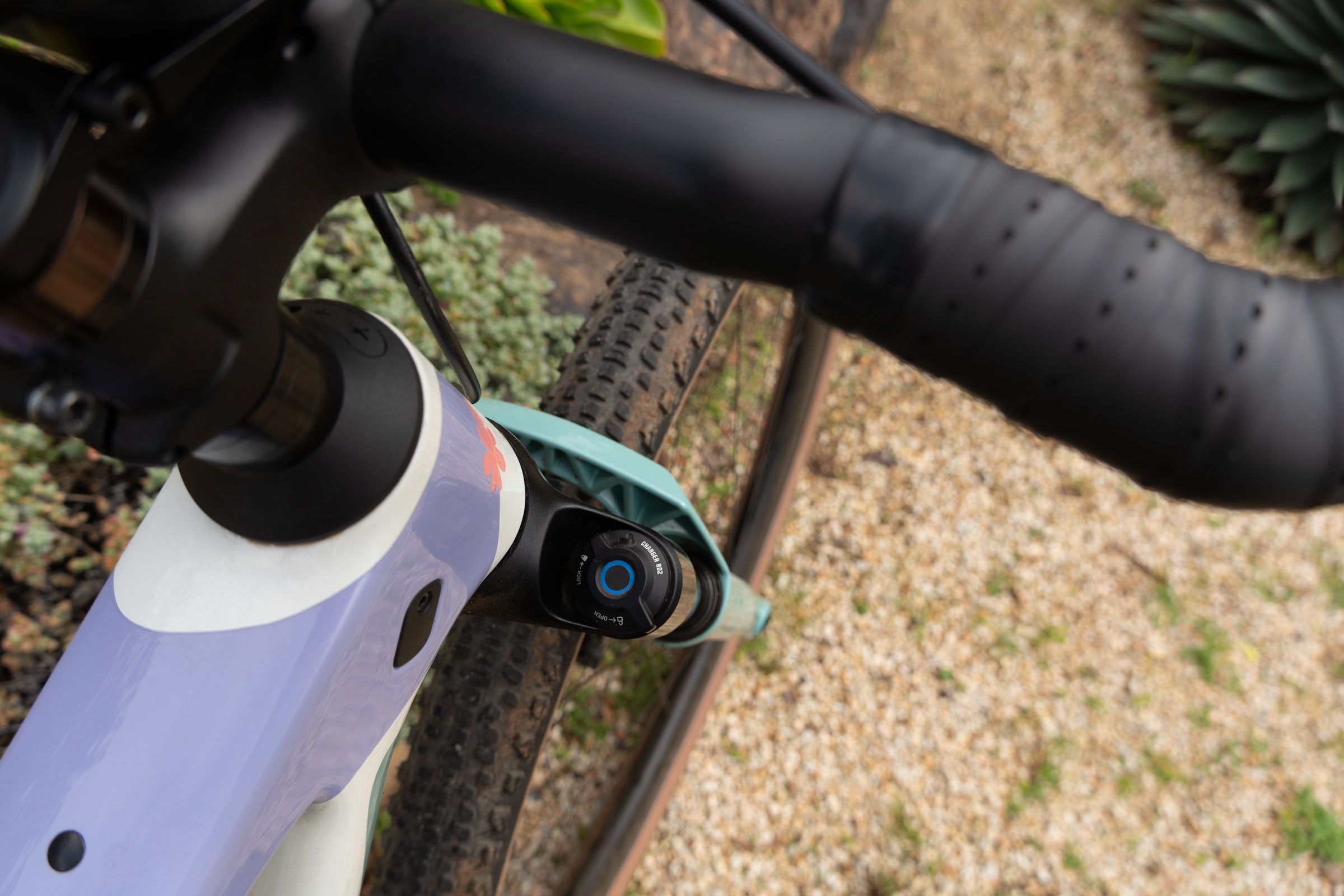
The biggest departure from any traditional gravel setup has to be the full suspension RockShox Rudy XL Ultimate fork delivering 60mm of travel. Accompanied by the RockShox SIDluxe Ultimate 3P rear shock bringing another 55mm of travel to the ride.
You can manually lock out the fork with a dial on the fork crown. There’s also a manual, three-position compression adjuster on the rear shock: open for the full suspension experience. Pedal (or what I like to call medium) for taking the edge off chattery roads. And fully locked out, to get rigid as it gets.
The RockShox Reverb AXS dropper post is interesting. With 100mm of travel and wireless control (just push the two shifter paddles in to activate) the feedback is quick and the activation smooth. Did I like it? That’s a story for later.
The 42cm handlebars are wide for a size small frame. Add 6cm of flare (on each side) you’re flirting with something that feels dangerously close to flat bars. That’s the point, but I still didn’t like it.
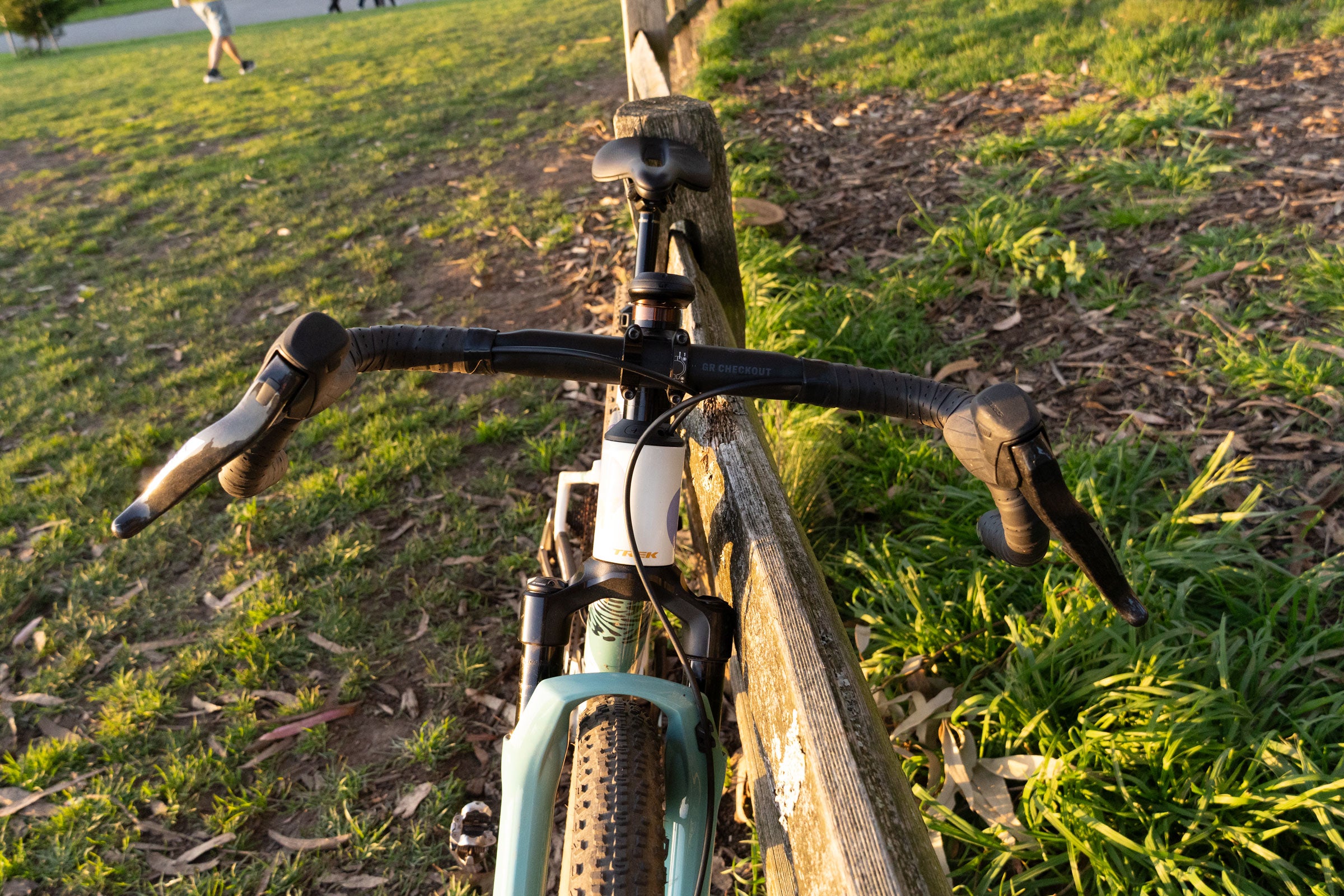
The hoods are turned in, which at first glance appears to be a ridiculously aggressive angle. I was pleasantly surprised at how comfortable they actually were. My hands rested in a relaxed, neutral position. Wrists weren’t contorted and I had plenty of control and comfort in something I’d consider to be an “all day” kinda hand position.
Saddles are a pretty personal thing, but the Trek Verse Short Elite saddle was surprisingly comfortable. With a 145mm option it should fit a wide variety of riders. The full cutout in the middle eliminates pressure points, the nose is a little shorter and even had some extra padding throughout, which I certainly appreciated.
Geometry
Ride experience
Gravel is a pretty broad term, open to a wide spectrum of definitions. For some, it’s hardpack dirt and loose rocks. For others, it’s a rutted and chonky single track. The CheckOUT can easily handle both, but it’s the most fun on the latter.
While I’m not against being overbiked, the full suspension starts to feel excessive when the terrain is too tame. Flat fire roads or hard packed dirt, anything the equivalent of a paved road, and the ride is fine, but not exciting. The term “mid” would be appropriate.
Even with the suspension locked out, the bike felt slow and sluggish. It was nearly impossible to keep up with my riding pals on their standard gravel bikes, as they effortlessly sailed away.
However, the tables turned when it was time to descend. I charged down rutted, rocky, and loose terrain, without a care in the world. While my friends were tentative, cautiously riding the brakes and calculating their every move.
This is a big selling point. The CheckOUT is a bike that takes away the mental load from tricky, hard to make sections. Suddenly, everything is just fun. Consequences be damned. The Marin gravel where I’m testing this bike has plenty of high consequence sections. Pick the wrong line and you’re not just messing up, you’re gonna wreck. The CheckOUT will absolve you of this fear. The 55mm Betasso tires are knobby enough to take a bite out of loose gravel and pair those with the full suspension and the result is a silky smooth ride that puts rider comfort as priority number one. Now, whether that’s a positive, or negative, is really up to you and your riding style.
A lot of the time gravel riding can be downright rough. I’ve had far too many days out when my elbows and knees were throbbing by the time I got home from taking a severe beating on some particularly unforgiving, tooth-filling shaking, tough descents. With the RockShox suspension system, all of this melts away.
Combine the full suspension with the more relaxed geometry and high volume tire and you’ve got yourself a recipe for long days of comfortable charging. I’m not saying it’s like the comfy couch at Mid South, but it sure comes close.
The cost for this comfort materializes in a weight penalty, tipping the scales at nearly 25 pounds (11.34 kg). Although the forgiving 10-52T gearing helps when things get steep, it’s still a lot to push up a hill. At least you can unleash on the upcoming descent, so that’s a nice trade-off.
As a city dweller there’s still plenty of paved road I need to contend with before I can get rowdy in the dirt. Even with the rolling hills, I still had plenty of gears to keep the pedals turning. I didn’t spin out, nor did I wish for one easier gear (ok, maybe I always wish for that).
The terrain in Marin is pretty aggressive, so hauling this rig up an extended 15% grade definitely left me doing the phantom shift (you know, when you keep hitting the paddle for that one gear that doesn’t exist). Perhaps nothing would ever suffice in that instance, but due to the weight of this bike, this factor cannot be overlooked. I shudder to think how this would feel loaded down on some monster climbs. Sheesh.
The bike I tested was a size small (49cm), which for a 5’5 rider fit great. Standover height was totally fine and the proportions and balance felt good. Bonus points for zero toe-overlap.
The bars are another story. Size small gets a 42cm wide bar which is already too wide out of the box. Those bars then get a 6cm flare making them borderline unusable. The control wasn’t great and I often had to compensate by moving my hands up the bars for better stability. The trade off here is likely with an eye toward cargo capacity and room for a large bar bag. You can also see that focus on true ultra endurance with the option of adding aerobars.
Unfortunately, small frames come with real estate challenges. When it comes to water capacity, on the downtube you can get a larger 24 oz (710 ml) bottle. However, on the seat tube, 21 oz (620 ml) bottles are the max and you’ll need side loading cages which are not always ideal.
As I rode this bike more, I started to come up with a list of changes I’d make. This is a full suspension gravel bike, not a drop bar mountain bike, and I think there’s room to further lean into that distinction. I would lose the dropper. I found the battery was constantly in my way plus it felt unnecessary given the expected use case of the bike. It also wouldn’t hurt to lose one of the batteries and 575 g / 1.26 lb of weight.
I’m also getting rid of the rear rack. It’s a great component and clever design, but my overnight adventure happens once a year (maybe). Unless that’s a standard part of your riding diet, at 760 grams (1.67 pounds) this is another big weight savings.
Finally, a lower volume tire. There’s nothing wrong with the Betasso’s but I would love to explore something a little faster on the pavement and let the suspension do more of the “comfort” work on the rough sections. Plus, isn’t complaining about tires the real spirit of gravel?
Usability
I don’t believe in the idea of a “forever bike.” However, there are features here that take long-term ownership into account. With a UDH (Universal Derailleur Hanger) and threaded T47 bottom bracket, durability and “future proofing” component options are realized.
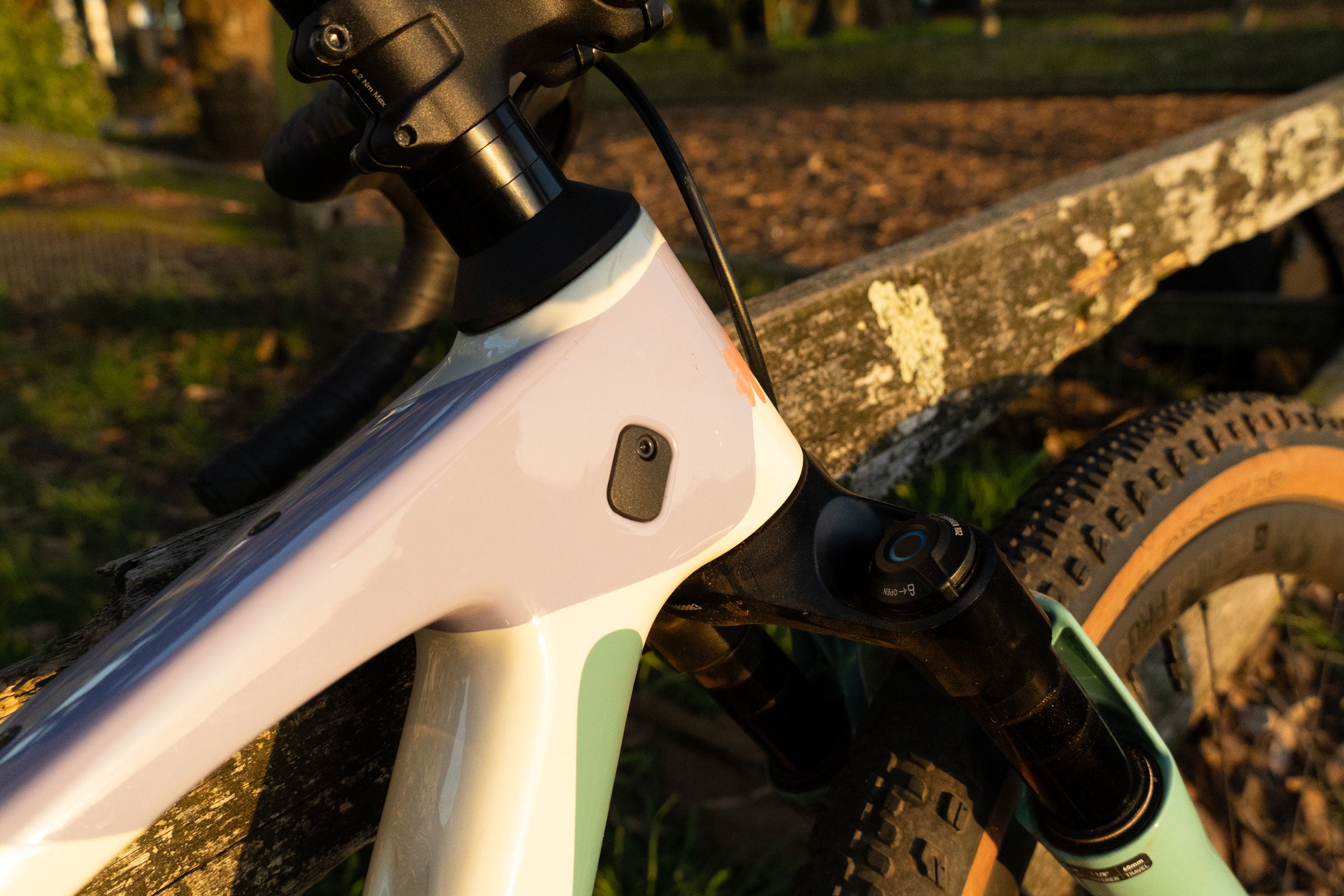
Given the bikepacking DNA, ensuring cables aren’t getting caught in bar bags is critical. Out of the box, brake cables are run through the headset, keeping the front end clean (and bags free from obstructions). However, the frame also accommodates external cable routing options with dedicated channels along the downtube. This is particularly appealing for hardcore adventure riders who want maximum flexibility, including the option to troubleshoot mechanicals roadside.
As with any full suspension setup, that does mean more service. There are two recommended service intervals with the first being a 50-hour lower leg service of removing the lowers, cleaning, replacing the oil, and installing new dust wipers. Then there’s a more comprehensive, 200-hour (or yearly) damper and air spring service that’s a full teardown of the fork and rear suspension. Not everyone will follow either of these strictly but that is the recommendation. Compared to a fully rigid gravel bike, this is a significant maintenance commitment. Factor it into your ownership decision.
Conclusion
The Trek Checkout is a specialized bike. This is not your do everything gravel bike that is an easy recommendation for anyone looking for big tires. Instead the Checkout comes right to the edge where you start to wonder if it’s maybe just a mountain bike. That means it might be a good choice for novice gravel riders looking to tackle seriously rough terrain. All the volume in the tires, the more upright body position and the full suspension offerings combine to create a bike that will empower the most tentative privateer. The confidence and support this bike will give you is off the charts. No matter what the road has in store, with the CheckOUT, you can rest easy knowing that you’ve got this.
That’s not the real point of the Checkout though. This is a bike that clearly had ultra endurance events in mind from the start and there’s a somewhat singular focus to that. You could use it for the occasional bikepacking adventure but you could also do that without the complexity of full suspension. Where this concept really starts to make sense is when you are looking at multiple days or rough trails and big loads of gear. In that light, the suspension makes sense for keeping the rider as fresh as possible and Trek has already figured out how you can mount everything you need.
The downside of that singular focus is that this bike is not going to make sense for everyone. It’s heavy and it’s complex when you aren’t trying to cross a continent. I can see the idea here but how many people need these features? If you do need them though, here’s the perfect bike for you.
Except for those bars, they are still too wide for a size small.