At a press conference in Vancouver today, Washington Governor Bob Ferguson announced that the Interstate Bridge Replacement Program will finally live up to its name.
Instead of five miles of freeway expansions and seven new interchanges, the project will be phased to include just the bridge replacements and an extension of MAX light rail across the Columbia River. Also making the cut in this “core set of projects” is the shared-use paths that will give bicycle riders and walkers new connections across the river.
Yes, project officials have finally relented and have decided to right-size the project in the way dozens of environmental and social justice organizations in the Just Crossing Alliance have been encouraging them to do for years now.
Ferguson also revealed a $7.65 billion cost estimate for this smaller project and said he’ll personally ensure construction begins by 2028. That’s still not a guarantee because the project has just $5.5 billion committed to the project so far. According to new cost estimate documentation shared today, that amount is enough for them to begin the major elements of the core set of projects.
“The first thing I want to say is we’re going to build this bridge,” Ferguson said at the outset of today’s press conference. “That’s going to happen. There’s just far too much at stake for any other option” Ferguson, flanked at the podium by project leaders, elected officials, and construction workers in helmets and hi-viz vests sought to tamp down skepticism of the project after a bombshell report by the Oregon Journalism Project back earlier this year that the full project would cost $12 billion to $17 billion.
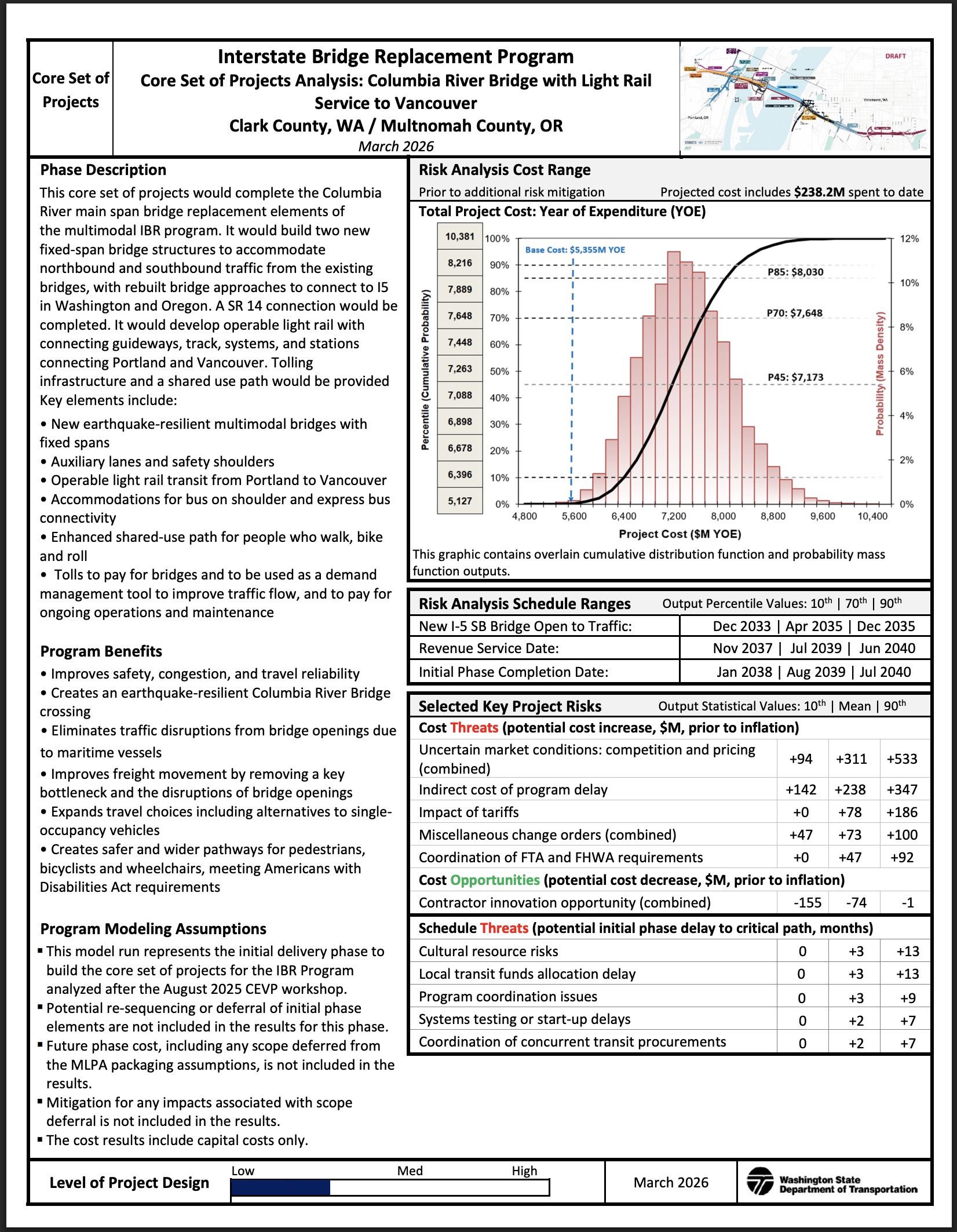
That cost estimate, which project officials dismissed as being just a draft when that report came out in January, was confirmed by project officials today. The new, official estimate for the full, five-mile corridor is now $14.4 billion.
The full project is still on the table, but Ferguson made it clear that it’s being pushed back for now. “We will continue to work toward the larger corridor down the road, in phases, as funding becomes available,” he said.
TriMet General Manager Sam Desue was also at the press conference. In his comments he touted light rail’s first extension into Washington as opening up, “one seat ride from Evergreen into downtown Vancouver to downtown Portland, the Moda center, shopping, health care and so much more.”
Toward the end of the press conference, someone in the media asked Governor Ferguson why the project had to include light rail at all, especially since many people in Clark County don’t want it. “That train has left the station,” Ferguson replied, without skipping a beat. “I want to be clear,” he continued. “I’m not interested looking backwards. We’re building this damn bridge. That’s happening, okay?!”
Ferguson’s enthusiasm is music to the ears of IBR project backers. But he’s only been on the job for 14 months and he’s also smart enough to understand that this project has been anything but easy since it first began in 2007. “We’re gonna have good days and we’re gonna have bad days ahead,” he cautioned folks at today’s presser (which included Portland Metro Chamber President Andrew Hoan, Oregon Trucking Association President Jana Jarvis, and many others). “That’s the fact. But I just want to be really, really clear that I’m super committed to this.”
Oregon State Senator Khanh Pham, who was a supporter of the “Right Size Right Now” campaign, told BikePortland today she’s encouraged that Governors Kotek and Ferguson have taken the project in a new direction. “I hope today’s decision marks a turning point in the IBR project in which the agencies acknowledge the financial realities of our state budgets and the imperative to curb excessive megaproject spending to preserve funding for core functions of our transportation system,” Pham shared in an email. “It’s imperative that policymakers in both states continue to push back against an oversized, bloated project and demand that ODOT propose and deliver a right-sized bridge with a right-sized budget that doesn’t bankrupt our state.”